Can You See Whales In Punta Cana?
The honest answer to whether you can see whales from Punta Cana: every listed whale trip runs in Samaná Bay, 3.5 to 5.5 hours by road, from $110 to $200 per person, mid-January through March.
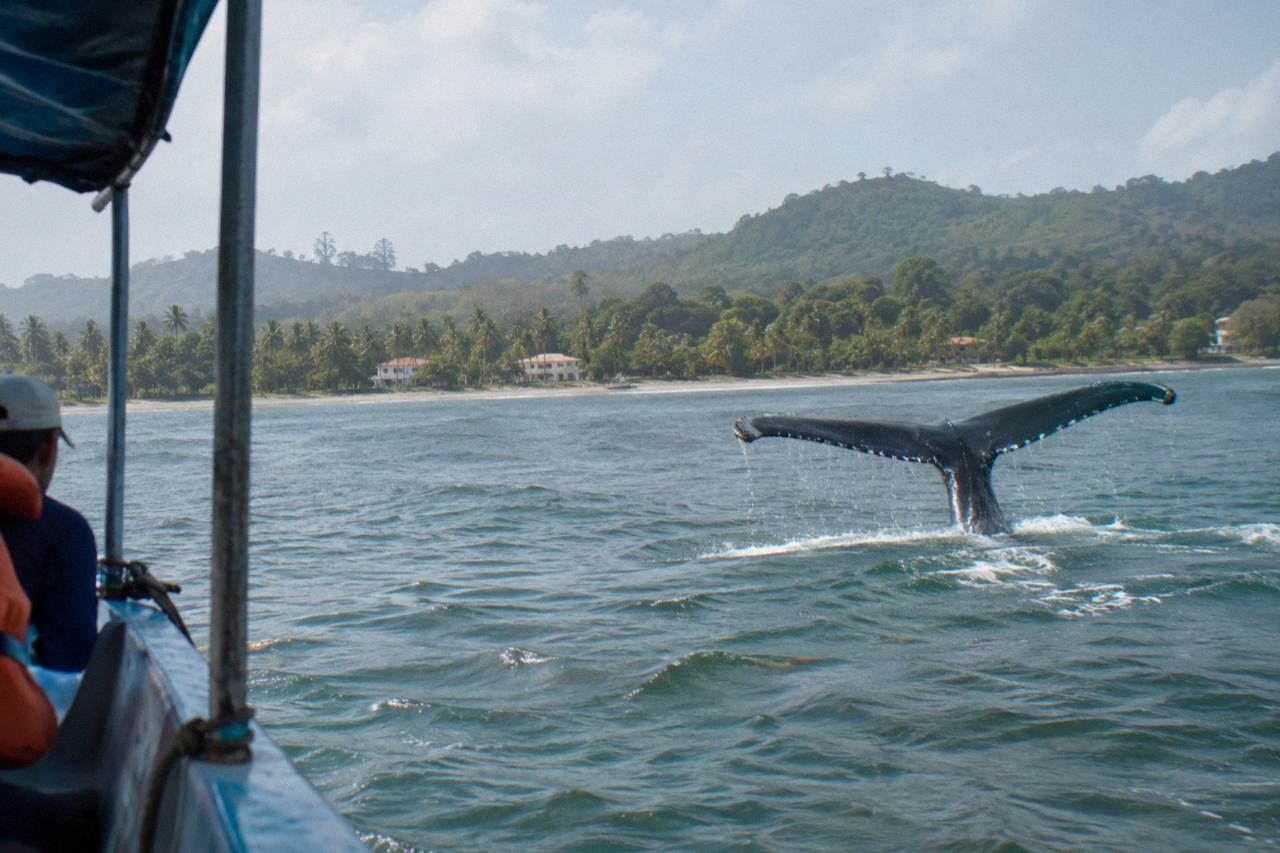
Not from the beach, and not from a boat that leaves Punta Cana itself: every whale-watching listing for this coast runs in Samaná Bay, 3.5 to 5.5 hours away by road. That makes the honest answer a day trip, and a long one. Ten Punta Cana departure listings run from $110 to $200 per person, all of them traveling to Samaná Bay, in a season that runs mid-January through the end of March. If that long drive gives you pause, this breakdown of staying in Samaná versus Punta Cana explains what switching your base would actually change for a whale-watching trip.
The question gets asked constantly, and usually at the wrong moment: a traveler is already booked into a Punta Cana resort, sees a photo of a humpback, and wonders whether the whales pass close enough to see from where they are standing. The humpback whales that come to the Dominican Republic each winter concentrate in the mating and calving grounds of Samaná Bay and the surrounding sanctuary banks. The ministry-licensed whale-watching boats operate there, under rules that CEBSE, the bay's conservation body, has applied since 1996. For the full picture of the sanctuary itself and the practical ways to reach it from Punta Cana, see our guide to humpback whales in the Dominican Republic.
So the decision in front of a Punta Cana visitor is not "whales from Punta Cana or nothing." It is whether to commit to a full-day trip, and which version of that trip to book. The Full-day Whale watching Tour in Samana Bay from Punta Cana, from $130 per person with hotel pickup and lunch, is the direct version: bus to the bay, boat to the whales, lunch, back. Others bolt on Bacardi Island, a waterfall, or a safari truck. A few are shorter and cheaper but skip the meal, like the half-day Samaná Bay option from $115 with snacks and drinks but no lunch.
For a fuller framing of the season itself, the guide to the best time for whale watching in Samaná covers the mid-January to March window in detail, and the site's Punta Cana departures overview compares all ten listings side by side.
Why Every Listed Whale Tour Goes To Samaná Bay
Humpbacks return each winter to the same warm, shallow breeding grounds, and on this coast those grounds are Samaná Bay and the offshore sanctuary banks, not the Punta Cana shoreline. The whale-watching authorizations the environment ministry issues each season are for boats operating in the bay, which is why every tour that leaves from a Punta Cana hotel spends most of its day on a bus first. If you're wondering why humpbacks choose this particular bay over deeper Atlantic water, why humpbacks give birth in Samaná Bay explains what those warm, shallow nurseries mean for your boat trip.
This is biology before it is logistics. Humpbacks migrate to warm, shallow water to mate and to calve, and the Dominican Republic's designated sanctuary, the Marine Mammal Sanctuary of the Banks of La Plata and La Navidad, centers on the bay and the banks north and east of it. The ministry's 2026 season opening, covering 15 January to 31 March, authorized 46 boat operations, 43 of them thematic authorizations in the Samaná area and 3 dispatched from Puerto Plata, per the official ministry release. The bay is where the licensed watching happens because that is where the whales and the rules are.
Even the cruise-port shore excursion, from $100, departs the port of Samaná itself. If every tour routing through the bay has you rethinking your plans, the guide to whether Samaná is worth the trip covers the whale season, Cayo Levantado, El Limón, and the towns that make good bases.
That framing also explains the price spread. A Punta Cana listing is not charging for a boat ride off its own coast; it is charging for a road transfer of several hours each way, the whale boat, usually a meal, and the guide, bundled into one day. Compare that with a Samaná-town departure like the budget Samaná whale watching tour with snacks, from $45 for 4.9 across 20 reviews, or the Las Terrenas departure with lunch from $125, and the geography of the pricing becomes obvious: distance from the bay is most of what you are paying for.
How Far Is Samaná From Punta Cana?
Roughly 3.5 to 5.5 hours by road each way, depending on the exact destination in the Samaná area, which means a Punta Cana whale day is a 10 to 13 hour commitment door to door. Listings state durations of 5 hours 30 minutes for the shortest half-day up to 13 hours for the fullest waterfall combos, and those numbers are honest.
Punta Cana and Bávaro to the Samaná area runs about 3.5 to 5.5 hours one way depending on the exact drop-off point, on the toll highway that connects the east coast to the northeast. That is why a "half-day" whale tour from Punta Cana still lists 5 hours 30 minutes total, and why the fuller days list 8, 10 or even 11 to 13 hours. The whale watching itself is typically a 3 to 4 hour bay trip; everything else is road.
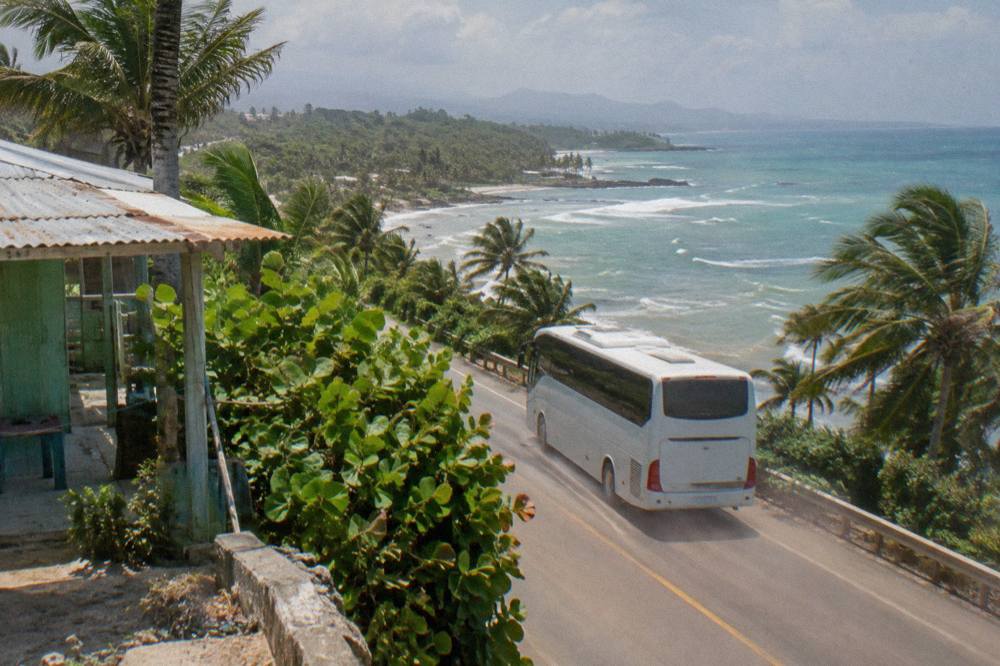
There is a temptation to beat the transfer by booking the pieces separately: a private transfer, quoted from about $240 per vehicle, plus a Samaná-town boat. For a group that works out, and it buys flexibility, since Samaná departures range from the $45 snack tour to the $125 Las Terrenas day with a Las Terrenas meeting point and lunch. For a couple counting hours, the bundled day trips usually win on simplicity, because the operator absorbs the schedule risk of getting you there and back. The guide on how to get from Punta Cana to Samaná works through every option, including the tolls and the drive times.
The whale-day math also matters for choosing a base. Visitors staying in Las Terrenas are roughly an hour from Samaná town, and visitors already in Samaná are at the dock. This is the single biggest argument, covered more fully in the blog post on whether Samaná is nicer than Punta Cana, for splitting a week between the two coasts instead of making the long round trip on the one day you care about whales.
What A Punta Cana Whale Day Trip Costs
The ten Punta Cana departure listings run from $110 to $200 per person, and the differences track inclusions more than quality: lunch, island stops, horseback riding and waterfall visits are what move the price. The cheapest listing is a half-day with snacks but no lunch; the priciest adds an open bar and a chaise lounge on Cayo Levantado.
Here is a real comparison of four representative listings, all with hotel pickup from the Punta Cana and Bávaro area, all prices and durations exactly as listed:
| Listing | Price (per person) | Duration | Listed inclusions | Reviews on the listing |
|---|---|---|---|---|
| Half-Day Samaná Bay Whale Watching | from $115 | 5 hours 30 minutes | Snacks, alcoholic beverages, certified guide; lunch excluded | 2 reviews |
| Full-day Whale watching in Samana Bay | from $130 | 8 hours | Lunch, professional guide | 14 reviews |
| Whale Watching and Bacardi Island day trip | from $165 | 10 hours | Buffet lunch with one drink, local guide, hotel pickup and drop-off, air-conditioned vehicle, bottled water | 4.4 from 47 reviews |
| Whales, Cayo, Waterfall Day (open bar) | from $200 | 10 to 12 hours | Air-conditioned vehicle, catamaran, Cayo Levantado visit, chaise lounge, lunch, open bar, guide | 1 review |
Review pools here are mostly small: with the exception of the 4.4 from 47 reviews on the Bacardi Island day, these are products with one to fourteen reviews, which is a fact about the listing, not a verdict on the boat. The most reviewed products listed here are elsewhere in the ecosystem: the Punta Cana combo with whales, Bacardi and Limón Falls at 4.1 from 233 reviews, from $110, and the featured Samaná whale and Cayo Levantado full day at 4.7 from 224 reviews, from $84.
Read the cancellation terms on the listing rather than assuming anything.
One more cost fact that belongs here and nowhere else in this article: no sanctuary or whale-watching fee turned up in any official source for authorized tours, so never let anyone add a "whale fee" line to a street offer. If a fee exists for a specific product, it is inside the listed price; the listing is where to check.
Which Punta Cana Whale Tour Should You Book?
Match the tour to your stamina, not to the whale odds: every one of these boats watches the same whales in the same bay under the same rules, so the real variables are day length, food and what else is bundled. Travelers who want the single most complete version usually land on the 13-hour whales and waterfall combo, from $169, 4.5 across 146 reviews.
That combo, run by Runners Adventures, includes transport, lunch, bottled water and all fees and taxes, and pairs the whale boat with the El Limón waterfall. Its 146 reviews is a pool large enough to mean something, which most of these listings cannot claim. Travelers who want the shortest version of the core experience should look at the half-day from $115 and accept that lunch is excluded. Travelers who want the middle path, whales plus a beach afternoon, should look at the Bacardi Island days.
The Bacardi Island day trip from $165 deserves its solo spot because it is the version that answers two Punta Cana wishes at once: the whales, and the postcard beach. Ten hours, buffet lunch with one drink, hotel pickup and drop-off, air-conditioned vehicle, bottled water, and a 4.4 rating from 47 reviews, the largest review pool of any pure Punta Cana whale day in the table above. Souvenirs are the only listed exclusion, which is about as clean as an inclusion list gets.
A quieter alternative worth naming: the private whale watching option out of Miches, from $95 per person for 3 to 6 hours, with a captain and guide on board and optional Cayo Levantado. It is a different structure entirely, a private boat rather than a shared day trip, and it suits travelers who would rather pay for exclusivity on the water than for a bus full of fellow guests. One review is on its listing so far, so judge it on its structure, not its rating.
When Is The Whale Season From Punta Cana?
The season runs mid-January through the end of March, and 2027 dates are not yet announced, so anyone booking a Punta Cana resort stay outside that window is booking a trip without whales in it. Peak concentrations fall February to early March, as researchers describe it, which is also when Punta Cana day trips fill up.
The ministry opened the 2026 season on 15 January and closed it 31 March. The permit call for 2027 ran 16 October to 13 November 2026, but no season dates for 2027 have been announced. A Punta Cana visitor with fixed dates should check that their dates fall inside the window before anything else, including the flight.
What can be said, in researchers' framing, is that February into early March is when concentrations peak, because that is the heart of the mating and calving period. The blog post on the odds of seeing a whale on a tour handles the honesty of that question directly, and the deeper background on the migration is in why humpback whales go to Samaná.
Weather is a minor planning fact: January to March is the dry side of the year in the Samaná area, with seas often calmest in the mornings and trade winds sometimes chopping up the afternoons. Hurricane season runs 1 June to 30 November, well clear of whale season, so a winter whale day carries normal sea-state risk and no seasonal-storm risk.
What The Day Actually Looks Like On The Water
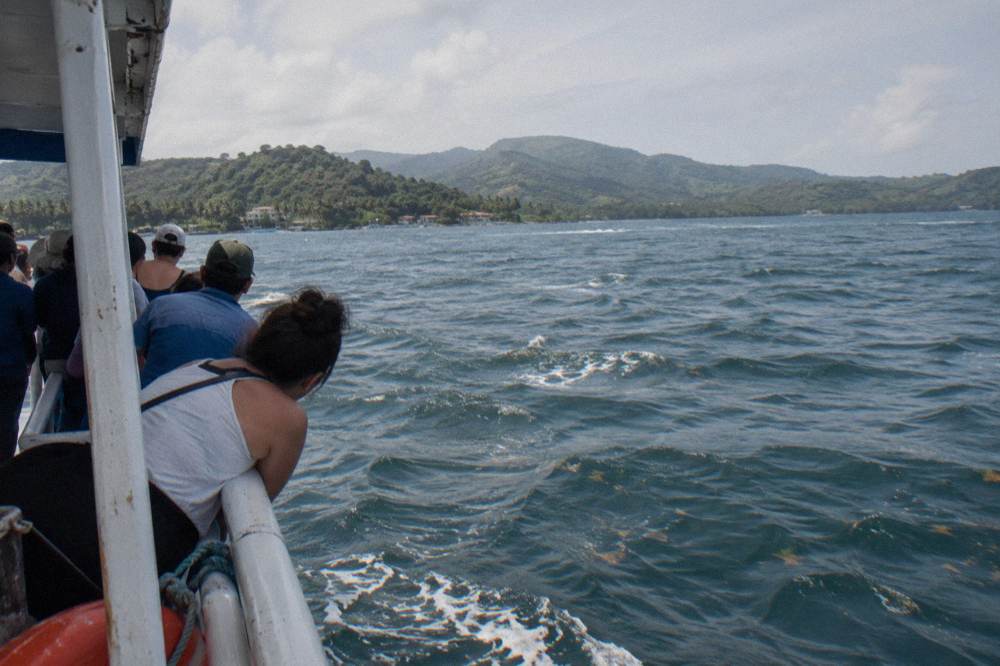
Once the bus reaches Samaná, the boat day is short and tightly regulated: typically 3 to 4 hours on the water, with boats holding 80 meters from mothers with calves, 50 meters from other groups, at most three boats per group and 30 minutes of viewing when others wait. Guides brief passengers, engines stay on, and no one swims with the whales.
These rules come from CEBSE, which has applied them in the bay since 1996 under ministry licensing, and they change the experience in ways first-timers should expect. You will not chase a whale; the boat holds a distance and lets the whales be whales. Engines stay on in the observation area, which surprises people until they learn it is a safety rule, not negligence. And swimming with humpbacks is prohibited in Samaná Bay outright: it is allowed only at Banco de la Plata, far offshore, under strict permits on live-aboard trips, roughly $3,500 to $5,500 for a week, which is a different kind of travel entirely. Offers to swim with whales from Las Galeras are illegal, and a ministry-licensed boat will not make them.
The 13-hour whales and waterfall day earns its late mention because it is the fullest expression of what a Punta Cana departure can be: the whale boat in the bay, then the El Limón waterfall, with lunch, bottled water and all fees and taxes in the price from $169 per person. Its 4.5 rating across 146 reviews makes it the best-evidenced long day on the Punta Cana side of the tours listed here. For what to pack for the boat itself, the what to wear and bring guide and the piece on seasickness on Samaná whale boats cover the practical details.
For the regulation-curious, the CEBSE panel on the bay publishes the boat conduct rules, and the ministry's season release covers authorizations. Neither promises a sighting, and neither should any listing: humpbacks, sea state and weather all vary, and the honest operators say so.
Common Questions About Whales In Punta Cana
How long is the whale trip from Punta Cana?
Listings run from 5 hours 30 minutes for a half-day with no lunch to 13 hours for the fullest waterfall combo. The road transfer alone is roughly 3.5 to 5.5 hours each way, and the whale watching itself is typically 3 to 4 hours on the water.
Is there whale watching in Punta Cana itself?
No licensed whale-watching product departs from Punta Cana's shoreline. The ministry's authorizations cover boats operating in Samaná Bay, so every Punta Cana product is a transfer plus a bay boat trip. No source claims whales never pass the Punta Cana coast; the bookable trips simply run in the bay.
What is the cheapest whale tour from Punta Cana?
The half-day Samaná Bay whale watching tour, from $115 per person, 5 hours 30 minutes, with snacks and alcoholic beverages included and lunch excluded. For comparison, Samaná-town departures start at $45, but reaching them from Punta Cana means arranging your own transfer.
When can you see whales from Punta Cana?
Mid-January through the end of March. The 2026 season ran 15 January to 31 March; 2027 dates are not yet announced. Researchers describe February to early March as the peak for whale concentrations in the bay.
Can you swim with the whales?
Not in Samaná Bay: swimming with humpbacks is prohibited there. It is allowed only at Banco de la Plata under strict permits on live-aboard trips, roughly $3,500 to $5,500 for a week. Any offer to swim with whales out of Samaná Bay is illegal.