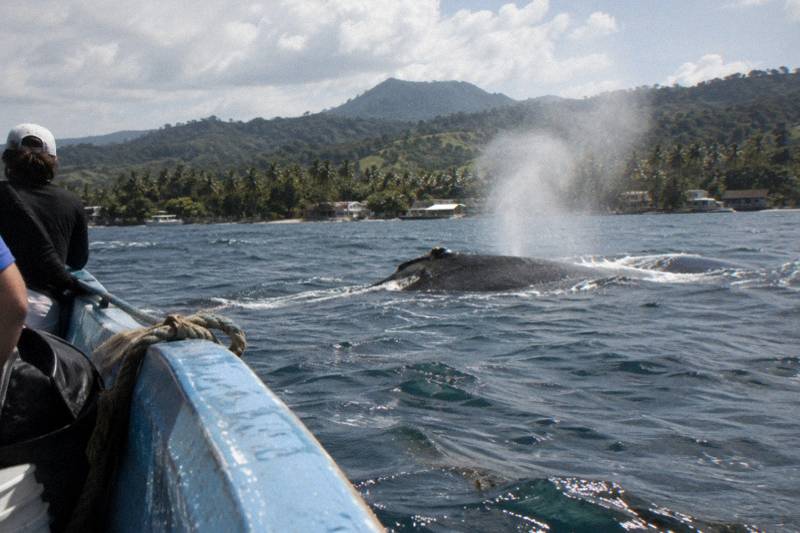
Where Do Whales Give Birth? The Samaná Bay Answer
Humpbacks give birth in warm, shallow tropical water, and the Dominican Republic's Samaná Bay and offshore banks are one of the Atlantic's calving grounds. Here is what that means for a boat trip.
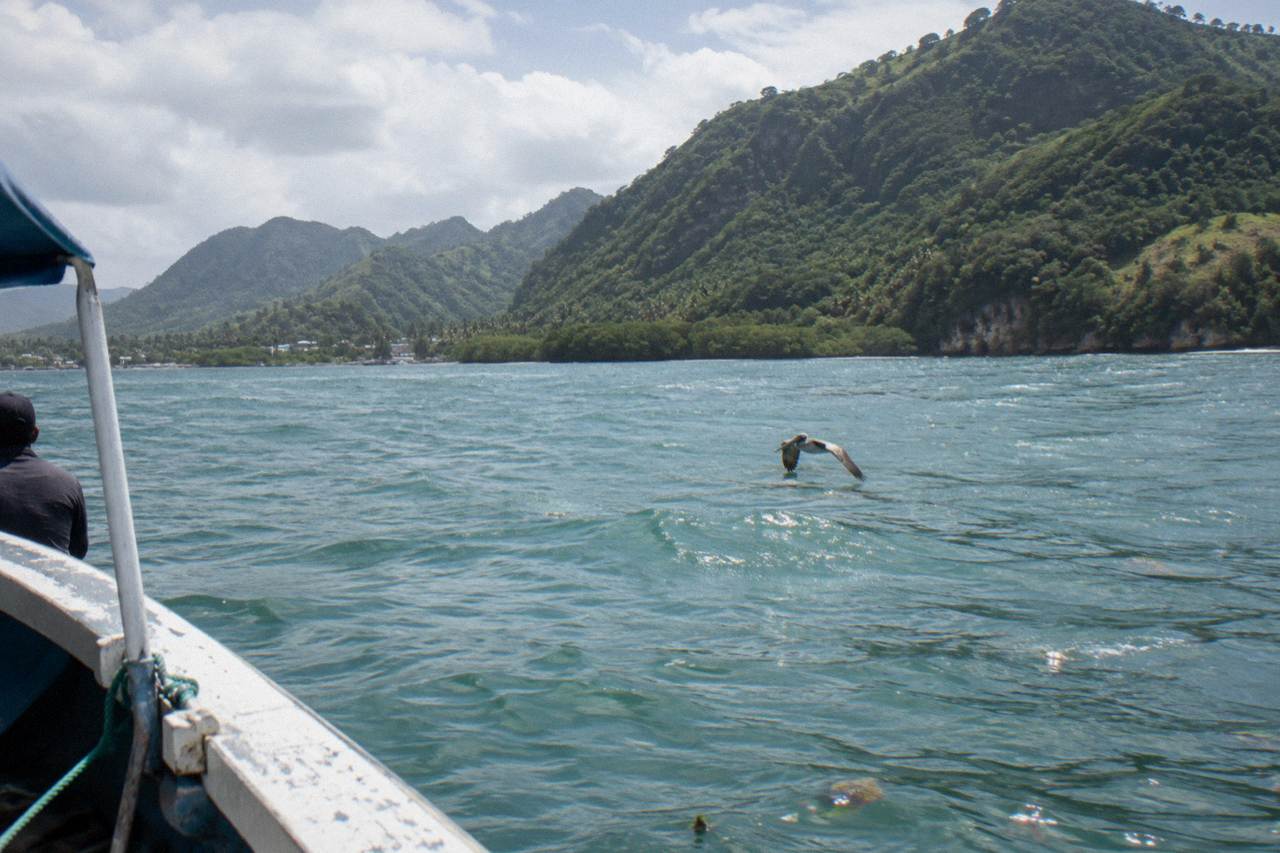
Humpback whales do not give birth wherever they happen to be. They migrate, sometimes over enormous distances, to deliver their calves in warm, shallow, protected water, and the northern coast of the Dominican Republic is one of the places in the Atlantic where that happens. From mid-January through March, Samaná Bay and the surrounding marine mammal sanctuary hold mother whales with newborn calves, adult males courting, and the licensed whale-watching boats that come out to observe them under some of the strictest viewing rules in the region. If you're curious why the whales pick this bay year after year, our guide to why humpback whales choose Samaná Bay each winter explains what the research says about the migration and how tour schedules are built around it.
The reason this bay works as a nursery, and the reason the rules are written the way they are, comes down to one thing: a humpback calf is born here, in this water, at the start of its life. This article walks through the calving biology in plain terms, where in Dominican waters the births happen, how the sanctuary protects mothers and calves, and what that means if you are planning to be on a boat in the middle of it.
Humpback whales give birth in warm, shallow, tropical water near sheltered coastlines, and in the Dominican Republic that means Samaná Bay and the offshore banks of the Banco de la Plata and Banco de la Navidad, which together form the Marine Mammal Sanctuary. The calves are born in the winter months, which is why the whale-watching season here runs mid-January through March.
The migration behind that answer is one of the animal kingdom's long journeys. Humpbacks spend the summer feeding in cold, food-rich water in the North Atlantic, then travel to the tropics for the winter to breed and calve. The general pattern, stated qualitatively by researchers, is that females seek warm, relatively shallow, calm areas to give birth, because a newborn calf has little blubber and cannot regulate its own temperature in cold water the way an adult can. Warmth is not a comfort for a calf; it is a survival requirement.
Samaná Bay fits the brief. It is a large, sheltered bay with warm winter water, and it sits inside the wider sanctuary that the Dominican Republic has designated for its marine mammals. The sanctuary's coverage, Samaná Bay together with the Banco de la Plata and the Banco de la Navidad, is the reason this stretch of the Caribbean functions as a calving ground rather than a corridor the whales simply pass through.
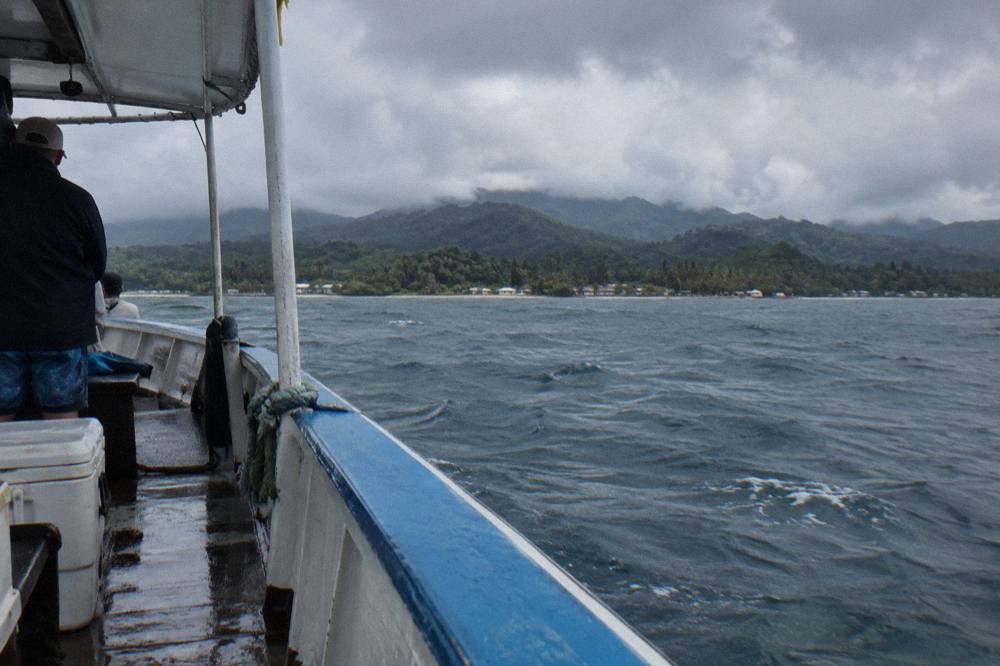
What the boats actually encounter reflects the mix of activities in the bay. Some groups are mothers with calves staying close to the surface and moving slowly. Others are competitive groups of adults, or pairs courting. A ministry-linked expedition in 2025 logged 289 sightings in Samaná waters, of which 34 were sightings of whales with calves, according to reports of the ministry's monitoring work. No month-by-month sighting counts for the bay are published, and none of the operators listed here promise a sighting, because whales, weather and sea state all vary day to day.
Why Warm, Shallow Water Matters For A Humpback Calf
A newborn humpback calf is born with a thin insulating layer and needs warm water to survive its first weeks, so mothers seek tropical, shallow, sheltered areas to give birth and nurse. Shallow water also offers some protection from large predators, which is why bays and banks, not deep open ocean, are the calving habitat.
The temperature logic is the clearest part. An adult humpback carries a thick layer of blubber built up during the feeding season. A calf is born without that reserve, and it must build mass quickly on milk in water warm enough that it does not lose heat faster than it can gain energy. Tropical water does that job. The feeding grounds, cold and rich in food, would be fatal for a newborn; the calving grounds, warm and food-poor for the adults, are exactly what the calf needs. The adult whales largely fast during the months in the tropics, living off stored energy, which is one reason the winter in Dominican waters is a fixed, high-stakes appointment rather than a casual visit.
Depth matters too. Calving tends to happen in relatively shallow, protected water: bays, banks and reef-sheltered shallows. Shallow water complicates the approach of large sharks, the main natural threat to a newborn calf, and calm surfaces reduce the energy a tiny calf spends simply staying oriented in its first days. Samaná Bay's mix of sheltered water and warm winter conditions, with sea temperatures commonly described as comfortable for swimming through the January to March season, matches that habitat description closely.
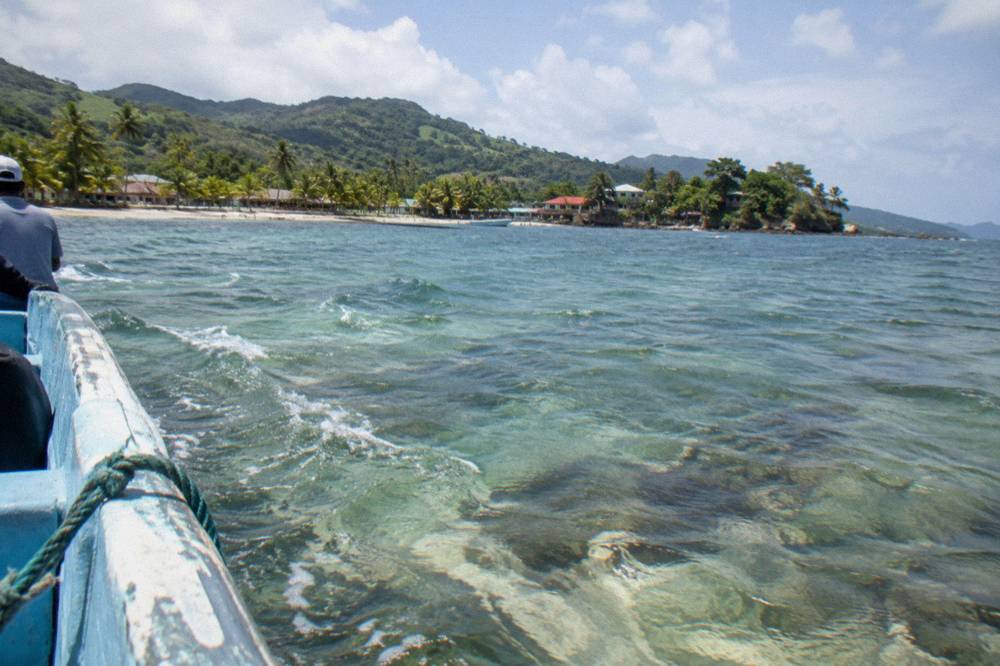
Nursing is the second half of the story. A mother whale in the bay is either about to give birth, has just given birth, or is nursing, and all three states make her sensitive to disturbance. That is not a sentimental point; it is the basis of the sanctuary's rulebook, which sets wider viewing distances for mothers with calves than for any other whale group. The full background on the protected area is covered in the guide to the Samaná Bay humpback sanctuary, including how the rules are enforced.
For a visitor, the practical translation is this: the thing you came to see is a nursery, and the way you see it is regulated as a nursery. Here is how the key pieces of the calving picture fit together.
| Calving fact | What it means | Where it shows up on a tour |
|---|---|---|
| Calves are born in warm, shallow tropical water | Mothers pick bays and banks, not open ocean | Day-boat sightings concentrate in the bay, within range of Samaná town |
| The season runs mid-January through March | Births and nursing happen inside the watch season | Every licensed departure listed here runs in this window |
| Mothers with calves get wider protection | An 80 m viewing distance, wider than for other groups | Boats hold back further from mother-calf pairs |
| No swimming with whales in the bay | The water is a nursery, not a swim site | Any swim offer from Las Galeras is illegal; only Banco de la Plata permits exist |
Where Humpbacks Give Birth In Dominican Waters
In the Dominican Republic, humpback calving habitat sits inside the Marine Mammal Sanctuary, which covers Samaná Bay plus the offshore Banco de la Plata and Banco de la Navidad. The bay is the accessible part, with licensed whale-watching boats; the banks are offshore areas that include the strictly permitted Banco de la Plata swim operations.
The three-part geography is worth holding onto, because tour copy often blurs it. Samaná Bay is the sheltered inshore water where the whale-watching fleet operates, departing from docks around Samaná town and nearby points. Banco de la Plata, the Silver Bank, lies well offshore to the north; it is the only place in Dominican waters where in-water encounters with humpbacks are permitted at all, and only for a small number of authorized live-aboard operations running roughly week-long trips. Banco de la Navidad is a further offshore bank, surveyed by ministry expeditions separately from the bay. A ministry-led expedition over the Banco de la Navidad in early February 2026 recorded hundreds of sightings across its transects, but that figure belongs to the bank, not to Samaná Bay, and should never be read as a bay count.
For almost every visitor, the bay is the realistic option. The departures from Samaná and Las Terrenas are short, inshore and relatively cheap: the three-hour Bay of Samana cruise runs from $69 per person, and the cheapest boat listed here, a whale watching tour with snacks, starts from $45. The featured whale watching and Cayo Levantado full day, from $84 per person with buffet lunch on the island, is the most reviewed of the Samaná-departure options at 224 reviews. These are the trips that put you over the calving water.
The banks are a different kind of trip entirely. The Banco de la Plata live-aboards are roughly week-long voyages priced in the thousands of dollars per person, and they are the only route to a legal in-water encounter. No day trip from Samaná offers that, and the rules are unambiguous that swimming with whales in Samaná Bay itself is prohibited, a point covered in more detail in can you touch a whale on a whale watching tour.
Between those two extremes sit the regional departures that reach the same bay by road or by long day. Punta Cana travelers ride three and a half to five and a half hours each way for the Bacardi Island day trips, such as the whale watching and Bacardi Island day trip from $165 per person, while the El Limón waterfall combos, like the 13-hour whales and waterfall day from $169 per person with 146 reviews on the listing, fold the peninsula's inland sights into the same long day. Visitors already on the peninsula can depart from Las Terrenas with a Las Terrenas meeting point from $125 per person. All of them end up in the same nursery water; the difference is how much of your day the journey takes.
How The Bay Protects Mothers And Calves
The bay's whale-watching rules, applied by CEBSE under ministry licensing since 1996, exist to protect mothers and calves: boats must stay 80 m from a mother with a calf and 50 m from any other group, with time limits, boat limits and a ban on swimming with whales in the bay. In 2026 the ministry issued 46 environmental authorizations and strengthened monitoring.
The distances are the heart of it, and the asymmetry is deliberate. A mother-calf pair gets 80 meters of space; any other whale group gets 50. No more than three boats may watch a group at once, and a fourth boat must wait 250 meters away for up to 30 minutes until one of the three leaves. Observation time per group is capped at 30 minutes when boats are waiting, halved when whales are scarce. Engines must stay on in the observation area, which sounds counterintuitive but is about maneuvering safety around animals that can surface unpredictably close. The CEBSE panel that documents these rules is published by the bay's conservation body and licensed through the environment ministry.
The 2026 season added administrative muscle. The ministry issued 46 environmental authorizations, 43 for Samaná operations and 3 dispatched from Puerto Plata, processed digitally for the first time, and signed an inter-institutional management agreement that created a sanctuary management committee covering boat inspection, captain training and scientific monitoring. A voluntary GPS tracking pilot ran on licensed boats during the season for real-time oversight. Enforcement is not perfect; illegal swimming offers from Las Galeras and unauthorized drone flights near whales have been reported, which is why checking that your operator is licensed, and reading the cancellation terms on the listing, genuinely matters.
Do you want to see the calving grounds with a guide who can explain the rules as you go?
The Bay of Samana whale watching experience, a three-hour bay cruise from Samaná town, runs with an expert guide, coconut snacks, water and soft drinks on board, from $69 per person. Read the cancellation terms on the listing before you book, and check availability for your dates, since the season is short.
Drones are worth a line of their own, because many visitors do not know the rule exists. Flying a drone inside the sanctuary without ministry permission is prohibited, full stop, and the restriction exists precisely because a hovering drone over a mother and calf is exactly the kind of disturbance the 80-meter rule tries to prevent on the water. If you want footage of the trip, the listing for several tours notes that professional photos are sold separately; leave the drone at the hotel.
What A Calving Ground Looks Like From The Boat
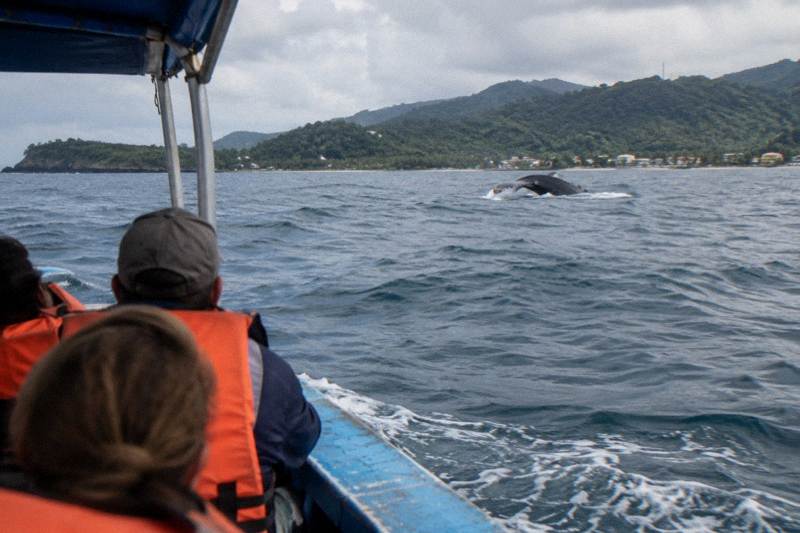
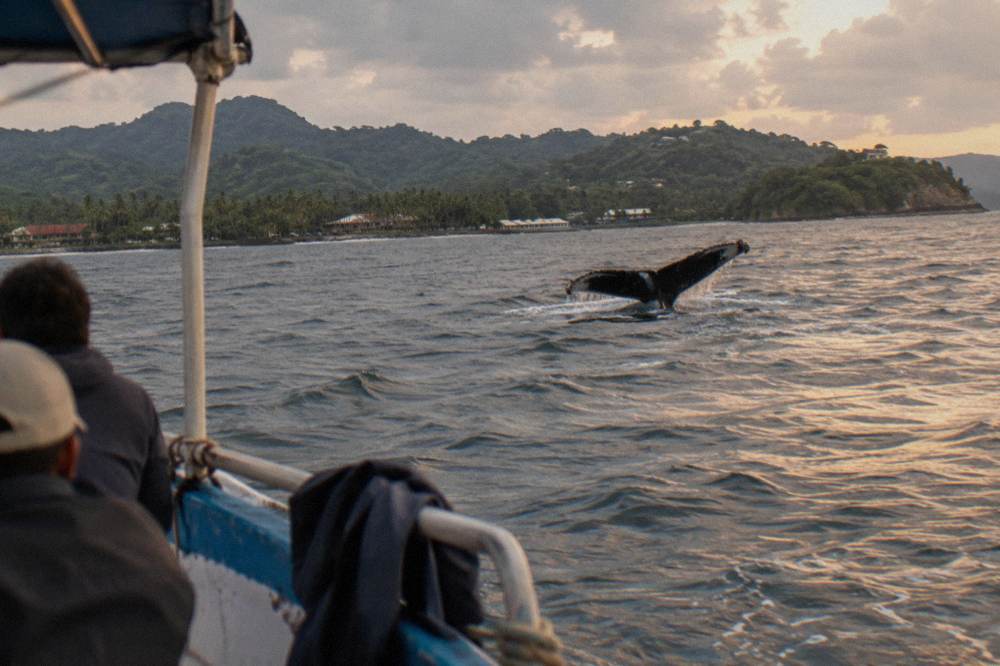
From the deck of a licensed boat, a calving ground looks calmer than most people expect: mothers and calves move slowly near the surface, resting and nursing, while adult courtship groups are the loud, splashy exception. Boats rotate through sightings under the time and distance limits, so the experience is watching, not chasing.
A mother with a newborn does very little that is cinematic. The pair surfaces to breathe, rests near the surface, and the calf stays close to its mother's side, sometimes lifting a small fluke as it dives under her. Guides on the bay describe the calf's first weeks as a period of steady nursing and rapid growth; the general behavior, stated qualitatively, is that calves gain weight quickly on extremely rich milk before the long migration north. Patience is the main skill a visitor needs, and the short cruises, like the three-hour bay experience or the half-day humpback trip from $95 per person with snacks and life jackets listed, are built around exactly that rhythm.
The louder spectacles belong to the adults. Courting males breach, slap their pectoral fins and lob their tails, and competitive groups can churn the surface for long stretches. The same bay holds both theaters at once, which is why a single trip can include a still mother-calf pair held at 80 meters and, twenty minutes later, a group of full-grown adults throwing themselves out of the water. What no trip can include is a guarantee: sea state, weather and the whales themselves decide each day, and the honest answer to the odds question is that no published sighting rate for the bay exists.
The boats themselves vary more than the whales do. Reported capacities run around 40 to 60 passengers on premium boats and up to 80 or 100 on others, though those figures are reported; individual listings state their own maximum group sizes. What the listings do state is their inclusions, and they differ sharply: the featured whale and Cayo Levantado full day includes buffet lunch, local snacks and drinks, while the cruise-port shore excursion from $100 per person includes the boat, guide, briefing and life jackets but no food. Matching the inclusions to your day matters more than matching a headline price, and the comparison of small groups versus large boats works through the tradeoffs.
For visitors who want the nursery water more to themselves, there is a private route. The private whale watching option from Miches runs from $95 per person with a captain and guide on board, two hours of whale watching and an optional Cayo Levantado stop, though its listing shows only a single review so far. With a month-by-month breakdown of the season in the best time for whale watching in Samaná, you can weigh the quieter early weeks against the February-to-early-March period that researchers describe as the peak of concentration in the bay.
When To Plan A Trip Around The Calving Season
The whale season in Samaná runs mid-January through the end of March, matching the calving and nursing window, with the 2026 season having run 15 January to 31 March under the ministry's opening. Peak concentrations are described by researchers as February to early March. The 2027 dates have not been announced, so book flexible plans.
That timing is not an accident of tourism; it is the calendar of the whales. The mothers arrive pregnant, give birth in the warm water, nurse through the late winter, and then lead their calves north as the season closes. The 2026 authorizations, the management agreement and the monitoring pilot all ran inside that window, and the ministry has already opened the permit process for the 2027 season, with documents accepted from mid-October to mid-November 2026, even though the 2027 visitor-facing dates are not yet announced. Anyone planning a trip should treat mid-January to end of March as the standing pattern and confirm dates on the operator's live listing before locking in travel.
Picking a tour around that calendar is mostly about matching departure point and stamina. The Samaná and Las Terrenas departures, from $45 to $125 per person, keep the day short and the boat ride inshore. The Punta Cana days, $110 to $200 per person and up to 13 hours door to door, trade a full vacation day for the chance to see the sanctuary. The combos, $110 to $199 per person, add Cayo Levantado or the El Limón waterfall to the whale leg. The general planning logic is laid out in the site's homepage comparison and the three-question trip picker, which sort these options by where you are staying and how long you want to be out.
One planning note that follows directly from the calving biology: mornings tend to be the calmer window on the water, and several operators schedule around that, with one Samaná operator's published schedule running a single late-morning trip in the early and late season and two daily departures at the February peak. Seas and weather vary, and hurricane season, 1 June to 30 November, sits entirely outside the whale calendar, so the two risks barely overlap. Pack for sun and spray rather than storms, follow the operator's safety briefing, and check the official government travel advisory page before booking any international trip.
Beyond the boat, the calving season leaves traces around the peninsula worth an hour. The whale museum in Samaná town sits near the departure docks, and the waterfront malecón is where the fleet is visible from land for free. The full free-and-cheap angle, including the honest limits of what can be done without paying for a boat, is covered in the budget guide to Samaná, since no free whale watching exists anywhere listed here.
Where whales give birth turns out to be a question with a specific, visitable answer: warm, shallow, sheltered water, and in the Dominican Republic, a bay and two offshore banks that the country runs as a sanctuary. The calves born here each winter are the reason the boats keep their distance, the reason the season has dates, and the reason a three-hour cruise from Samaná town can be one of the more meaningful things you do on the island.
Common Questions About Where Whales Give Birth
Can you see a whale being born on a tour?
No tour can promise that. Births are rarely witnessed and no operator listed here promises a sighting of any kind. What tours do commonly report is mothers with newborn calves resting near the surface, held at the wider 80-meter viewing distance the rules require.
Why do the whales come to Samaná Bay specifically?
The bay offers the warm, sheltered, shallow water that newborn calves need in their first weeks, and it sits inside the designated sanctuary. Mothers arrive in the bay to give birth and nurse before migrating back north. The full migration story is covered in why humpback whales go to Samaná.
Is swimming with the whales allowed in the calving ground?
No. Swimming with whales is prohibited in Samaná Bay. The only permitted in-water encounters in Dominican waters are at Banco de la Plata, under strict permits held by live-aboard operations, not by any day trip from Samaná.
When is the best time to see mothers with calves?
Researchers describe peak concentrations in the bay as February to early March, and the standing season runs mid-January through the end of March. No published month-by-month sighting counts exist for the bay, so treat those as planning patterns rather than promises.
How close do boats get to a mother and calf?
Licensed boats must stay 80 meters from a mother with a calf and 50 meters from any other whale group, with a 30-minute maximum observation time per group when boats are waiting. The rules, applied since 1996, are the reason a licensed operator matters.