Catamaran, Beach Lunch, Bacardi
8 hours 30 minutes
★ 4.0 · 17 reviews · From $65
Check availability →The Dominican Republic's whale watching season is not a year-round affair: the country's environment ministry opens Samaná Bay to licensed whale boats from mid-January through March, and every bookable trip on this site runs inside that window. Choosing the right weeks inside it matters more than choosing the right boat.
Short answer
The whale watching season in the Dominican Republic runs mid-January through March in Samaná Bay. The ministry opened the 2026 season on 15 January with 46 licensed authorizations. Researchers describe the highest concentrations of humpbacks as February to early March. No 2027 dates are announced yet; the permit call ran 16 October to 13 November 2026.
The Dominican Republic has one of the most tightly scheduled wildlife seasons in the Caribbean, and it is scheduled by a ministry, not by tour companies. Every winter, humpback whales arrive at the Banco de la Plata and Banco de la Navidad banks and in Samaná Bay to mate and calve, and every year the Ministerio de Medio Ambiente y Recursos Naturales sets the dates during which licensed boats may take visitors out to watch them. For 2026 that window ran 15 January to 31 March, opened with an inter-institutional management agreement and 46 environmental authorizations, 43 of them thematic for Samaná operations and 3 dispatched from Puerto Plata.
That framing matters for anyone comparing dates. There is no floating "whale watching available year round" reality here: outside the ministry's window, licensed whale watching in Samaná Bay simply does not run. A reader choosing dates needs the exact weeks the whales are in the bay before booking a boat, and that is exactly what follows. For the money side, the cost guide for whale watching in Samaná breaks down every price band listed here, from the $45 budget fare to the $210 private departure from Boca Chica.
Whale watching season in Samaná runs mid-January through March, dates set each year by the environment ministry. The 2026 season ran 15 January to 31 March under 46 environmental authorizations. The ministry's own announcement, not operator marketing, defines the window, and no boat runs legally outside it. That is the whole season: roughly eleven weeks.
The official opening for 2026 was signed in mid-January by the ministry, with the announcement published on the ministry's site, and it created more than a calendar. The same agreement established a Marine Mammal Sanctuary Management Committee covering authorizations, boat inspection, captain training, scientific monitoring and end-of-season technical reporting, and the 2026 permits were processed digitally for the first time. For a visitor, the practical takeaway is simpler: the boats you can book, including the featured whale and Cayo Levantado full day (from $84 per person, 7 hours, buffet lunch at Bacardi Island) and the 3-hour bay cruise (from $69 per person), all operate inside this window and only inside it. Since every departure depends on the bay behaving, the month-by-month breakdown of Samana weather and sea conditions helps you pick the calmest weeks inside the season.
Two cautions on dates. First, the ministry's press copy says 15 January to 31 March, while CEBSE, the conservation body that has applied the bay's whale watching rules since 1996, prints 30 March on its own panel page about Samaná Bay. Before you book anything, our full verdict on whale watching in the Dominican Republic covers the sanctuary rules in Samaná Bay, what trips really cost, and the honest limits you should weigh first.
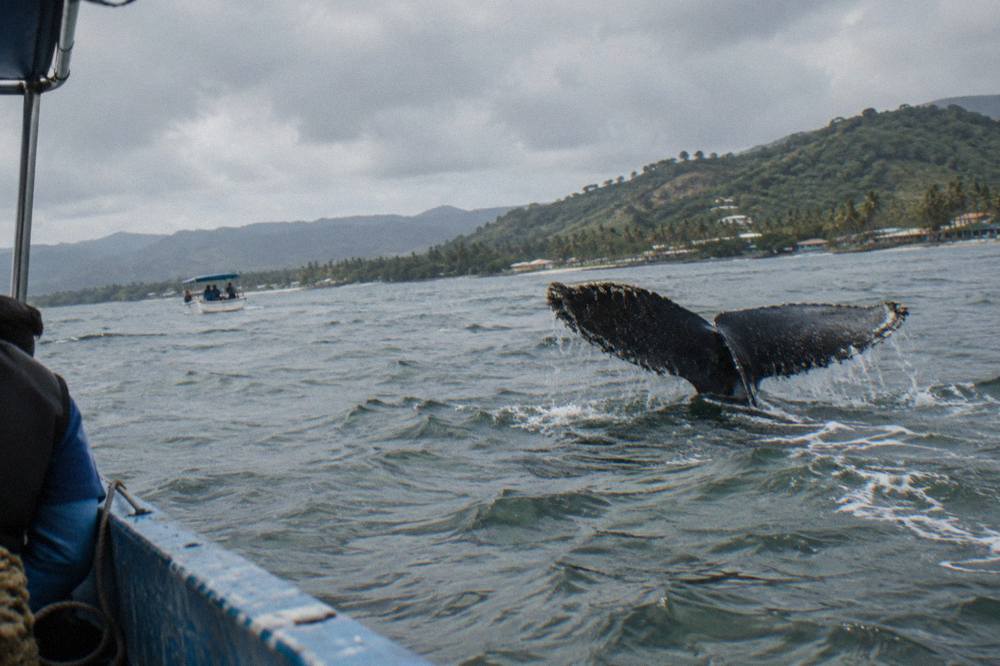
What you can plan around instead is behavior and scheduling. Humpbacks come to these waters to mate and to calve, which is a qualitatively different show from feeding: the bay hosts singing males, mothers with newborn calves, and competitive groups, and the mix shifts across the season. The rules of the bay, set by CEBSE and licensed by the ministry, are constant all season: boats keep 80 meters from mothers with calves and 50 meters from other groups, at most 3 boats watch a group at once, and no one swims with whales in Samaná Bay under any circumstances. Those rules shape what every week of the season looks like from the water, a topic covered in full in what to expect on a Samaná whale watching boat.
Researchers describe the highest concentrations of humpback whales in Samaná Bay as February through early March, the weeks when mating and calving activity is most intense. February to early March is when the season's demand and its boat schedules peak.
The peak-week framing comes from researchers and ministry-linked reports rather than from a published dataset, and it deserves to be phrased exactly as those sources do: concentrations are described as highest in February, with the strongest activity extending into early March. What drives it is the breeding cycle. The whales that winter here are not feeding; the bay is a nursery and a mating ground, and the behavior on display, males singing, mothers escorting calves, competitive groups forming, is the reason a February or early-March trip is a different experience from a mid-January one, when the season is young and the mothers with newborns are arriving.
Demand follows the same curve, and that part is practical. February into early March is when the two-a-day boat schedules appear, when the Punta Cana day trips fill their seats fastest, and when the popular combos are hardest to book late. The featured whale and Cayo Levantado full day, rated 4.7 from 224 reviews and the most reviewed dedicated whale product departing Samaná town itself, is a good example of the kind of listing that tightens in those weeks: it is the one many travelers book first because it pairs the bay with the island beach, from $84 per person over 7 hours with a buffet lunch at Bacardi Island included.
Three trip options, three ways to use the peak. The featured full day above combines whales with Cayo Levantado time. The 3-hour Bay of Samana cruise, from $69 per person with a 4.5 rating from 126 reviews, is the short format: it fits a peak-week morning when you want the rest of the day for the town or the beach, and it runs the same season window as everything else.
For travelers based in Punta Cana, the peak weeks carry an extra calculation: the drive is roughly 3.5 to 5.5 hours one way, so a peak-week day trip means a very long day, and the Punta Cana departure guide works through the trade-offs in detail. The Bacardi Island day trip from Punta Cana, from $165 per person over 10 hours, rated 4.4 from 47 reviews, is one of the few Punta Cana listings with enough reviews to carry a star rating honestly.
The season splits into three phases: mid-January to early February (season opening, one trip a day on the one operator whose schedule is published), early February to mid-March (peak, two trips a day on that operator), and mid to late March (tail, back to one trip a day). The ministry window and the peak-week description sit on top of that operator schedule. Other operators set their own schedules and differ.
The only operator whose full season schedule is published is Whale Samana, which runs from the main town dock on Avenida La Marina, across from its office on Calle Mella. Its calendar for the season read: one trip daily at 10:00 from 15 January to 5 February, two trips daily at 09:00 and 13:30 from 6 February to 13 March, and one trip daily at 10:00 again from 14 to 31 March. If the whales are just one part of your plan, our honest look at Samaná beyond the whale season weighs the beaches, waterfalls, and towns that make the rest of the trip worth it.
| Weeks | Details | Notes for planning |
|---|---|---|
| Mid-January to end of January | Ministry window open; 46 authorizations in force; Whale Samana runs one trip daily at 10:00 | Season opening, thinner schedules, younger season for mothers and calves |
| Early February (1 to 5 Feb) | Same single-trip schedule on Whale Samana through 5 February; early-Feb Banco de la Navidad survey recorded exceptional offshore numbers | Last days of the one-trip rhythm on that operator |
| 6 February to 13 March | Peak-concentration window per researchers; Whale Samana runs two trips daily, 09:00 and 13:30 | Highest demand; book earliest; both morning and afternoon departures exist |
| 14 to 31 March | Whale Samana back to one trip daily at 10:00; CEBSE's own material prints 30 March | Season tail; read late-March bookings with the soft end date in mind |
Read the table as a rhythm, not a guarantee. The two-trip stretch on the published schedule lines up with the weeks researchers describe as peak concentration, which is why February into early March carries both the most boats and the most travelers. The January opening weeks have their own case: fewer boats on the water per day, a season just beginning, and often easier bookings.
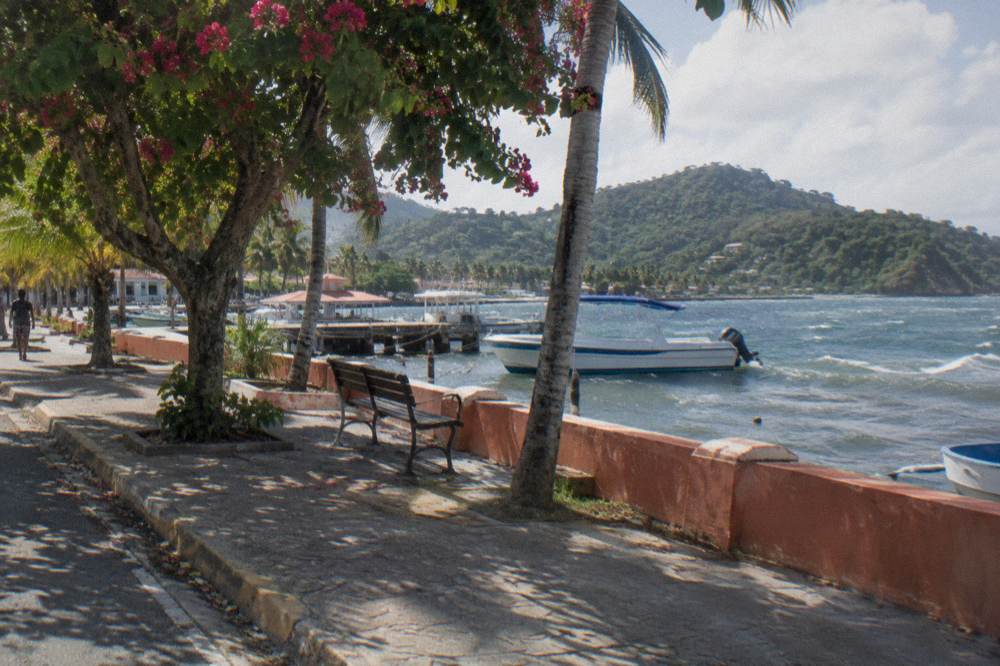
The weather side of the calendar is stable and knowable. January to March sits outside the Atlantic hurricane season, which runs 1 June to 30 November with its peak August to October. January to March days in Samaná typically bring air highs around 28 to 29 degrees, water around 26 to 27 degrees, moderate rainfall, and calmer mornings with choppier afternoons when the trade winds pick up, which is why morning departures, like that 09:00 peak-season trip, ride the calmer water. The whale season and the good-weather season in Samaná are the same season, and that is not a coincidence: the whales choose these months too.

Cayo Levantado, the island the listings call Bacardi Island, is a fixture of the season not a separate one: the island has no entrance fee and the boat is the cost, and most whale-plus-island trips bundle both into the same day. Peak weeks mean more visitors on the island, reported at roughly 400 to 600 a day, so the island experience is best earlier in the day or earlier in the season.
The island sits about 15 minutes by boat from Samaná town, its public beach carries no entrance fee, and a shared boat from town is reported at roughly US$15 to 25 per person round trip, check on the day. What the season adds is crowding: the reported 400 to 600 daily visitors concentrate in the middle of the day and in the peak weeks, which is one reason the featured whale and Cayo Levantado full day, which sequences the whale watch with island time and a buffet lunch, is a different product in February than in mid-January. Travelers weighing the island on its own terms have a full write-up in the combo guide and in is Cayo Levantado worth it.
The lineup's whale trips run from 3 hours to 13 hours, and the right length depends on your week and your base, not on the whales. Short bay cruises suit Samaná-based travelers in any week; full-day island combos suit peak-week visitors who want everything in one booking; 10-to-13-hour days are the reality for Punta Cana, Santo Domingo and Puerto Plata bases because of the drive.
Length is where the season calendar meets geography. If you are staying in Samaná town or Las Terrenas, a short trip fits any week: the 3-hour Bay of Samana cruise at from $69 per person, or the budget 6-to-7-hour tour with snacks at from $45, both depart from or near town. Las Terrenas itself also has its own departure, a 6-hour trip from $125 per person with lunch and a Las Terrenas meeting point, and the roughly one-hour drive between Las Terrenas and Samaná town makes either base workable in any week of the season.
| Trip length | Example tours | From (per person) | Who it fits |
|---|---|---|---|
| 3 hours | Bay of Samana Whale Watching Experience, 4.5 from 126 reviews | $69 | Samaná-based, any week, short-day format |
| 7 hours | Whale Watching and Cayo Levantado Full Day Tour, 4.7 from 224 reviews | $84 | Peak-week visitors wanting whales and island in one booking |
| 6 to 7 hours | Whale Watching Tour with Snacks, 4.9 from 20 reviews | $45 | Budget travelers based near the departure point |
| 10 hours | Whale Watching and Bacardi Island day trip from Punta Cana, 4.4 from 47 reviews | $165 | Punta Cana base, peak-week booking well ahead |
| 13 hours | Whale Watching and Limón Waterfall Day Trip, 4.5 from 146 reviews | $169 | One-day-everything itinerary, longest day listed here |
The long days deserve a plain warning rooted in the drive times. Punta Cana to Samaná is roughly 3.5 to 5.5 hours one way, which is why Punta Cana whale listings are 8 to 13 hours long: the whales are a small fraction of the day. Santo Domingo is about two hours, Puerto Plata about 3 hours 48 minutes. In peak weeks those long days also sell out first, so if your dates are locked to February or early March and your base is Punta Cana, book earlier than feels natural, and read the cancellation terms on the listing before you commit.
Catamaran, Beach Lunch, Bacardi
8 hours 30 minutes
★ 4.0 · 17 reviews · From $65
Check availability →The Bacardi Island day trip from Punta Cana is a fair template for the 10-hour format: buffet lunch with one drink, hotel pickup and drop-off listed, bottled water included. Travelers who want the waterfall added can compare it against the whales-and-El Limón combos, where the waterfall entry is reported at about RD$100 and the horse ride at RD$1,500 to 2,500, check on the day.
If the peak-week Punta Cana format sounds like more day than you want, the featured whale and Cayo Levantado full day is the town-based alternative: same whales, same island, from $84 per person, and no highway hours either side of it.
Whale watching from Punta Cana, Santo Domingo, Boca Chica and Puerto Plata runs the same mid-January through March window as Samaná itself, because every one of those trips drives to Samaná Bay to board. The window does not shift by departure city; only the day length and the price do, from $130 to $210 for Punta Cana departures and $130 to $210 for Santo Domingo, Boca Chica and Puerto Plata.
This is the point most worth internalizing when dates are the decision. There is no separate Punta Cana whale season and no separate Santo Domingo season, and there are no whales to watch off the Punta Cana hotel beaches in any month: the question can you see whales in Punta Cana answers itself once you know the geography. Every departure city in the country feeds the same bay in the same weeks. The 46 authorizations for 2026 covered 43 thematic operations in Samaná plus 3 dispatched from Puerto Plata, and those three belong to live-aboard dive vessels heading to Banco de la Plata, roughly US$3,500 to 5,500 for a week, which is a different product entirely from a day trip.
What changes by city is the shape of your day. From Punta Cana, dedicated whale days span from $115 (the 5.5-hour half-day, no meal) to $200 (the 10-to-12-hour open-bar catamaran day), with pickup listed across Punta Cana and Bávaro hotels on every one of them. From Santo Domingo, an 8-hour trip runs from $130 with lunch and a professional guide listed; from Boca Chica a private 8-hour option runs from $210; from Puerto Plata, listings run 11 to 13 hours and from $130 to $160. The earliest pickups in these formats fall in the pre-dawn hours, which is the honest cost of the distance.
| Departure city | Drive to Samaná (roughly) | Listed price span | Day length of listed tours |
|---|---|---|---|
| Samaná town | You are there | $45 to $125 | 3 hours to 8 hours 30 minutes |
| Las Terrenas | An hour | $70 to $125 | 6 to 8 hours 30 minutes |
| Punta Cana and Bávaro | 3.5 to 5.5 hours one way | $130 to $210 | 5.5 to 13 hours |
| Santo Domingo | About two hours | $130 to $210 | 8 to 12 hours |
| Puerto Plata | About 3 hours 48 minutes | $130 to $160 | 11 to 13 hours |
Cruise passengers have their own version of the timing question: the shore excursion from Puerto de Samaná runs from $100 per person over 6 hours, with round-trip boat transportation, a local guide and a safety briefing listed, and it exists precisely because a ship's day in port is itself a fixed date inside the season window. If your port call falls in late March, the same tail-of-season caution applies as for everyone else.
The 2027 season dates are not announced. The ministry's permit call for 2027 ran 16 October to 13 November 2026, open to boat owners and tour companies across Samaná Bay, Las Galeras, Miches, Sabana de la Mar and Las Canitas plus Banco de la Plata operators. Anyone selling you a firm 2027 date is guessing.
The mechanics of how a season gets announced are worth understanding, because they explain why nobody honest can sell you a 2027 date today. Each autumn the ministry opens the authorization process, documented on its permit call page; each January the ministry signs the management agreement and declares the season open. The standing window has been mid-January to the end of March, and 2026 followed it exactly, but the announcement, the authorization count and the exact opening day are set fresh each year. Listing pages that already sell 2027-dated departures are doing so ahead of any official window, which is legal commerce but not an official calendar.
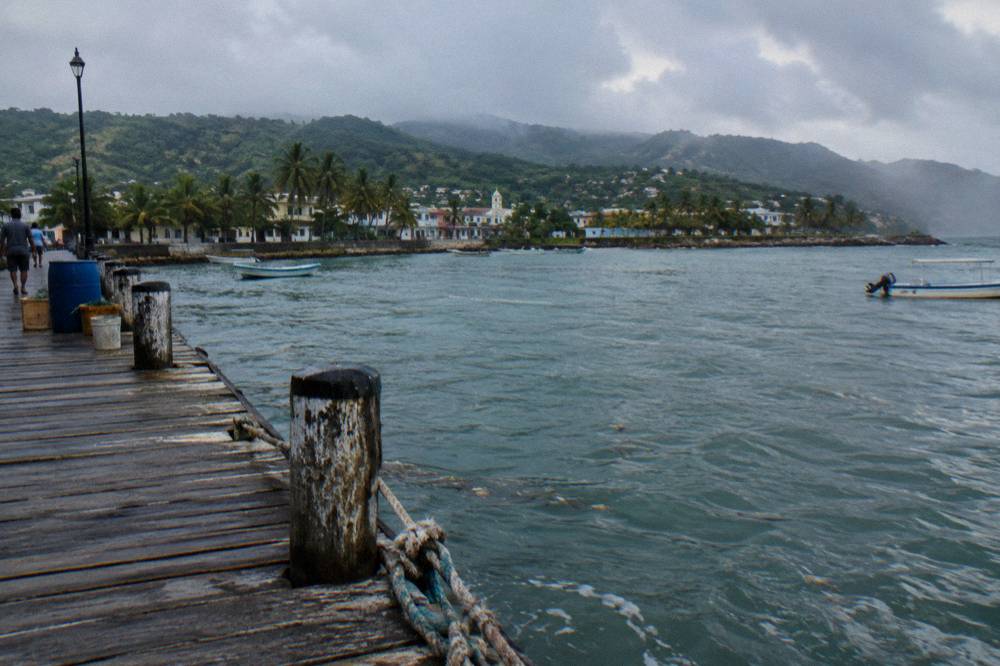
For practical planning, treat "mid-January through March" as the working assumption for 2027 and hold it loosely. If your travel dates are locked to a specific week in January, know that the earliest days of the window are the ones most likely to shift year to year, and read the cancellation terms on whichever listing you book rather than assuming flexibility. And if a site or a seller claims to know when the first whales of the coming season arrived, treat that with suspicion: no first-sighting announcement for the 2026-27 season exists in any official or press source. The honest companion read is what are the odds of seeing a whale on a tour, which handles the sighting question without inventing numbers.
No. Las Terrenas departures and Cayo Levantado stops run the identical mid-January through March window, because they are the same bay. The Las Terrenas trip adds roughly an hour of driving each way; Cayo Levantado simply adds an island stop to the same boat day. Timing decisions are made once, for the season, not per town.
A traveler sometimes asks whether basing in Las Terrenas buys a different or longer season, and the answer is no: the Las Terrenas 6-hour trip (from $125 per person, lunch and professional guide listed, a Las Terrenas meeting point) boards the same waters under the same license in the same weeks. What the base town changes is logistics, not the calendar, and the Las Terrenas whale watching guide covers that side. The same holds for the island: whether your listing calls it Cayo Levantado or Bacardi Island, the stop is inside the same season and the same rules.
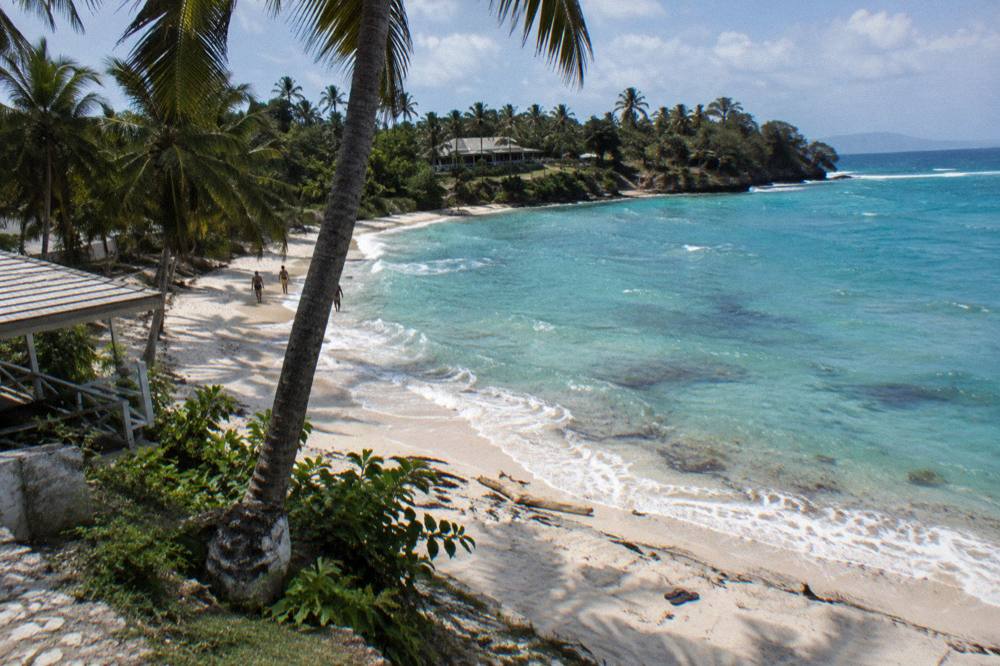
One last planning note for the peak weeks: the featured whale and Cayo Levantado full day departs from Avenida La Marina in Samaná town, does not include hotel pickup and drop-off (that exclusion is stated on the listing), and pairs the whale watch with buffet lunch at Bacardi Island, from $84 per person.
Whatever week you choose inside the window, the sequencing rule is simple: fix the week, then the boat, then the base, in that order. The week determines what the boats are doing; the boat determines your day's shape; the base determines how long the day feels. And the season itself will do what it has done every winter on record: open in mid-January, surge through February, and quiet down through March, on a schedule announced by a ministry and kept by whales.
Mid-January through March, dates set each year by the environment ministry. The 2026 season ran 15 January to 31 March under 46 environmental authorizations. CEBSE, the bay's rule-setting conservation body, prints 30 March on its own material, so late March is best treated as a soft tail rather than a hard final day.
Researchers and ministry-linked reports describe the highest concentrations as February through early March, when mating and calving activity is most intense. That is a general description, not a per-trip sighting promise, and no month-by-month sighting counts for Samaná Bay exist in any official source.
No. The ministry's permit call for the 2027 season ran 16 October to 13 November 2026, but the season dates themselves are announced each year at the opening, historically mid-January. No first sightings of the 2026-27 season are available, and no seller can honestly quote a firm 2027 date yet.
February into early March is what researchers describe as the concentration peak, and it is when one published operator schedule runs two trips a day. Mid to late March is quieter, with fewer daily departures on that schedule and a season winding down. Neither month comes with any sighting guarantee; only the odds framing in our dedicated article handles that honestly.
No. Every whale trip from Punta Cana, Santo Domingo, Boca Chica or Puerto Plata drives to Samaná Bay and boards inside the same mid-January through March window. The departure city changes the day's length (5.5 to 13 hours) and price ($110 to $210 across those cities), not the season.
From 3 hours on the short bay cruise (from $69 per person) to 13 hours on the longest waterfall combo (from $169 per person). Town-departure trips run 3 hours to 8 hours 30 minutes; Punta Cana and Puerto Plata departures run 5.5 to 13 hours because of the drive, roughly 3.5 to 5.5 hours one way from Punta Cana.
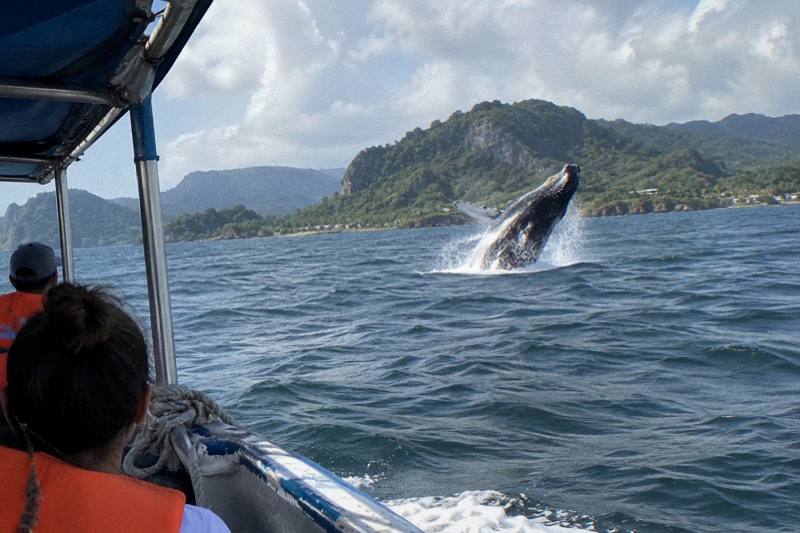
Before you go, the pick for this guide:
Whales And Cayo, Meal Included
★ 4.7 224 reviews · From $84
Check availability →