Is Samaná Worth Visiting?
An honest look at whether Samaná is worth the trip: the January to March whale season, Cayo Levantado, El Limón, the Las Terrenas and Las Galeras bases, and the drive times from every gateway.
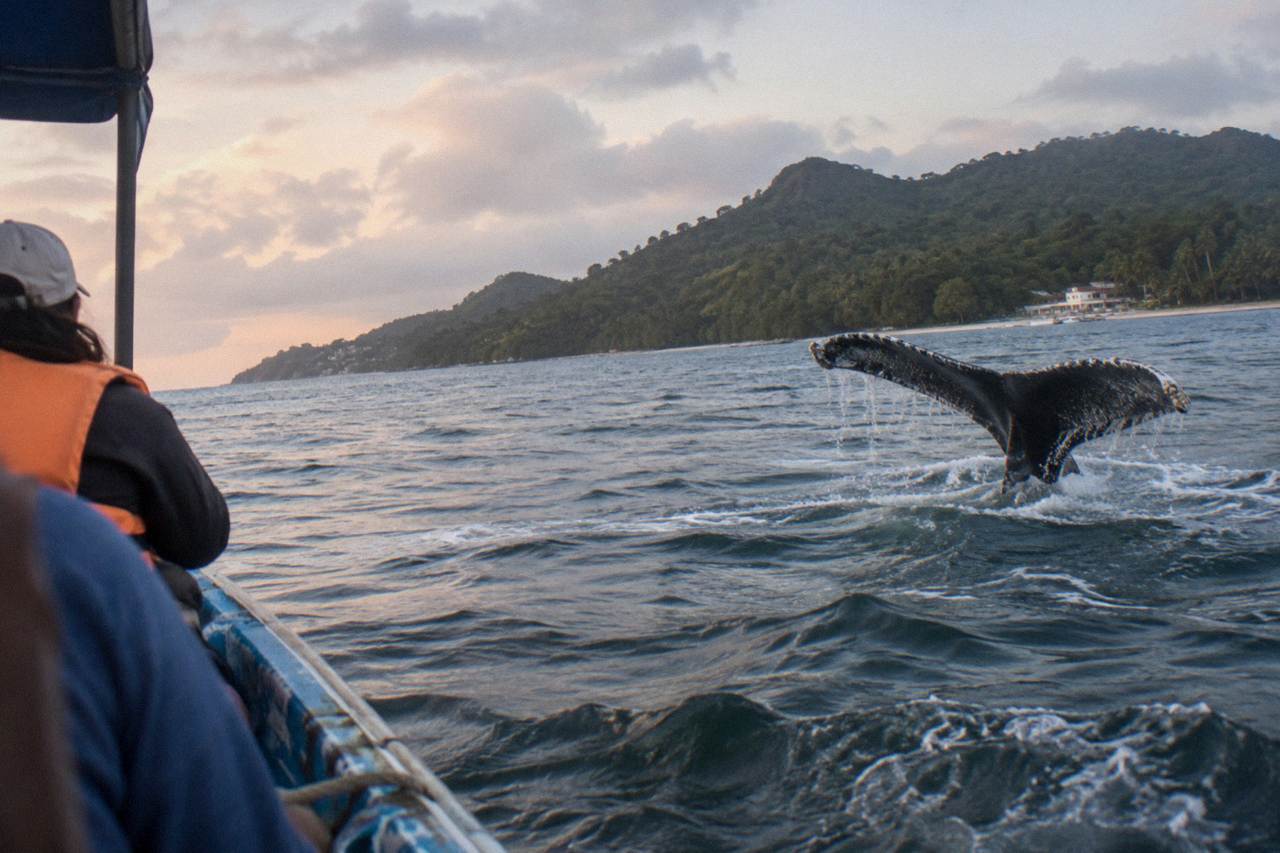
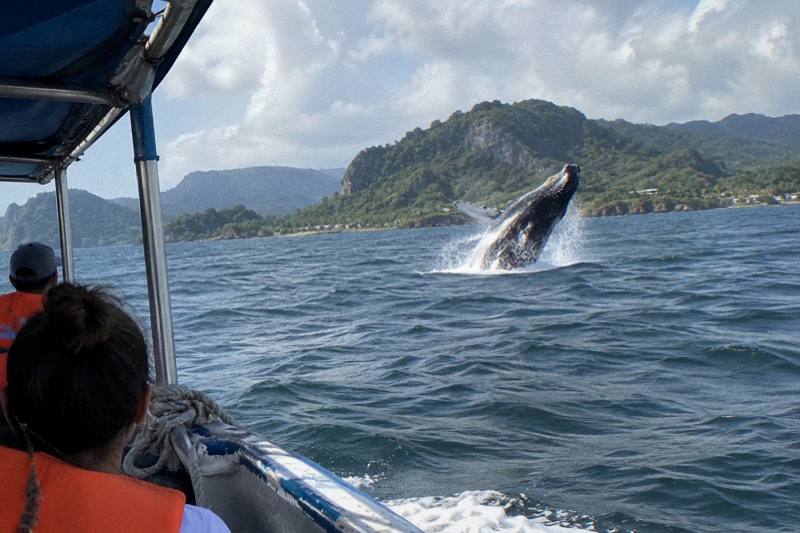
Yes, if you time the trip around whale season and accept that the peninsula is a working Dominican region rather than a resort strip. From mid-January through March, Samaná Bay is one of the places humpback whales gather to calve and mate, and licensed boats go out to watch them. Outside that window the beaches, El Limón waterfall and Los Haitises carry the trip, and they carry it well, just differently.
That is the honest short version, and it comes with a date attached in your planning rather than on the page: the whales are the headline, and the whales are seasonal. The rest of what makes the peninsula worth the long drive, the town malecón, the sandbar of Cayo Levantado, the horse trails up to El Limón, the quieter beaches around Las Galeras, is there year round. What changes across the year is how the place feels and how much effort it takes to reach.
The worth-it math also depends on where you start. Samaná sits on a peninsula on the Dominican Republic's northeast shoulder, roughly two hours by road from Santo Domingo via the DR-7 toll highway, and 3.5 to 5.5 hours one way from Punta Cana. Visitors coming from the big east-coast resorts are signing up for a full day of driving before anything else happens. Visitors already in Santo Domingo, or flying into El Catey airport near the peninsula itself, have a much shorter path to the water.
This site exists because the whale season alone justifies the trip for a lot of travelers, and the pages here, like the best time for whale watching in Samaná guide, dig into that decision in detail. But the peninsula is more than a boat departure point, so here is the fuller picture, season, logistics, costs and limits included.
What Makes The Whale Season The Reason To Go?
Humpback whales travel to Samaná Bay each northern winter, and the watching season runs from mid-January through the end of March under ministry rules. In 2026 the season opened 15 January with 46 environmental authorizations for licensed boats. Researchers describe peak concentrations from February to early March, when mating and calving activity is at its height. No operator can promise a sighting, but the bay is a genuine gathering place.
The background is worth knowing because it explains why this peninsula and not another. Humpbacks migrate from northern feeding grounds to the warm, shallow waters of the Caribbean to breed and give birth, and the Dominican Republic's Marine Mammal Sanctuary, which spans the Bancos de la Plata y la Navidad offshore, protects a stretch of their winter range. Samaná Bay is the accessible edge of that system, the part a day visitor can actually reach by boat. The why do humpback whales go to Samaná post covers the migration in more depth.
The watching itself is regulated, and that regulation is part of the value. Boats under the CEBSE rules keep 80 meters from mothers with calves and 50 meters from any other group, at most three boats watch a group at a time, and observation windows are capped at 30 minutes when other boats are waiting. Engines stay on in the observation area, swimming with whales is prohibited in the bay, and drones need ministry permission. The upshot for a visitor: the experience is managed around the animals, not around the camera shot, which is exactly why the season has kept running since the rules were first applied in 1996. The official environment ministry page on the 2026 season opening lays out the authorization system.
For 2027 nothing is announced yet. The ministry ran its permit call for the 2027 season from 16 October to 13 November 2026, and the dates will follow from that process. Anyone planning around a specific week should check the season pages on this site before locking flights, since the window is mid-January to end of March, not a year-round offer.
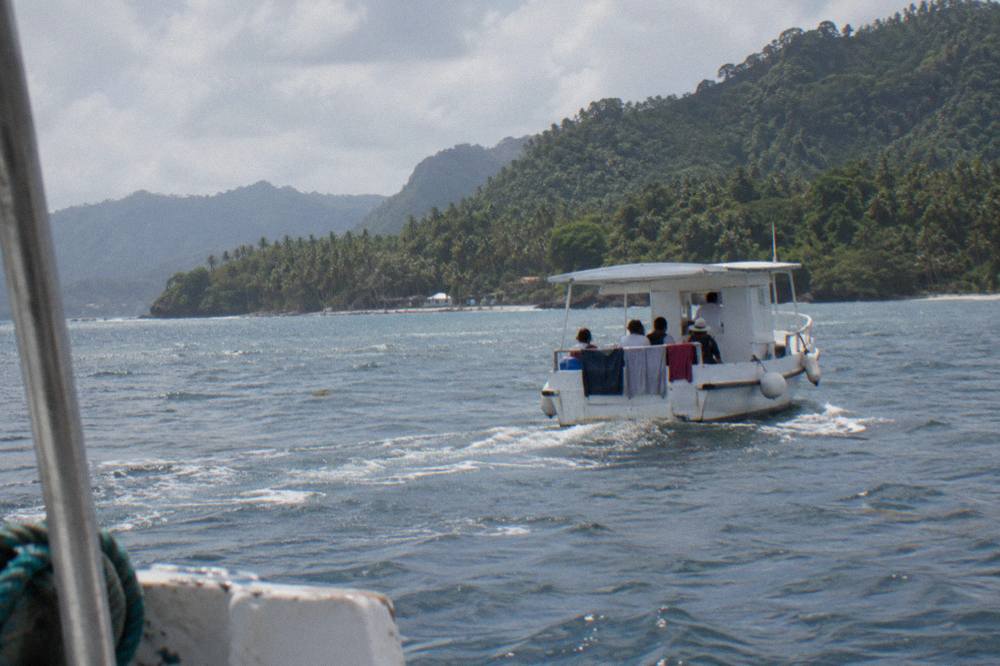
The boat day itself is the product most visitors book. The featured whale watching and Cayo Levantado full day, run by Moto Marina Tours from Avenida La Marina in Samaná town, is from $84 per person for 7 hours with buffet lunch at Bacardi Island, coconut snacks, drinks and a guide, and it carries a 4.7 rating from 224 reviews. That is the most-reviewed whale-and-island day listed here after the big combo trips from Punta Cana, and it is the single booking that most cleanly answers the worth-it question. It is also the anchor of the Whale Tours Samana comparison pages for good reason.
How Do You Get To Samaná?
By road, Samaná is about two hours from Santo Domingo, 3.5 to 5.5 hours one way from Punta Cana depending on the exact destination, and about 3 hours 48 minutes from Puerto Plata. The DR-7 toll highway carries the run from the capital, with a toll of roughly RD$500 each way for a Category 1 car. Two small airports, El Catey and Arroyo Barril, sit close to the peninsula itself.
The gateway question shapes the whole trip. From Santo Domingo the drive is short enough that a day trip is genuinely comfortable, and the whale watching from Santo Domingo guide covers those departures. From Punta Cana the arithmetic changes: seven to eleven hours of round-trip driving plus three or more hours on the water makes most operators build these as full-day coach tours with hotel pickup, and the how to get from Punta Cana to Samaná page works through the options. A private transfer from Punta Cana runs from about $240 per vehicle, so a small group can also split the cost and stay a night or two instead.
| Gateway | Roughly | Notes |
|---|---|---|
| Santo Domingo | About two hours by road | DR-7 toll highway, roughly RD$500 each way |
| Punta Cana / Bávaro | 3.5 to 5.5 hours one way | Most visitors take a full-day tour with hotel pickup |
| Puerto Plata | About 3 h 48 min | 12-hour tour days listed here from here |
| Las Terrenas | Roughly an hour to Samaná town | Paved road via Sánchez |
| Las Galeras | 28 km, 35 to 45 minutes from Samaná town | Coastal road, some curves |
Flying in changes the picture again. El Catey airport serves the peninsula with seasonal Canadian routes into late 2026, Montreal and Toronto among them, and US travelers usually connect through Santo Domingo, Punta Cana or Puerto Plata. Arroyo Barril is a small domestic strip about 10 miles from Samaná town. The Samaná airport and transfers to Las Terrenas guide handles the landing-side logistics in full.
Worth-it verdict on access: from Santo Domingo or a peninsula base, easy. From Punta Cana, the drive is real but the day absorbs it, every Punta Cana whale listing includes hotel pickup, and prices there run from $110 to $200 per person.
Where Should You Stay: Samaná Town, Las Terrenas Or Las Galeras?
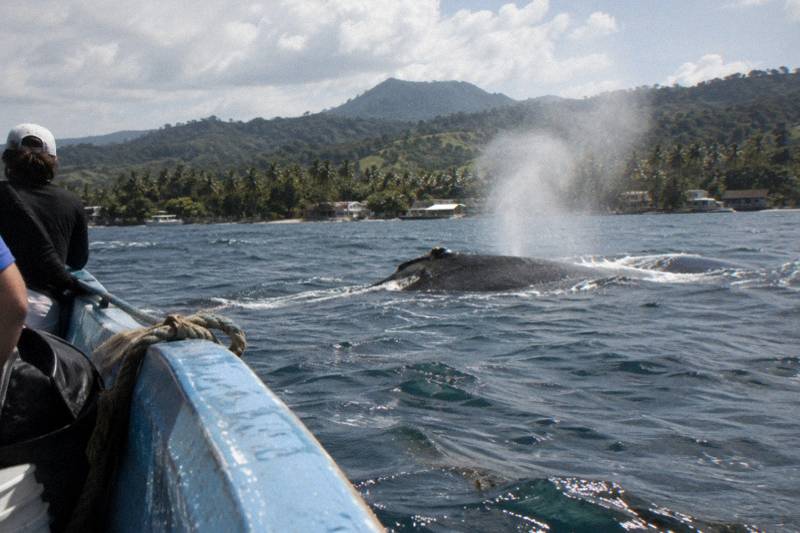
Samaná town is the practical base for whale boats, since departures leave the town dock on Avenida La Marina. Las Terrenas, roughly an hour away on the north coast, suits travelers who want beaches and restaurants first and the boat second. Las Galeras, 28 km east of town, is the quiet option with boat access to Playa Rincón and Playa Frontón. All three work in season.
If the boat day is the point of the trip, sleeping within walking distance of the malecón removes every morning variable. The where to stay in Samaná for whale watching guide names specific properties and areas.
Las Terrenas is the peninsula's most established resort town, beachfront along Playa Cosón and the town beaches, with a paved road to Samaná that takes roughly an hour. It is the base for travelers combining a beach holiday with one whale day, and there is a dedicated tour for that: the whale watching tour from Las Terrenas is from $125 per person for 6 hours with lunch and a Las Terrenas meeting point, and the whale watching in Las Terrenas page compares the local options.
Las Galeras is the third answer, a fishing village at the end of the road, 35 to 45 minutes from town, with the peninsula's quietest hotel scene and boats to beaches you otherwise cannot reach. Illegal swimming-with-whales offers have been reported from Las Galeras, and swimming with whales is prohibited in Samaná Bay, allowed only offshore at Banco de la Plata under strict permits. Treat any such offer as a reason to walk away, not a bargain.
What Else Is There Beyond The Whales?
Cayo Levantado, the island the listings call Bacardi Island, is a 15-minute boat ride from Samaná port with a public beach and no entrance fee, only the boat cost. El Limón waterfall sits in the hills reached by horseback trails. Los Haitises National Park, across the bay, holds Taíno cave art reachable only by boat. All three anchor the non-whale peninsula. If the boat-only access gives you pause, our honest take on whether Los Haitises justifies the trip weighs the crossing, the cave art, and the cost against easier days on the water.
Cayo Levantado deserves its reputation with an asterisk. The sandbar is genuinely pretty, the public beach has no entrance fee, and a shared boat from Samaná town runs roughly US$15 to 25 per person round trip, with cash and negotiation in play. The asterisk is crowd: reported figures put daily visitors at 400 to 600, and midday in peak season the island earns its busy reputation. The is Cayo Levantado worth it post weighs this honestly; the short version is that most whale tours bundle the island stop, which is the efficient way to do both.
El Limón is the interior counterpart. The waterfall is reached on horseback with local guides from paradas along the way, and reported pricing for the ride runs RD$1,500 to 2,500 including guide and often entry, with the entry itself about RD$100 in cash; check amounts on the day. Several whale combos fold it in, including the whale watching and Limón waterfall day trip, from $169 per person for 13 hours with a 4.5 rating from 146 reviews, and the Punta Cana whales, Bacardi and Limón Falls combo at from $110 per person with 233 reviews, the most-reviewed product listed here. The whale watching and El Limón waterfall combo guide compares them. Travelers staying on the east coast often ask whether whales can actually be spotted from Punta Cana itself, and the short answer surprises plenty of first-time visitors.
Los Haitises, across the bay from Samaná, is the underrated third pillar: mangroves, mogote hills and caves such as Cueva de la Arena and Cueva de la Línea with Taíno petroglyphs and pictographs, reachable by boat, reported free to enter though tours bundle the costs. Boats from Samaná town cross in 30 to 45 minutes, and Sabana de la Mar is the shortest crossing if you are coming from Punta Cana or Santo Domingo. The Los Haitises and whale watching combo page covers those days, and the CEBSE panel on the bay gives the conservation background.
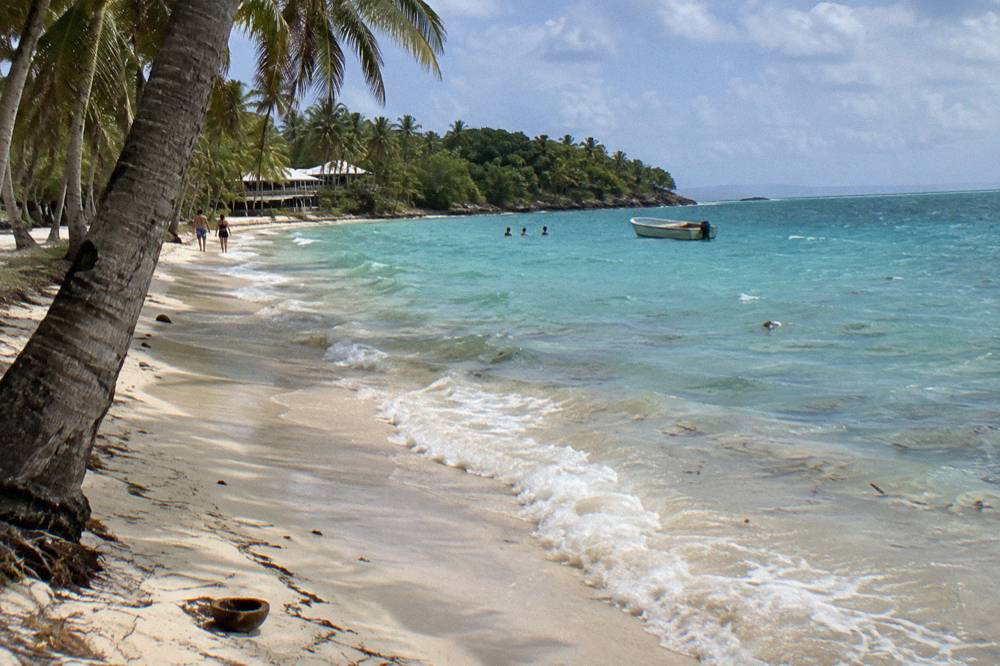
Beyond the big three, the peninsula offers the Samaná town waterfront for free, the beaches at Playa Rincón and Playa Frontón from Las Galeras, and the north-coast strand around Las Terrenas. In January to March the air runs roughly 28 to 29 degrees by day and the sea about 26 to 27, with mornings typically calmer on the water and afternoon trade winds; rain shows up on 8 to 10 days a month even in the dry stretch, so a shower plan is sensible, not pessimistic.
The budget angle matters to some travelers: every boat listed here is paid, the cheapest whale outing is from $45 per person, and genuinely free stops are the waterfront, the Cayo Levantado beach once you pay the boat, and Los Haitises' reported free entry, boat aside. The free things to do in Samaná on a budget guide is honest about those limits. If your wallet has the final say, the guide to what's genuinely free in Samaná sorts the true freebies from the ones with a boat fee attached.
What Does A Trip Cost?
Local whale-watching departures from Samaná and Las Terrenas run from $45 to $125 per person, combos that add Cayo Levantado or El Limón run $110 to $199, and full days from Punta Cana or the distant gateways run $115 to $210. Island boat transfers, waterfall rides and tolls sit on top only if you travel independently.
| Trip type | Price band | What the band covers |
|---|---|---|
| Whale-only from Samaná / Las Terrenas | $45 to $125 per person | 3-hour bay cruise up to 6-hour days, some with lunch |
| Whale + island / waterfall combos | $110 to $199 per person | Most include lunch, transport and fees |
| From Punta Cana | $110 to $200 per person | Hotel pickup standard, 8 to 13 hour days |
| From Santo Domingo, Boca Chica, Puerto Plata | $130 to $210 per person | 8 to 12 hour days, hotel pickup listed |
Two specifics from the tours listed here show the band's width. The Samaná whale watching tour with snacks, run by Tour Whales Samana, is from $45 per person for 6 to 7 hours with coconut snacks, drinks and a guide, and carries a 4.9 rating from 20 reviews; a small pool, but a striking one. At the other end, the private whale watching option from Miches is from $95 per person with a captain and guide aboard, for groups who want the boat to themselves.
Short on time or prone to seasickness? The 3-hour Bay of Samana whale watching experience, also from Moto Marina Tours, is from $69 per person with a 4.5 rating from 126 reviews, and the seasickness on Samaná whale watching boats guide explains why a shorter morning window is the safer bet for uneasy stomachs.
No sanctuary or whale-watching fee turned up in official sources for authorized tours, so if a listing or a street seller quotes one separately, check what it actually covers before paying. : read the terms on the operator's live listing before you book.
When Is The Best Time To Visit?
For whales, mid-January through the end of March, with researchers describing peak concentrations from February to early March. For beaches and everything else, the peninsula works year round, though hurricane season runs 1 June to 30 November with its peak from August to October, and the busiest, priciest weeks cluster inside the whale window.
The whale season is the demand engine, and it is short. The 2026 season opened 15 January and ran to the end of March under the ministry's authorization system, 46 permits for licensed boats, with three dispatched from Puerto Plata for offshore live-aboard operations at Banco de la Plata. Travelers who want both whales and elbow room often pick the early or late edges of the window rather than the February peak, accepting that whale presence is never guaranteed in any week, which is exactly why no honest page will promise you a sighting.
Outside the season the peninsula does not empty. Las Terrenas runs as a beach destination through the year, the waterfall trails and Los Haitises boats operate, and Cayo Levantado receives visitors in every month. What disappears is the whale fleet. Anyone whose worth-it calculus depends on seeing humpbacks should build the trip inside the window and treat everything else as the bonus, not the reverse. The Samaná weather by month guide handles the rest of the year in detail. Once you have your dates fixed, the Samana airport and transfer guide covers which gateway to fly into and how the drive to Las Terrenas lines up with the whale boat departures.
One planning note: mornings are typically the calmest time on the bay, and trade winds can chop the water in the afternoon, so early departures are the comfortable default for anyone watching from a small boat. The 2027 season dates have not been announced, so hold loose plans until the ministry publishes them.
Common Questions About Visiting Samaná
How many days do you need in Samaná?
Two to three days covers a whale day, Cayo Levantado or El Limón, and time on a beach. One day works only as a tour from a gateway city, and Punta Cana day tours run 8 to 13 hours round trip because of the drive.
Can you see whales outside January to March?
Not through the licensed watching fleet: the season runs mid-January to the end of March under ministry rules. Humpbacks migrate to the region for the northern winter, and no off-season whale tours appear on any tour here.
Is Samaná safe for tourists?
No flat verdict belongs on a planning page. For general advisories, check the official government travel advisory page before booking, and see the safety post.
Is it better to stay in Samaná town or Las Terrenas?
Samaná town if the whale boat is the priority, since departures leave the malecón dock. Las Terrenas if beaches and restaurants lead the trip, roughly an hour's drive away. Las Galeras is the quiet third option for beach-bound travelers.