Seasickness On Samana Whale Watching Boats
Seasickness is the single most common worry readers raise about a Samaná whale trip. Here is what the listings, the rules and the bay itself actually say about trip length, timing and rough water, with no promises about conditions nobody can make.
Short answer
The standard Samaná whale trip runs 3 to 4 hours on the water. The shortest bookable options are a 3-hour bay cruise from $69 per person (4.5 from 126 reviews) and a half-day humpback trip from $95 per person (3 to 6 hours, 3.5 from 15 reviews). Mornings are often calmer than afternoons in the bay, but no sea-state statistics exist, so nobody can promise either.
Seasickness ends more Samaná whale plans than price does, and it is the objection that needs a straight answer. The good news is structural: the bay's whale trips are short by Caribbean day-trip standards, the standard outing runs 3 to 4 hours on the water, and the shortest bookable option, the 3-hour bay cruise operated by Moto Marina Tours from Avenida La Marina in Samaná town, is also one of the most reviewed whale products listed here at 4.5 from 126 reviews. The half-day humpback trip and the snacks-included budget fare from $45 per person keep the water time similarly tight, while the featured whale and Cayo Levantado full day stretches the same bay crossing into a 7-hour island day.
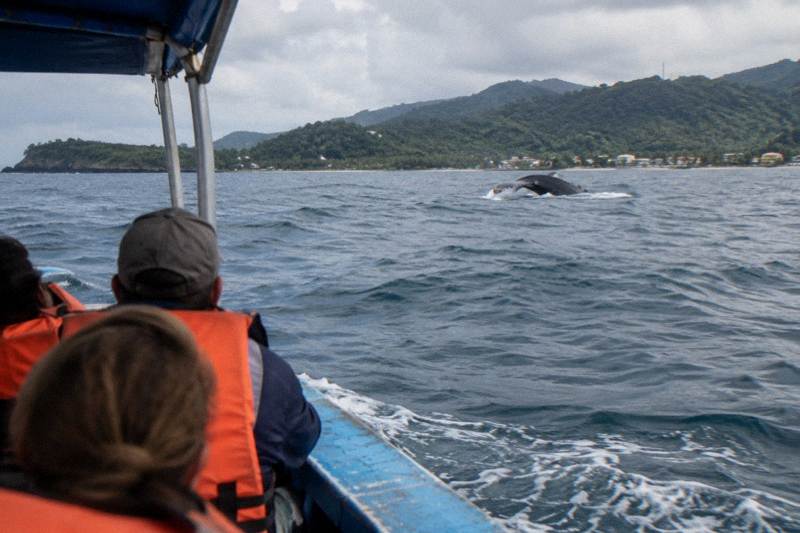
What nobody can do is promise you flat water. What the practical sources do say, plainly, is that mornings are often calmer and afternoons choppier once the trade winds pick up. That single pattern, plus trip length and a few habits that cost nothing, is most of what a nervous sailor can actually control. Boat size plays into this too, and the guide to small group versus large boat whale watching in Samaná explains which setup tends to suit nervous passengers.
Why Do Samaná Whale Boats Make Some People Seasick?
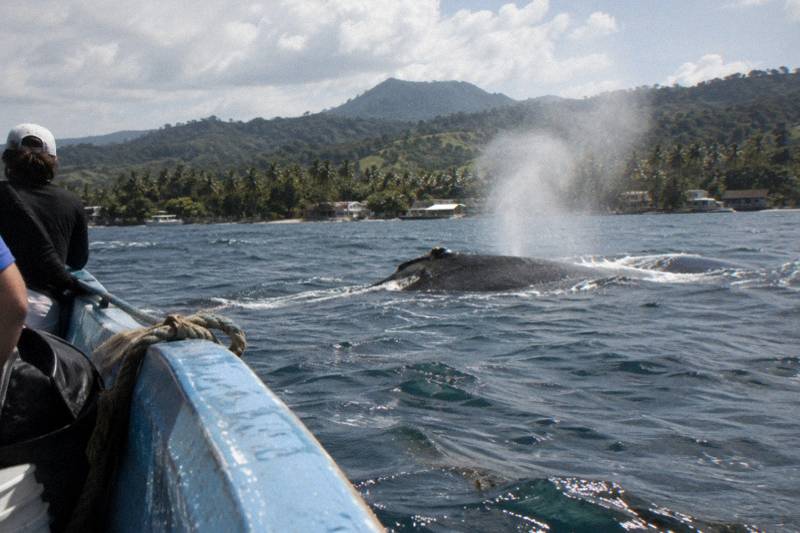
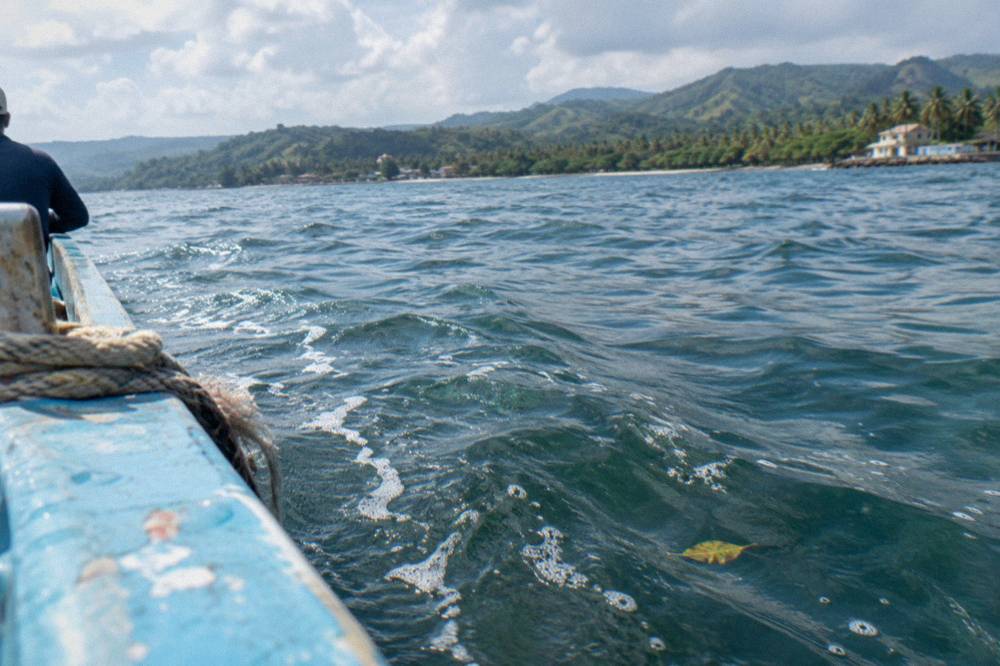
Motion sickness on a Samaná whale boat comes from the mismatch between what your eyes and your inner ear feel, and three things on the bay feed it: swell outside the harbor, the chop the trade winds build in the afternoon, and the rule that keeps boat engines running in the observation area. None is extreme by open-ocean standards, and no source describes the bay as rough, but no statistics exist to promise calm either.
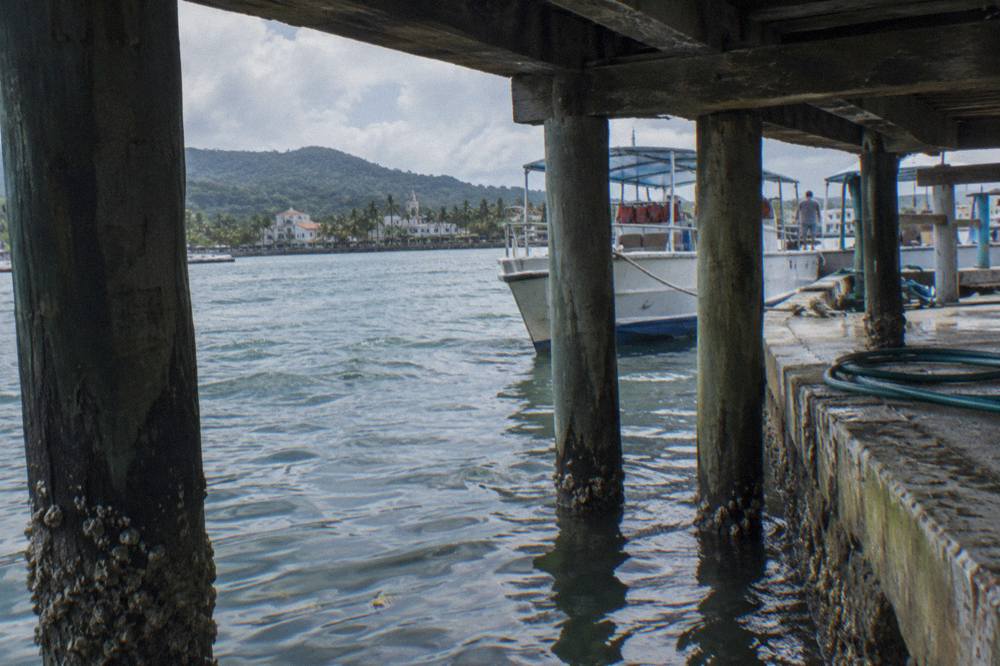
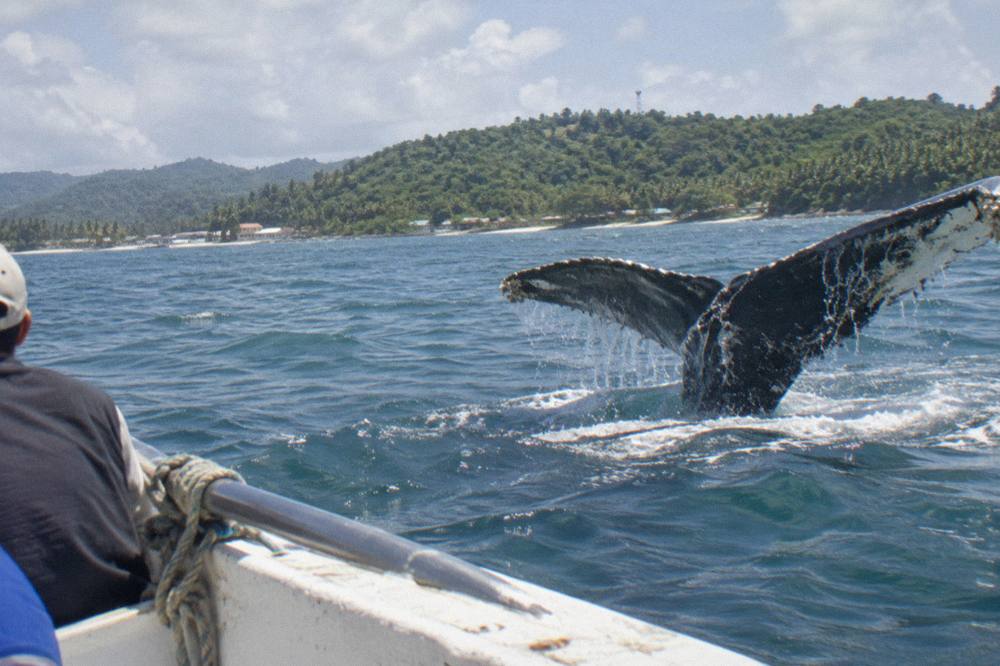
The bay is a big, semi-enclosed body of water rather than a sheltered cove. Boats leaving the Samaná town dock on Avenida La Marina cross open water to reach the whale observation zones, and that crossing exposes everyone aboard to whatever swell is running that day. Once the boat slows near whales, the rules that protect the animals also change how the boat behaves: CEBSE's regulations, in force since 1996 and licensed by the Ministry of Environment, require engines to stay on in the observation area, so the boat idles and rolls rather than sitting still. For a sensitive stomach, a rolling idle can be harder work than steady motion.
The rules also cap how long any single boat can linger. A group of whales may be observed for at most 30 minutes when other boats are waiting, and that time is halved when whales are scarce, so a trip is a sequence of approaches, pauses and moves rather than one long cruise. Some people find the variety easier than monotony; others do not.
One more honest limit: sea state varies day to day and week to week with weather, and hurricane season, which runs 1 June to 30 November with its peak from August to October, sits entirely outside the whale season anyway. The whale window runs mid-January through March, within the drier stretch of the year. A useful companion read is the site's month-by-month breakdown in Samana weather by month, which covers what climate summaries say about wind and rain without promising any particular day.
Which Samaná Whale Watching Trip Is The Shortest?
The shortest bookable whale trips from Samaná town are the 3-hour bay cruise, from $69 per person and rated 4.5 from 126 reviews, and the half-day humpback trip, from $95 per person, running 3 to 6 hours with a 3.5 rating from 15 reviews. The snacks-included budget tour from $45 per person runs 6 to 7 hours, and every long combo listed here runs 7 to 13 hours door to door. If you're weighing one of those longer days and wondering what the park portion adds, the guide to pairing Los Haitises with Samaná whale watching covers the boat ride over and which combos fit both stops.
Short water time is the seasick traveler's best structural protection, so it pays to read durations carefully, because a "3-hour cruise" and a "7-hour day" can both be described as whale watching. The table below pulls the lineup apart by time on the itinerary. Where a listing does not state a start time, the table says so rather than guessing one.
| Trip (departure base) | Duration | Price | Rating and reviews |
|---|---|---|---|
| Bay of Samana Whale Watching Experience, Samaná town | 3 hours | from $69 per person | 4.5 from 126 reviews |
| Half-Day Humpback Whale Watching, Samaná town | 3 to 6 hours | from $95 per person | 3.5 from 15 reviews |
| Whale Watching Cruise with Breakfast, Samaná area | 3.5 to 6 hours | from $95 per person | no reviews yet |
| Whale Watching Tour with Snacks, Samaná area | 6 to 7 hours | from $45 per person | 4.9 from 20 reviews |
| Whale Watching Tour in Samana, departure not stated | 6 hours | from $70 per person | 3 reviews |
| Whale Watching and Cayo Levantado Full Day, Samaná town | 7 hours | from $84 per person | 4.7 from 224 reviews |
Two things jump out of that table. First, the shortest trips all depart from Samaná town itself, not from a resort hub hours away, which is why what to expect on a Samaná whale watching boat matters as much as the itinerary: the boat day starts at the dock, not at your hotel lobby. Second, the price spread is wide but does not track length. The $45 snacks tour is among the cheapest and among the longer bay trips; the $69 cruise is the shortest and mid-priced.
Are Mornings Calmer Than Afternoons In Samaná Bay?
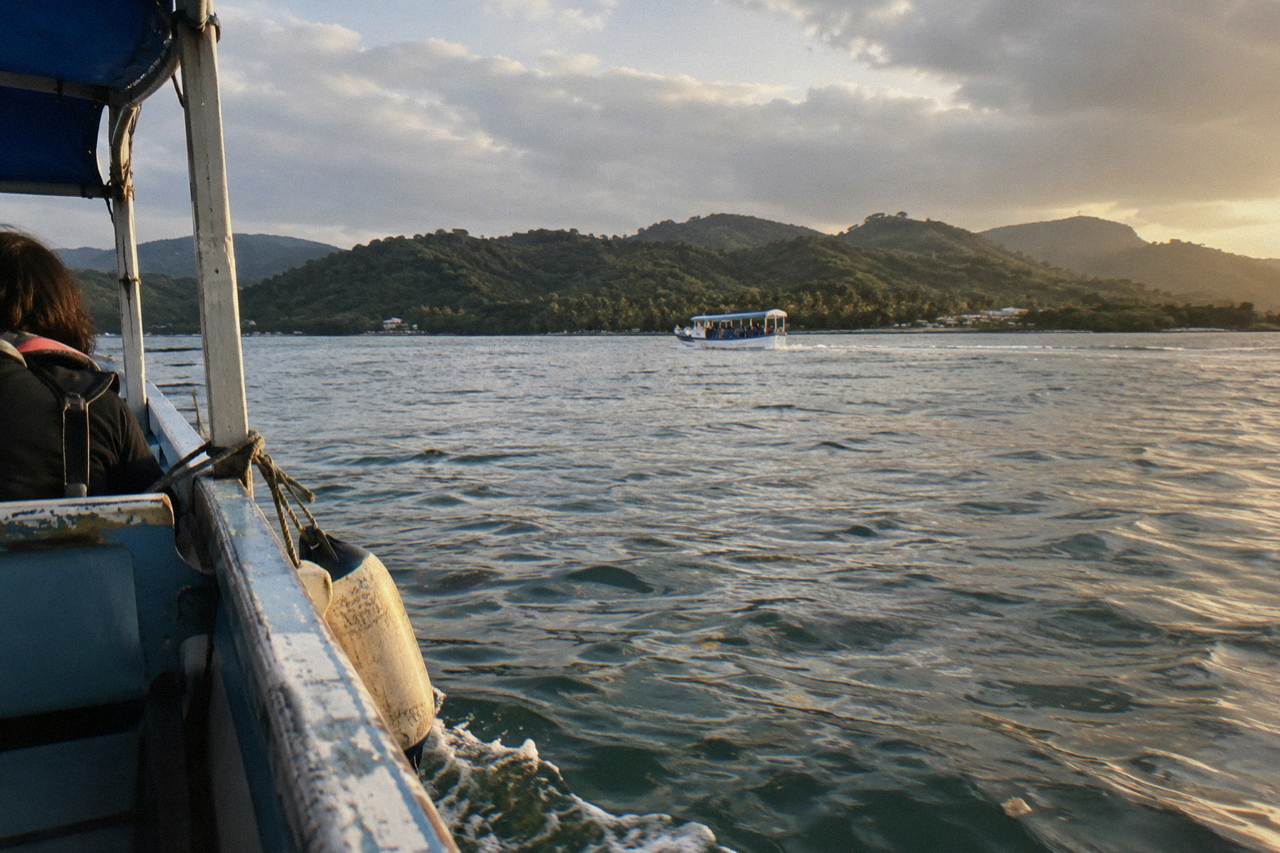
Practical sources covering the bay consistently describe mornings as often the calmest part of the day and afternoons as choppier once trade winds build, but no sea-state statistics are available, so this is a reported pattern, not a guarantee. One operator's published schedule concentrates departures at 10:00 in early and late season and adds a 13:30 sailing only in the peak weeks.
The pattern has a physical logic: the trade winds strengthen through the day, and fresh guides summarizing Samaná's January-to-March climate note that seas are often calmest in the mornings while afternoons can be choppier. Air temperatures in the whale window run roughly 28 to 29 degrees Celsius highs with 19 to 20 degree nights, and rainfall in those months is lower than the rest of the year, though afternoon showers still happen. None of that tells you what March 14 will look like; it tells you which end of the day to bias toward.
The operator evidence points the same way, cautiously. Whale Samana, one of the bay's long-standing operators, publishes a schedule with a single 10:00 departure from mid-January to early February, two daily sailings at 09:00 and 13:30 only in the peak weeks of early February to mid-March, then back to one 10:00 trip through the end of March. But the shape of it, morning-first, afternoon only when demand doubles, is consistent with the reported calm-morning pattern.
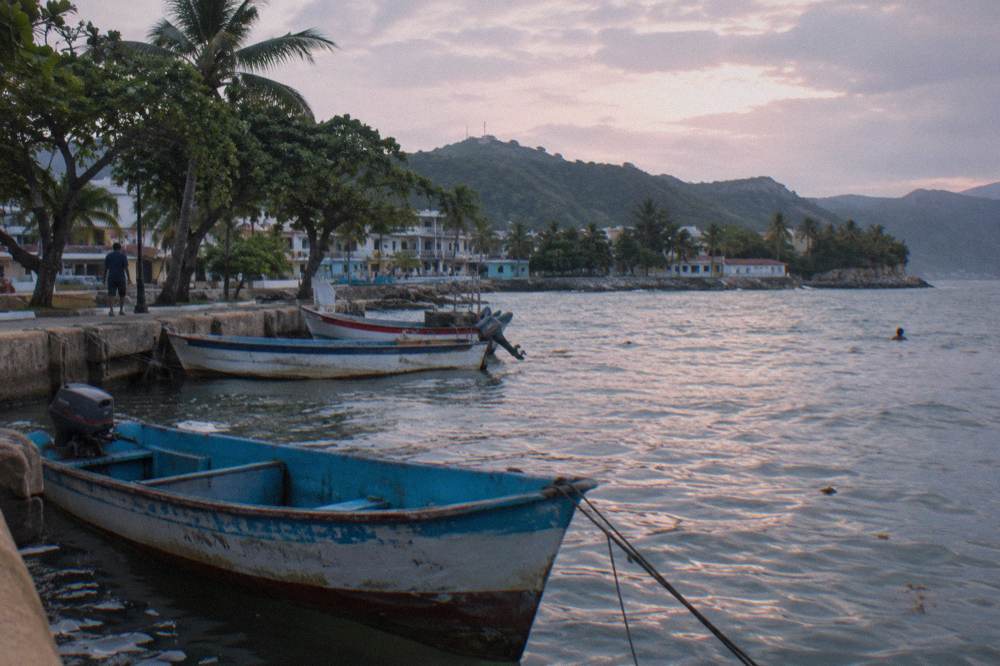
For the lineup trips, the listings mostly do not state a start time, and the table says so where that is the case. Where a listing does state one, the departure time belongs to that listing only. What you can do regardless of listing is ask for the earliest departure when you book, and check the marine forecast for the bay that morning; both are free questions. The cruise-port shore excursion from Puerto de Samaná, from $100 per person, is a case in point: cruise passengers cannot choose their timing, and that inflexibility is worth knowing before you compare it against a town-departure trip.
The 3-hour bay cruise departs Av. La Marina 3 in Samaná town, and its 3-hour format fits the morning-calmer pattern neatly: even the trip's full duration sits inside the calmer half of the day when you take the earliest slot.
What Should You Ask Before Booking A Samaná Whale Tour?
Ask four questions before you pay: how many hours are actually on the water, what time the boat leaves, where it boards, and what the listing includes by way of food and drinks. , and the same operator can run a 3-hour and a 12-hour product that sound identical in a search result.
The first question matters most for the seasick-prone. A whale day from Puerto Plata runs 11 to 13 hours door to door, while the water time in Samaná Bay is a fraction of it. The coach transfer is not the sea, but it is a long, winding prelude that does sensitive stomachs no favors before the boat even leaves the dock. The site's how to get from Punta Cana to Samana guide covers the 3.5 to 5.5 hour one-way drive in detail.
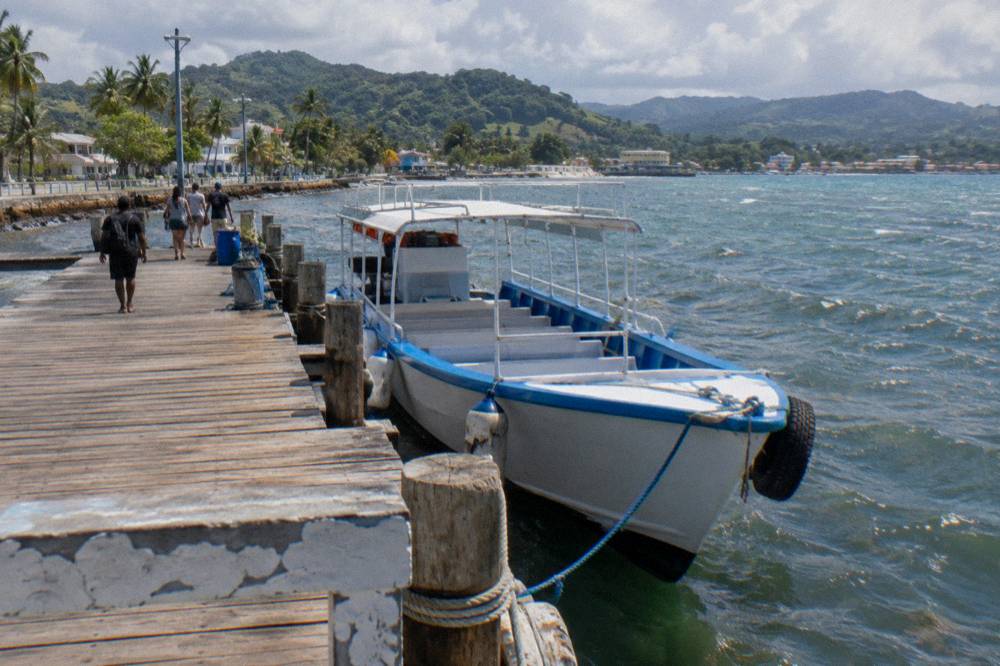
The second and third questions set your margins. Departure points on these tours include the town dock area on Avenida La Marina, the Whale Samana office on Calle Mella, Santorino restaurant, Zabora Bistro, Restaurant Royal Samaná, and hotel pickup in Punta Cana and Bávaro, Santo Domingo, Boca Chica and Puerto Plata. A listing that states no departure point, like the $45 snacks tour, means you confirm the meeting point before booking, not that one does not exist. The fourth question is about what is on the boat; the table below summarizes what the listings actually state, with no inclusions moved between products.
| Question to ask | Where the answer lives | Example from the tours listed here |
|---|---|---|
| Hours on the water | The duration line of each listing | 3 hours (bay cruise) vs 10 to 12.5 hours (Punta Cana combo) |
| Departure time | The listing, where stated; many do not state one | Whale Samana's own calendar lists 10:00 or 09:00 and 13:30 sailings |
| Boarding point | The departure line, per listing only | Santorino restaurant, Samaná; a Las Terrenas meeting point, Las Terrenas |
| Food and drink aboard | The inclusions line of that exact listing | Coconut snacks, water and soft drinks on the 3-hour cruise |
Group sizes are stated per listing where given; reported boat capacities of 40 to 60 on premium boats and 40 to 80, occasionally up to 100, on others are reported figures, not tied to any listing.
A final pre-booking question is season timing, because the whale window is fixed: mid-January through March, with 46 environmental authorizations issued for 2026 under the ministry's opening. Book a Samaná whale trip in November and there is no season to sail in, hurricane calendar aside. The site's best time for whale watching in Samana guide covers the window, and the ministry's own season pages, such as the 2026 season opening release, are the primary record.
What Helps Against Seasickness On A Samaná Boat Day?
**The non-medical basics that physicians and boat crews repeat are consistent: stay on deck where you can see the horizon, keep your eyes on the fixed distance rather than the boat, eat a light meal beforehand rather than nothing or a heavy one, and if you want a remedy, ask a pharmacist or doctor before the trip. **
The horizon point matters on a whale boat more than on a ferry, because the instinct when a whale surfaces is to stare down at the water right beside the hull. Looking at the near water maximizes exactly the eye-and-ear mismatch that causes the problem. A middle spot on the boat, near the centerline and low, generally moves less than the bow or stern, though the crew assigns positions and the observation rules decide where the boat sits relative to the whales at 50 m for most groups and 80 m for mothers with calves, per the CEBSE rules published on the CEBSE bay panel page.
Food and drink are a planning matter the listings help with. The 3-hour cruise includes coconut snacks, water and soft drinks on the listing; the snacks tour from $45 per person includes the same category of refreshments over its 6 to 7 hours; the breakfast cruise includes a light breakfast, with lunch listed as an exclusion. Eating lightly before boarding, sipping water rather than nothing, and keeping alcohol for the beach afterward are habits, not medical advice, and they cost nothing.
| Habit | Why it is repeated | Costs anything? |
|---|---|---|
| Watch the horizon, not the near water | Reduces the sensory mismatch that causes motion sickness | No |
| Light meal before boarding | An empty or heavy stomach is repeatedly described as worse | No |
| Center of the boat, low, on deck | Less motion than bow or stern, fresh air on deck | No |
| Ask about a remedy in advance | A pharmacist or doctor can match one to you | Ask the pharmacy |
| Book the shortest trip and earliest departure | Less exposure, and mornings are often calmer in the bay | Price varies by listing |
Timing your remedy, if you use one, is a question for the professional who supplies it, and the honest limit here is firm: no medical guidance is offered here, and inventing any would be irresponsible. What is fair to add is that the shortest trips reduce the problem by arithmetic. Three hours is a different proposition from thirteen, which is the full length of the whale watching and Limón waterfall day trip, rated 4.5 from 146 reviews, a superb product for a hardy traveler and a long one for a nervous stomach, since it pairs the bay with El Limón in a single 13-hour day from Punta Cana.
That waterfall day is a good example of reading a listing for what it is: the inclusions line lists an air-conditioned vehicle, lunch, bottled water and all fees and taxes, which helps a long day, but nothing about the listing shortens it. If the combo tempts you and the sea worries you, the site's whale watching and El Limón waterfall combo guide works through the trade-offs in full.
Can You Do Whale Watching From Las Terrenas Or Punta Cana Without A Long Boat Day?
Yes, with a catch: the boat time is short only if the boat is short. From Las Terrenas, a 6-hour whale trip runs from $125 per person; from Punta Cana, the shortest whale option is a 5.5-hour half day from $115 per person, but the door-to-door day still swallows a 3.5 to 5.5 hour transfer each way. The water time is similar; the total day is not.
The Las Terrenas departure illustrates the point cleanly. Las Terrenas sits roughly an hour's drive from Samaná town, and the listing from that base, from $125 per person with a Las Terrenas meeting point and lunch included, runs 6 hours total. That is a moderate day by any measure, and the whale watching in Las Terrenas guide compares it against driving to the town dock yourself. For the motion-sensitive, the practical difference is that a coach transfer on Dominican roads is its own motion experience before any swell.
Punta Cana is the sharper trade. The half-day tour from Punta Cana, from $115 per person with snacks and drinks listed, spends about 5.5 hours on its itinerary, but the listing's own framing as a half day refers to the tour content; , which is why whale watching from Punta Cana treats the drive as the first decision, not a footnote. The same logic applies in reverse to Santo Domingo and Puerto Plata departures, from $130 to $210 per person across their listings, all of them reasonable products with the transfer doing the heavy lifting.
| Departure base | Shortest whale option | Water-plus-transfer reality |
|---|---|---|
| Samaná town | 3-hour bay cruise, from $69 per person | 3 hours, no transfer |
| Las Terrenas | 6-hour trip from a Las Terrenas meeting point, from $125 per person | 6 hours, roughly an hour from town |
| Punta Cana and Bávaro | Half-day tour, from $115 per person, 5 hours 30 minutes | 3.5 to 5.5 hours one way by road |
| Santo Domingo | 8-hour tour, from $130 per person | About two hours by road each way |
| Puerto Plata | 11 to 13 hour day, from $132 per person | About 3 hours 48 minutes one way |
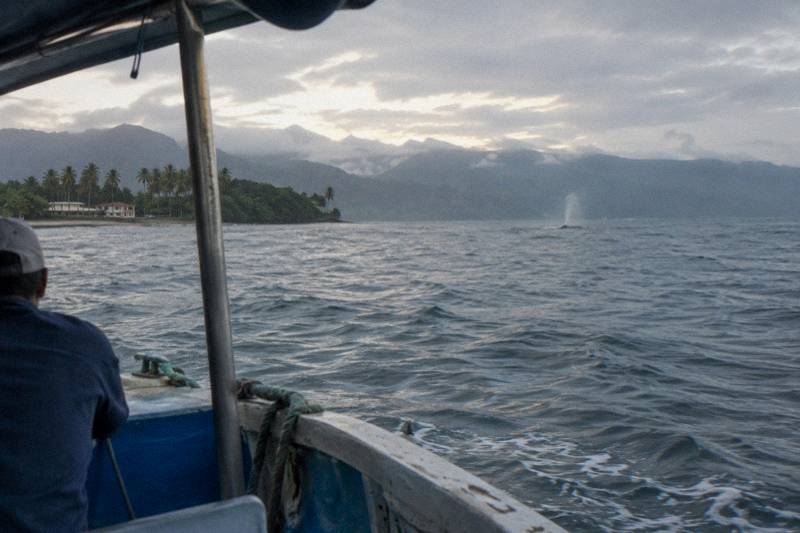
The breakfast cruise is the interesting middle case among Samaná-area departures: from $95 per person, 3.5 to 6 hours, with a light breakfast on the inclusions line and lunch and transport to the meeting point on the exclusions line. The listing does not state its departure point, so confirming where it boards, and at what hour, is the seasick traveler's first booking question, ahead even of price.
Whale Watching From Samaná And Las Terrenas · 3.5 - 6 hours
New listing with few reviews so far · From $95
Check availability →A different structure altogether is the cruise-port shore excursion from Puerto de Samaná, from $100 per person for 6 hours with a local guide and a safety briefing listed. Cruise passengers inherit the ship's timetable rather than choosing one, but the port sits inside the bay itself, so the transit to the whales is short. For cruise passengers the long transfer disappears entirely.
What Does The Whale Season Timing Mean For Your Stomach?
The whale season runs mid-January through March, inside the drier and slightly cooler part of the Samaná year, and hurricane season, 1 June to 30 November with its August-to-October peak, sits wholly outside it. Peak whale concentrations are described by researchers as February to early March, which is also when operators add afternoon sailings, so the calmest months and the busiest weeks overlap only partly.
This matters for planning more than it first appears. If seasickness is your main worry, the shoulder weeks in mid-to-late January or mid-to-late March give you the single-morning-departure schedule on the one published operator calendar and the same rules-protected bay. If seeing the most possible whale activity matters more, aim for February into early March and simply book the earliest sailing of the day, which in the peak weeks is typically a morning one. Neither choice guarantees anything about whales or water; the rules protect the animals, not the forecast, and the honest phrasing throughout is "commonly reported" and "described by researchers", never a promise.
The snacks-included budget tour deserves its own mention in this timing discussion, because it is the lineup's cheapest whale product at from $45 per person, carries the strongest rating-to-review ratio on the Samaná departures at 4.9 from 20 reviews, and still runs 6 to 7 hours. Its meeting point varies by the option selected, which is precisely the detail a nervous traveler should pin down before booking rather than after.
The last structural point is about what surrounds the whale trip. Cayo Levantado, the island many listings call Bacardi Island, is about a 15-minute crossing from Samaná town, with shared boats reported at roughly US$15 to 25 per person round trip and no entrance fee on the public beach itself. A nervous sailor who books the 3-hour cruise can add the island separately on a calm afternoon, or skip it, splitting the day into two short exposures rather than one long one. The site's guide to the whale and Cayo Levantado combo works through that choice with the lineup.

Read that chart as a seasickness budget. The shortest bar is the whole water commitment of the 3-hour cruise; the longest bar is mostly highway. Between them sit the 7-hour island days, where the added hours buy a beach and a buffet rather than more swell. Whichever you choose, check the forecast that morning, ask for the earliest departure, and read the cancellation terms on the listing; those three habits are free, and no page, including this one, can honestly offer more.
Common Questions About Seasickness On Samana Whale Watching Boats
Why do Samaná whale boats make some people seasick?
Motion sickness comes from the mismatch between what your eyes and inner ear sense. On Samaná Bay, swell outside the harbor, afternoon chop from the trade winds, and the requirement that engines stay on while boats idle near whales all contribute. No sea-state statistics exist, so nobody can promise calm water for any given day.
Which Samaná whale watching trip is the shortest?
The 3-hour bay cruise from Samaná town, from $69 per person and rated 4.5 from 126 reviews, is the shortest listed here. The half-day humpback trip, from $95 per person and running 3 to 6 hours, is next. Both depart from Samaná town rather than a resort hub.
Are mornings calmer than afternoons in Samaná Bay?
Practical sources consistently describe mornings as often calmer and afternoons as choppier once trade winds build, but this is a reported pattern, not a statistic. One operator's published schedule concentrates departures at 10:00 and adds a 13:30 sailing only in the peak February-to-mid-March weeks.
What helps against seasickness on a Samaná boat day?
Watch the horizon rather than the water beside the hull, eat a light meal beforehand, take a low central spot on deck, and ask a pharmacist or doctor about remedies before the trip. Booking the shortest trip with the earliest departure reduces exposure by arithmetic alone.
Can you do whale watching from Las Terrenas or Punta Cana without a long boat day?
The boat time is short from every base; the total day is not. From Las Terrenas, a 6-hour trip with a Las Terrenas meeting point runs from $125 per person. From Punta Cana, the shortest option is a 5.5-hour half day from $115 per person, but the transfer runs 3.5 to 5.5 hours each way on top.
Do the whale watching rules affect how the boat moves?
Yes. CEBSE rules in force since 1996 require engines to stay on in the observation area, cap observation at 30 minutes per whale group when boats are waiting, halve that when whales are scarce, and keep boats 50 m from most groups and 80 m from mothers with calves. A trip is therefore a sequence of short approaches and moves rather than one long cruise.