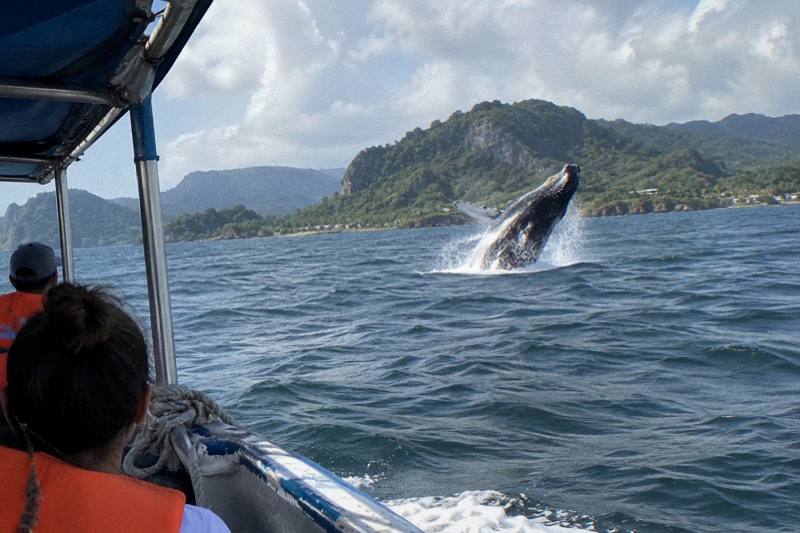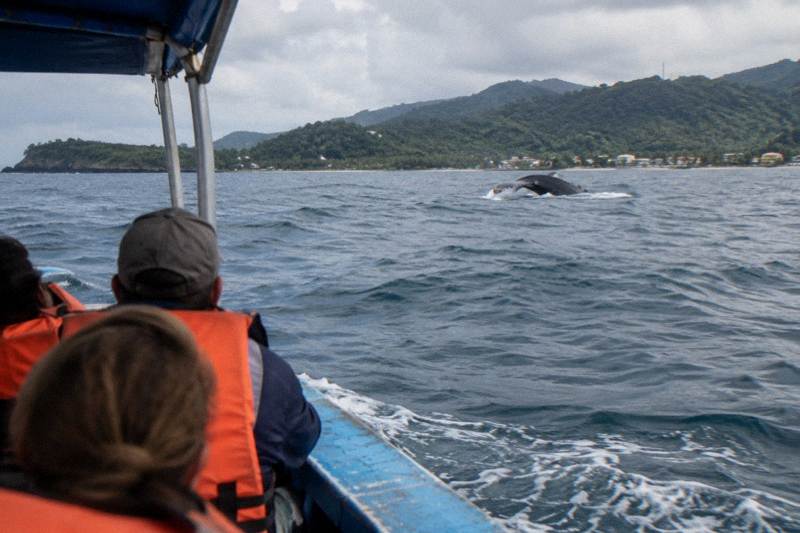
Humpback Whales In The Dominican Republic
Every winter, humpback whales arrive in the warm, shallow waters of the Dominican Republic's Marine Mammal Sanctuary to mate and give birth. Here is where they gather, what the research actually counts, and how the boat tours fit around them.
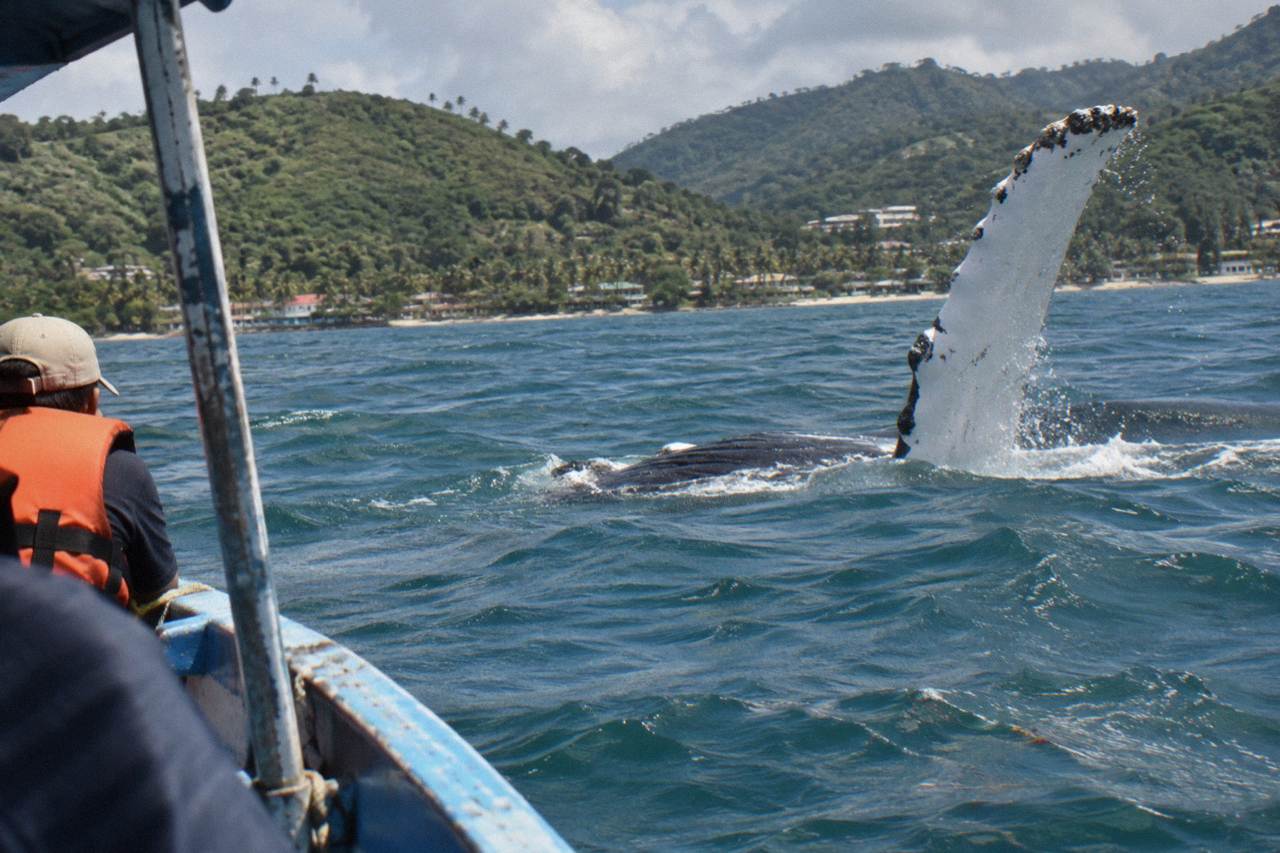
Short answer
Humpbacks gather in three sanctuary waters: Samaná Bay, Banco de la Plata and Banco de la Navidad, roughly mid-January through March. A ministry-led February 2026 survey of Banco de la Navidad logged 644 sightings and an estimated 891 whales in three days. Boat tours run from Samaná town, from $45 per person.
Every winter the same migration repeats: humpback whales leave their northern feeding grounds and turn up in the warm, shallow waters of the Dominican Republic, where they mate, give birth and raise calves before heading north again. The country protects these waters as the Marine Mammal Sanctuary, and the season, the rules and the research around it are unusually well documented for the Caribbean. This guide sets out where the humpbacks actually gather, what the official surveys count, what is allowed and what is not, and how the bookable tours fit around the whales rather than the other way around. If you're curious why the whales choose warm, shallow bays over the open ocean for calving, our guide to Samaná Bay as an Atlantic calving ground explains what that means for a boat trip.
The heart of it for most visitors is Samaná Bay, on the peninsula's south side, where licensed boats leave the town dock on Avenida La Marina roughly mid-January through March. The 3-hour bay cruise from Moto Marina Tours, from $69 per person, rated 4.5 from 126 reviews, is the simplest way onto the water.
Where Do Humpback Whales Gather In The Dominican Republic?
Humpback whales in the Dominican Republic concentrate in three sanctuary waters: Samaná Bay on the peninsula's south coast, Banco de la Plata, also called Silver Bank, to the northwest, and Banco de la Navidad to the east. Together these form the Marine Mammal Sanctuary, and the whales arrive roughly mid-January through March each year to mate and calve.
Samaná Bay is the only one of the three that works as a day-trip destination. It is a broad, sheltered bay with a town, Samaná, sitting on its shore, and the licensed whale boats depart from the main dock on Avenida La Marina, across from the Whale Samana office. The bay's shallows and warmth are what draw the whales: researchers describe mating and calving activity reported through February, with peak concentrations February to early March. The featured whale and Cayo Levantado full day from Moto Marina Tours, from $84 per person and rated 4.7 from 224 reviews, and the quick 3-hour bay cruise both operate here, as does the half-day humpback trip and the budget fare with snacks from Tour Whales Samana, from $45 per person.
Banco de la Plata and Banco de la Navidad are offshore banks, shallow submerged plateaus far out in the open Atlantic, and they belong to the live-aboard world rather than the day-trip one. Silver Bank is the one place in Dominican waters where in-water swimming with humpbacks is permitted, and only for authorized live-aboard operators running roughly US$3,500 to 5,500 for a week, reported figures from operator sites. Nothing listed here goes there, and no day trip from Samaná does either.
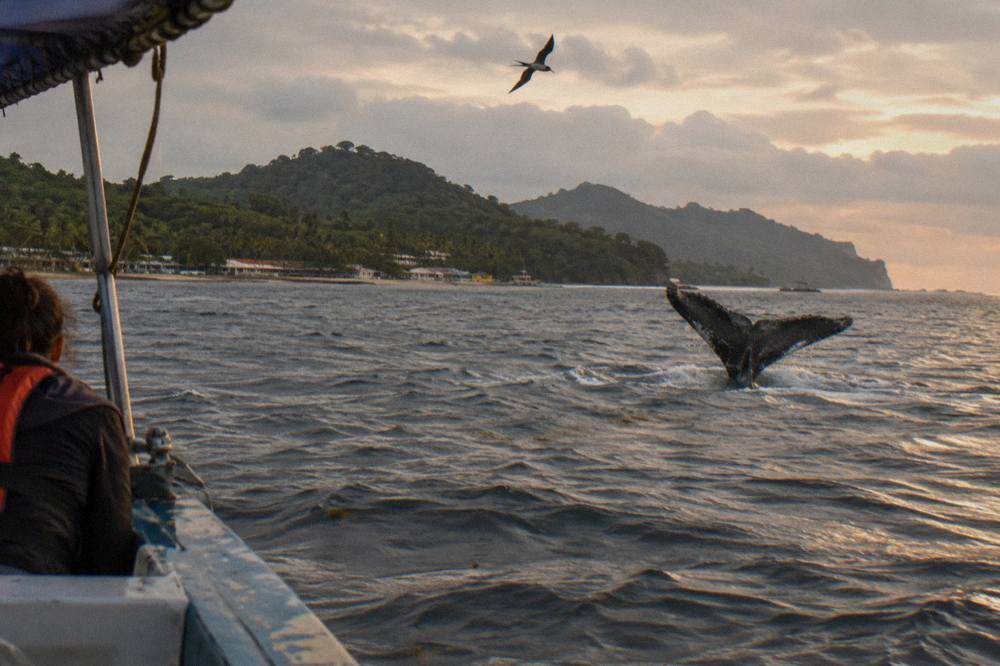
The distinction matters because numbers get mixed up. When a survey reports hundreds of whales, it almost always counted a bank, not Samaná Bay. The bay holds a shifting subset of the population: mothers with calves, competing males and the boats that watch them under CEBSE rules that have applied since 1996.
| Sanctuary site | What it is | Details | How visitors reach it |
|---|---|---|---|
| Samaná Bay | Sheltered bay on the peninsula's south coast | Reported photo-ID catalogue of 252 individuals; a 2025 expedition with 289 sightings, 34 with calves; licensed day boats under CEBSE rules | Day tours from Samaná town, Las Terrenas and further afield |
| Banco de la Plata (Silver Bank) | Offshore bank northwest of the bay | The only site where permitted in-water encounters happen, on authorized live-aboards, roughly US$3,500 to 5,500 for a week | Multi-night live-aboard trips from Puerto Plata |
| Banco de la Navidad | Offshore bank to the east | February 2026 ministry survey: 644 sightings, 891 estimated individuals, a peak of more than 500 in one day | Scientific expeditions only; no tourist day trips |
If you want the deeper background on the protected area itself, see the guide to the Samaná Bay sanctuary, and for the timing question, the best time guide covers the season window in detail.
What Do The Official Surveys Actually Count?
A ministry-led expedition to Banco de la Navidad in early February 2026 logged 644 sightings and an estimated 891 individual whales over three days, with a reported peak of more than 500 whales in a single day. That is a bank survey, not Samaná Bay counts, and the ministry published it on 2 March 2026. For Samaná Bay itself, a reported cumulative photo-ID catalogue lists 252 individual whales.
These are the two most solid numbers, and they say different things. The Banco de la Navidad expedition covered about 500 km of transects across the bank over three days, and its 891 estimated individuals describe the offshore population using that bank in early February. More expeditions were planned for Samaná Bay, Navidad and La Plata from February to April 2026, but their results had not been published when last checked. The ministry's expedition report has the February figures: the ministry's Banco de la Navidad expedition page.
The Samaná Bay side is quieter. A 2025 Samaná expedition reported 289 sightings, 34 of them with calves, and the cumulative fluke-photo catalogue reportedly stands at 252 identified individuals. Anyone promising you a count per trip is inventing it.

What the surveys do support, qualitatively, is the shape of the season: whales are present in the sanctuary waters from roughly mid-January, concentrations build through February when mating and calving activity is reported, and numbers thin into late March. The rest of the year the banks and the bay are quiet, and the licensed whale boats do not run.
For planning around what the whales are doing, the guide to what a boat trip is like explains the on-water sequence, and the odds of seeing a whale post handles the honest limits of any prediction.
Can You Swim With Humpbacks In The Dominican Republic?
No, not in Samaná Bay. Swimming with whales is prohibited throughout the bay and the sanctuary rules are explicit about it; in-water encounters with humpbacks are allowed only at Banco de la Plata, under strict permits, for authorized live-aboard operators. Offers of swimming with whales from Las Galeras are illegal, and enforcement reporting confirms they exist.
This is the clearest line in Dominican whale watching. CEBSE, the Centro para la Conservación y Ecodesarrollo de la Bahía de Samaná, has applied the bay's rules since 1996, licensed by the Ministry of Environment: boats keep 80 m from mothers with calves and 50 m from other groups, at most three boats watch a group at a time, observation runs 30 minutes maximum when boats are waiting, engines stay on, and nobody enters the water. The rules are published on CEBSE's own panel page for the bay.
Silver Bank is the exception, and it is a different product entirely. Authorized live-aboards run roughly seven-night trips out of Puerto Plata, at reported prices of roughly US$3,500 to 5,500 per person for the week, and only those operators may put guests in the water under strict protocols. It is not a day trip from Samaná in any form, and no tour here offers it.
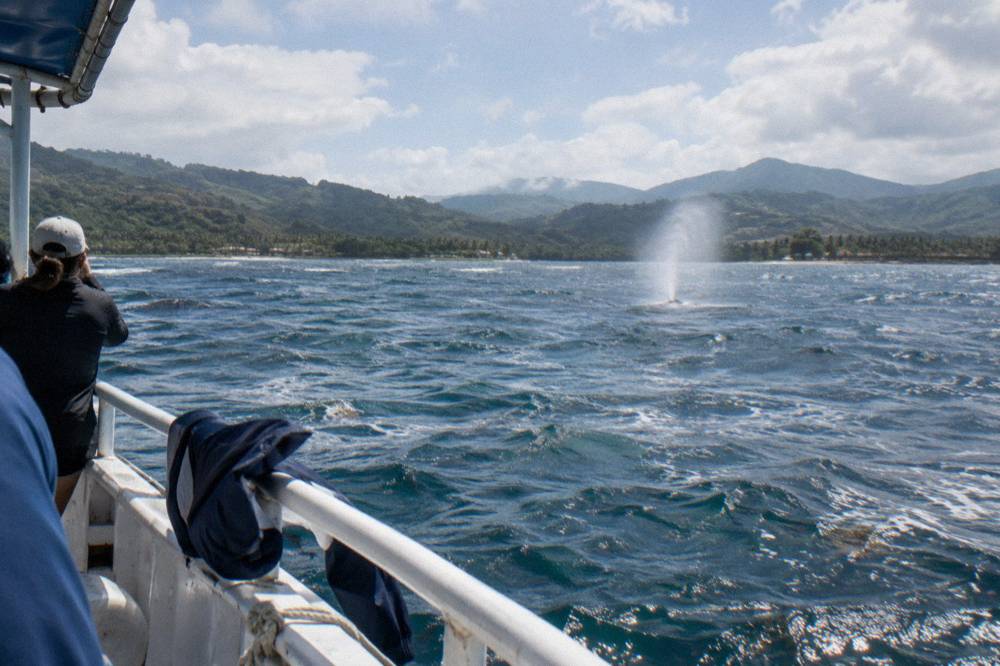
For a normal visitor the practical translation is simple: watch from the deck, in a licensed boat, and treat any offer to swim, touch or feed a whale in the bay as a signal to walk away. Drones are also banned inside the sanctuary without ministry permission. The blog post on whether you can touch a whale on a tour covers the ethics and the rules in more depth.
How Do You See Humpbacks From Samaná Town?
Whale boats depart the main town dock on Avenida La Marina in Santa Bárbara de Samaná, and the lineup's Samaná-based options run from $45 to $125 per person, roughly three to eight hours. The 3-hour Bay of Samana cruise costs from $69 per person, rated 4.5 from 126 reviews, and the whale plus Cayo Levantado full day runs from $84, rated 4.7 from 224 reviews.
Samaná town is where the season happens. One operator, Whale Samana, publishes a seasonal schedule of trips 3 to 4 hours long, one departure a day in early season and mid-January, two a day through the February peak, and one again from mid-March, which gives a rough sense of how the operators as a whole pace themselves around the whales. The dock sits on the malecón, the waterfront promenade, and the whale museum and the town's walkable malecón make the day more than a boat ride.
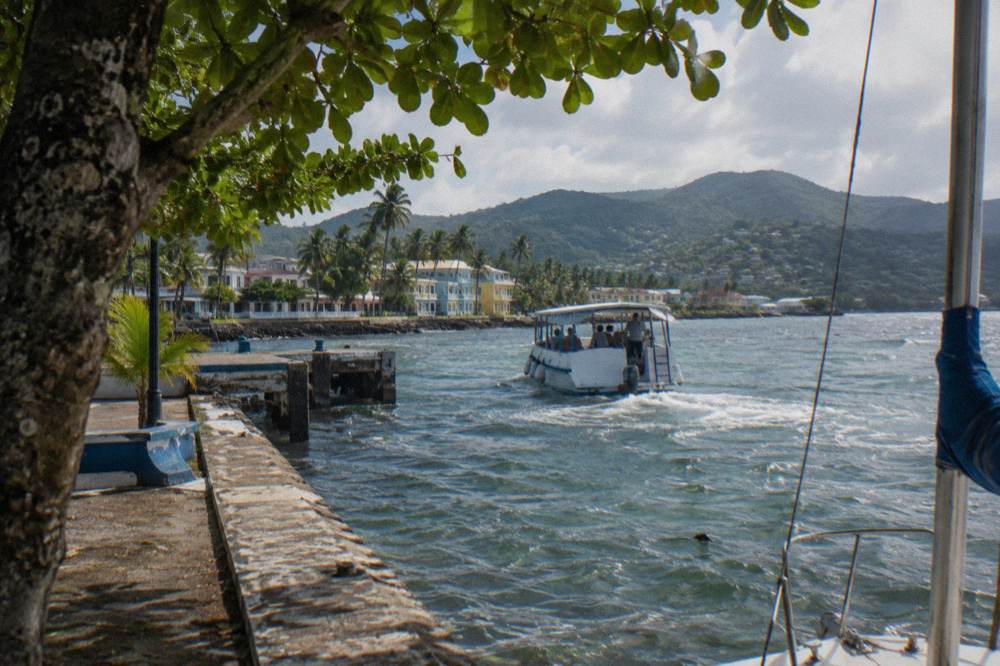
The lineup's Samaná departures differ mainly in length and what is included, and the table below sorts them out.
| Tour (departure Samaná town area) | Price from | Duration | Meal or snacks | Rating on the listing |
|---|---|---|---|---|
| Whale Watching Tour with Snacks, Tour Whales Samana | $45 per person | 6 to 7 hours | Local snacks, water, soft drinks | 4.9 from 20 reviews |
| Bay of Samana Whale Watching Experience, Moto Marina Tours | $69 per person | 3 hours | Local snacks, water, soft drinks | 4.5 from 126 reviews |
| Whale Watching + Cayo Levantado (Bacardi Island) | $65 per person | 8 hours 30 minutes | Beach lunch, beverages | 4.0 from 17 reviews |
| Whale Watching and Cayo Levantado Full Day, Moto Marina Tours | $84 per person | 7 hours | Buffet lunch, water, soft drinks | 4.7 from 224 reviews |
| Whale Watching and Cayo Levantado with Lunch by Locals | $65 per person | not stated | Lunch, all fees and taxes | 5 reviews, too few for a rating |
| Half-Day Humpback Whale Watching | $95 per person | 3 to 6 hours | Snacks | 3.5 from 15 reviews |
| Whale Watching Tour in Samana (budget fare, meal included) | $70 per person | 6 hours | Lunch | 3 reviews, too few for a rating |
| Whale Watching and Cayo Levantado Full Day, operator Ballenas | $65 per person | 7 hours | Lunch | 1 review, too few for a rating |
Two honest notes on that table. Ratings with small review pools describe a handful of guests, not a verdict, and the low review counts are printed as counts for exactly that reason. Cancellation terms likewise live on each listing.
The 3-hour cruise is the fit for a visitor who wants the whales without surrendering a whole day; the full-day whale and Cayo version adds the island beach and buffet lunch. For the fuller decision, the cost guide breaks the price ranges down, and the site's homepage comparison and trip picker handle the three-question version of the choice.
What About Watching From Las Terrenas Or Cayo Levantado?
From Las Terrenas, roughly an hour's drive from Samaná town, the lineup has a dedicated 6-hour departure with a Las Terrenas meeting point from $125 per person, and guests based on the north coast otherwise drive in for the Samaná departures. Cayo Levantado, the island the listings call Bacardi Island, has no entrance fee but is reached only by paid boat, and it appears on most full-day whale tours as the lunch stop.
Las Terrenas sits on the peninsula's north coast, and its whale watchers face a small logistic choice. The dedicated Las Terrenas departure, 7 reviews on the listing and from $125 per person with lunch, starts from a Las Terrenas meeting point. Otherwise it is roughly an hour's drive to Samaná town, where the cheaper and shorter options concentrate, and the Las Terrenas guide weighs the two paths.
Cayo Levantado is a different kind of stop. The public beach has no entrance fee, and a shared boat from Samaná town runs a reported US$15 to 25 per person round trip, but the island has become busy, with reported daily visitor numbers in the hundreds. The whale combos that include it, like the featured full day and the eco combo with El Limón, fold the beach and the lunch into the whale day rather than being a separate expedition. The blog post is Cayo Levantado worth it takes that question head on.
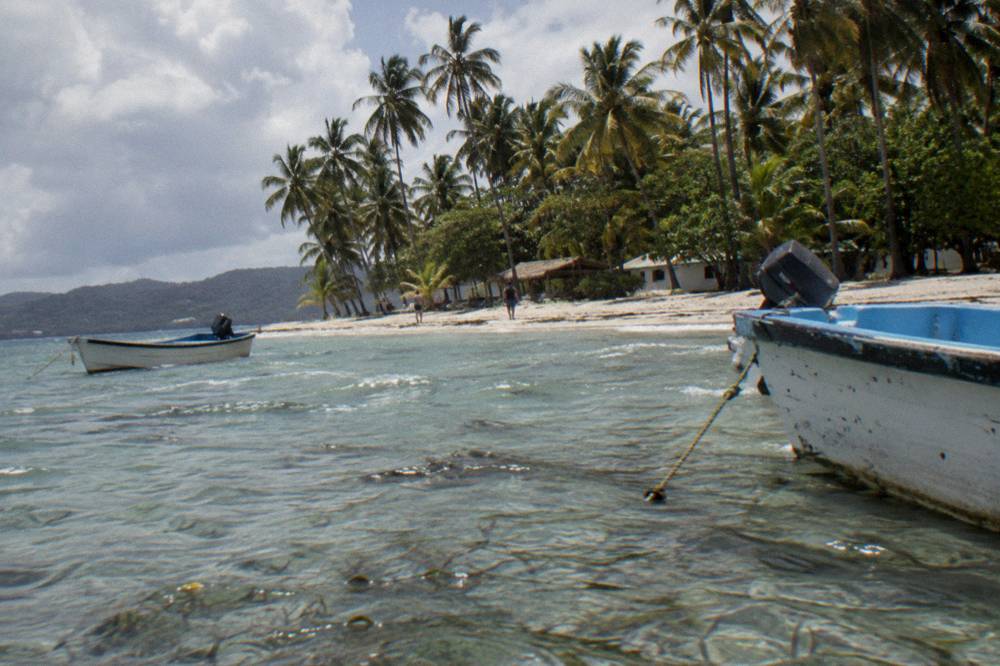
Can You See Humpbacks On A Day Trip From Punta Cana Or Santo Domingo?
Yes, though the drive is long: Punta Cana to Samaná runs roughly 3.5 to 5.5 hours one way, and Punta Cana departures listed here cost from $110 to $200 per person, nearly all with hotel pickup listed. From Santo Domingo, about two hours by road, whale tours run from $130 to $210 per person, and Puerto Plata departures from $132 to $160.
The Punta Cana day trips are built around that drive, which is why they run 8 to 13 hours and bundle so much: whale watching plus Cayo Levantado, often a waterfall or a horseback leg, lunch and transport. The most reviewed combo listed here, the Samaná whale, Bacardi and Limón Falls day from Pa'conoce RD, from $110 per person and rated 4.1 from 233 reviews, is a Punta Cana departure; The Punta Cana guide and the how to get from Punta Cana to Samaná guide cover the road logistics, and the blog post can you see whales in Punta Cana answers the narrower question honestly: the whales are in Samaná Bay, not off Punta Cana's own beach.
Santo Domingo works better as a base thanks to the about-two-hour drive on the DR-7 toll road, roughly RD$500 each way for a car. Its options include the 8-hour whale watching tour from $130 per person and a 12-hour full day from $165, while Puerto Plata, about 3 h 48 min away, has an 11 to 13 hour departure from $132 per person that lists breakfast, lunch and hotel pickup. The table below groups the away-from-Samaná departures.
| Departure base | Listed price range | Durations listed here | Pickup listed |
|---|---|---|---|
| Punta Cana and Bávaro | $110 to $200 per person | 5.5 hours to 13 hours | yes, on the listings |
| Santo Domingo | $130 to $210 per person | 8 to 12 hours | yes, on the listings |
| Puerto Plata | $130 to $160 per person | 11 to 13 hours, 12 hours | yes, on the listings |
| Boca Chica | $210 per person | 8 hours, private | yes, on the listing |
| Samaná cruise port | $100 per person | 6 hours | not stated |
The cruise-port shore excursion, from $100 per person with no reviews yet on the listing, is its own case: it departs Puerto de Samaná and is built around a ship's hours rather than a hotel's, with a safety briefing, life jackets and a local guide listed.
What Do The Humpbacks Actually Do In Dominican Waters?
They mate, give birth and nurse calves, then leave. Humpbacks do not feed in these waters; the sanctuary is their breeding ground, and researchers describe peak mating and calving activity through February, with mothers and calves the most commonly watched pairing from the boats.
The behavior a visitor sees from a licensed boat follows from that calendar. Males compete and display, mothers keep their calves in the sheltered shallows, and the CEBSE distance rules exist precisely because a mother with a calf is the grouping most sensitive to boats: hence 80 m instead of 50, and the three-boat limit with a fourth waiting 250 m away.
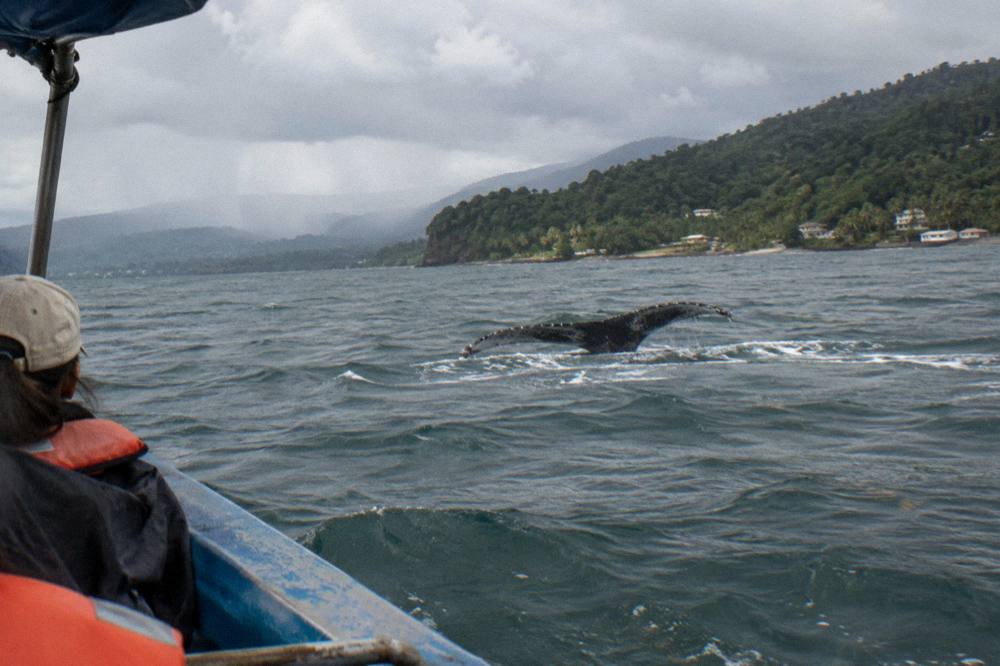
The conservation backstory explains the rest. The 2026 season, 15 January to 31 March, opened with an inter-institutional management agreement signed by the Ministry of Environment, creating a sanctuary management committee for authorizations, boat inspection, captain training and scientific monitoring, and issuing 46 environmental authorizations, 43 of them thematic for Samaná operations and 3 dispatched from Puerto Plata for the live-aboards. A voluntary GPS pilot tracked licensed boats in real time during the season. The opening is documented on the ministry's 2026 season page. Reporting during the season also noted illegal swimming offers and unauthorized drone flights near whales, which is exactly why checking that your boat is licensed, and that your operator follows the distances, matters more than any price difference.
The 2027 season dates have not been announced. The permit call for 2027 ran from 16 October to 13 November 2026, open to boat owners and operators from Samaná Bay, Las Galeras, Miches, Sabana de la Mar and Las Canitas plus the Banco de la Plata operations, which is the earliest formal signal each year gives. Until the ministry publishes dates, treat any specific 2027 claim on another page with suspicion.
Common Questions About Humpback Whales In The Dominican Republic
Where do humpback whales gather in the Dominican Republic?
In the Marine Mammal Sanctuary waters: Samaná Bay, Banco de la Plata and Banco de la Navidad. Samaná Bay is the day-trip destination; the two banks are offshore and reachable only on multi-day live-aboard trips.
When is humpback season in the Dominican Republic?
Roughly mid-January through March. The 2026 season ran 15 January to 31 March per the ministry opening, and researchers describe peak concentrations February to early March. The 2027 dates have not been announced.
Can you swim with humpback whales in the Dominican Republic?
Only at Banco de la Plata, on authorized live-aboard trips reported at roughly US$3,500 to 5,500 for a week. Swimming with whales in Samaná Bay is prohibited, and offers from Las Galeras are illegal.
How many humpback whales are in Samaná Bay?
No official count exists for the bay as a whole. A reported cumulative photo-ID catalogue lists 252 individual whales, and a 2025 expedition reported 289 sightings, 34 with calves. The much larger 891-whale figure from February 2026 is a Banco de la Navidad bank survey, not the bay.
What is the cheapest way to see humpbacks in the Dominican Republic?
The Samaná: Whale Watching Tour with Snacks from Tour Whales Samana, from $45 per person, rated 4.9 from 20 reviews, departing Samaná town. Every boat listed here is paid; there is no free option.
Are whale watching boats in Samaná regulated?
Yes. CEBSE rules in force since 1996 set 80 m distance from mothers with calves, 50 m from other groups, a three-boat limit per group and 30-minute maximum observation times, and the ministry licenses the operators, 46 of them in 2026.