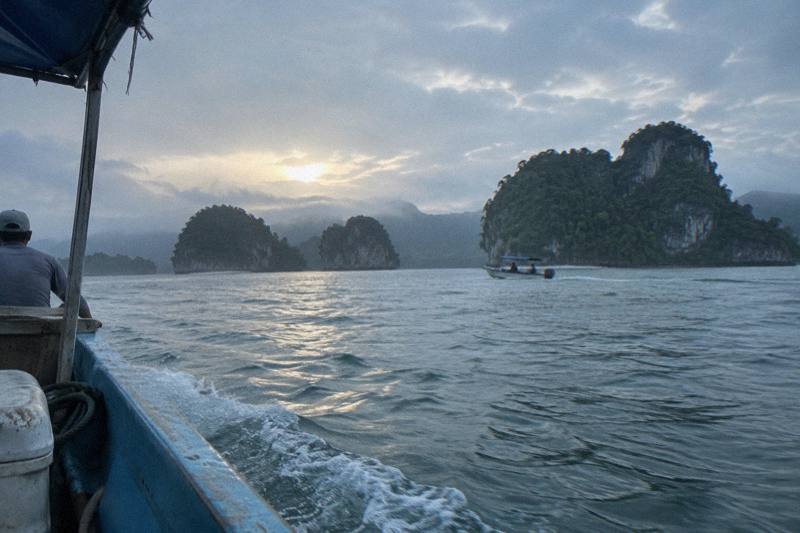
Is Samaná Nicer Than Punta Cana?
A decision rule, not a verdict: what staying in Samaná versus Punta Cana actually changes for a whale-watching trip, from road hours to departure docks.
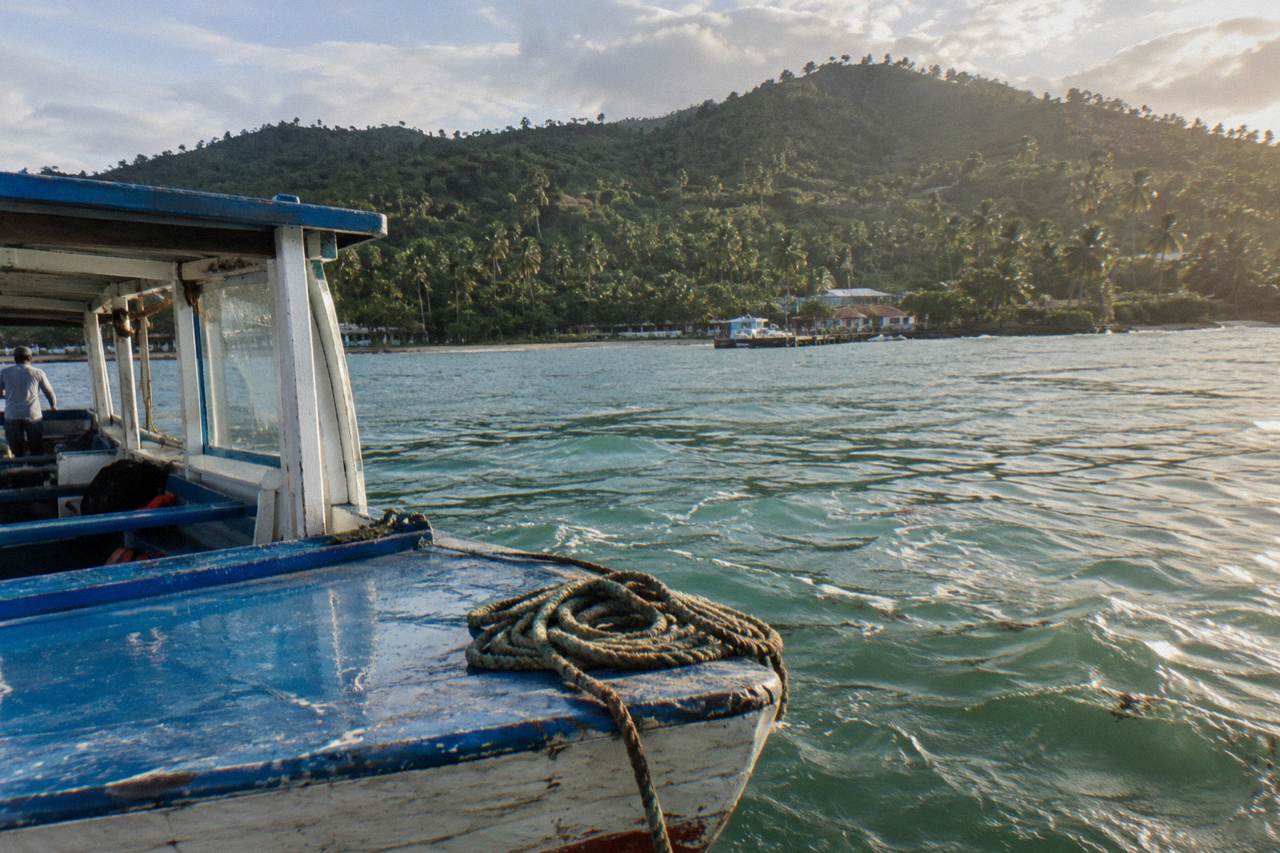
The honest answer is that "nicer" is the wrong question. Every whale tour listed here, whatever town it starts from, ends up on the same water: Samaná Bay, between mid-January and the end of March. The whales do not know where you slept. What your base actually decides is the shape of your day: a Punta Cana departure is an 8 to 12 hour commitment with roughly 3.5 to 5.5 hours of road each way, while a base in Samaná town, the marina side or Las Terrenas puts you minutes to an hour from the dock. The 3-hour bay cruise from the town waterfront, from $69 per person, does not exist as a product from Punta Cana; the road eats it. So the comparison is not nicer versus less nice. It is: do you want a resort base with a long whale day bolted on, or a trip built around the bay? If the resort base still appeals, the full guide to whale watching from Punta Cana walks you through what that long day actually involves before you book anything.
There is a second, quieter reason the question gets asked so often. Punta Cana holds a large share of the country's resort rooms, so a huge number of visitors arrive there without ever choosing Samaná at all, then discover the whales exist and wonder whether they picked the wrong coast. This article is written for that moment: the Punta Cana guest deciding whether a Samaná day trip is worth it, or whether a future trip should be based in Samaná itself. Both answers are legitimate. One of them costs a full day on a bus, and the price lists reflect that: Samaná and Las Terrenas departures run from $45 to $125 per person, while Punta Cana departures run from $110 to $200 per person.
What Each Base Gives A Whale Trip
A Punta Cana base gives you one product shape: the long day, door to door, with transport, a meal and usually an island stop bundled in. A Samaná base gives you the short products: the 3-hour bay cruise, the half-day trip, the 6-hour local departures, plus freedom to walk to the dock and choose your hour on the water. Neither base gives better whales, because there is only one bay. What differs is time on water versus time on asphalt, and how much of the logistics an operator carries for you.
Start with what a Punta Cana departure actually contains, because the listing durations are the clearest evidence. The Samaná whale watching and Bacardi Island day trip from Punta Cana, from $165 per person, runs 10 hours. The whale watching and Bacardi Island day from the same coast at from $135 per person runs 10 hours 30 minutes. The Samaná Bay and Cayo Levantado whale watching tour from Punta Cana runs 10 to 12 hours, from $200 per person. Strip out 7 to 11 hours of round-trip driving from those numbers and you can see the whale portion is a slice, not the day. That is not a criticism; it is arithmetic, and for a family that wants one adventure day from a resort it is a perfectly good trade.
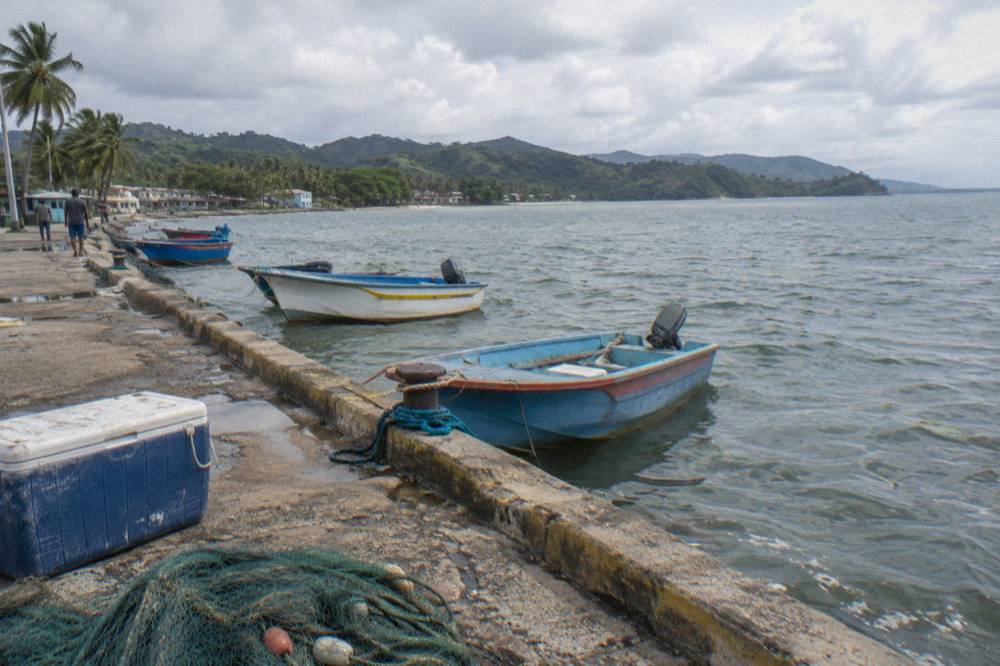
Now the Samaná side. The featured whale watching and Cayo Levantado full day tour departs the town dock area on Avenida La Marina, runs 7 hours, and is from $84 per person, with buffet lunch on the island, snacks, drinks, boat and guide listed and hotel pickup explicitly not included. The 3-hour bay cruise from the same operator, from $69 per person, is the shortest whale product listed here. The budget tour with snacks, from $45 per person, runs 6 to 7 hours. And from Las Terrenas, the 6-hour whale watching tour with a Las Terrenas meeting point is from $125 per person, roughly an hour's drive from the Samaná departures. These products cannot exist from Punta Cana because the road forbids them.
A useful way to hold the comparison is to say Punta Cana sells outcomes and Samaná sells time. The Punta Cana day trips are engineered packages: pickup at the hotel, breakfast sometimes included, lunch on Bacardi Island, the whale boat, the return. You surrender a day and receive a fully managed one. The Samaná products assume you are already there and let you decide whether a morning on the water is enough. Whether one is "nicer" depends entirely on which of those two currencies, packaged certainty or flexible hours, you value more. For help with that larger choice, the case for visiting Samaná at all and the homepage trip picker walk through it question by question.
There is also a subtle difference in how each base treats the island. From Punta Cana, Cayo Levantado is a scheduled stop inside a fixed itinerary; the boat arrives when the itinerary says it arrives, and leaves the same way. From Samaná, the island is a place in its own right: shared boats from the town run roughly US$15 to 25 per person round trip, the crossing takes about 15 minutes, and the public beach itself has no entrance fee. A Samaná base turns Bacardi Island from a tour segment into an independent half day you can take before, after or instead of a whale trip. That flexibility is invisible in any price table, and it is one of the quietest arguments for basing yourself on the bay.
How Long Is The Road From Punta Cana To Samaná?
The drive from Punta Cana and Bávaro to Samaná runs roughly 3.5 to 5.5 hours one way depending on your exact destination, so a day trip spends 7 to 11 hours in a vehicle before you count the boat. Samaná-based departures eliminate that road entirely; Las Terrenas sits roughly an hour from Samaná town by the paved road via Sánchez. These are planning figures, not promises; traffic and weather move them.
The DR-7 toll road, the Autovía del Nordeste, is what makes the Punta Cana day trip feasible at all; the toll runs RD$500 each way for a category 1 vehicle, and a private transfer from Punta Cana to Samaná starts from about $240 per vehicle if you would rather not take a shared tour bus. For most resort guests, though, the shared day tour with pickup listed from Punta Cana and Bávaro area hotels is the practical route, and every Punta Cana whale listing here includes that pickup.
Here is the honest side-by-side of what each base costs you in hours, using only listed durations and the verified drive times:
| Base | Road each way | Typical whale product | Total day length | Price basis |
|---|---|---|---|---|
| Punta Cana / Bávaro | roughly 3.5 to 5.5 hours | 10 to 12 hour bundled day trips | 10 to 12.5 hours | from $110 to $200 per person |
| Samaná town | walk or short ride to the dock | 3-hour cruise to full-day tours | 3 to 8 hours 30 minutes | from $45 to $95 per person |
| Las Terrenas | roughly 1 hour to Samaná town | 6-hour tour from a Las Terrenas meeting point | 6 hours | from $125 per person |
Notice what the table cannot say: which day feels better. A 12-hour day from a resort with everything handled can feel easier than self-managing a Samaná morning if you have no car and no Spanish. A 3-hour cruise can feel like the best morning of your life if you are already on the malecon. The road is the single biggest, most measurable difference between the two bases, and it is the one thing no tour operator can engineer away.
It is also worth being honest about the third and fourth hours of that drive. The first hour of a Punta Cana departure is novelty: the bus, the guide, the first town you pass. None of this makes the trip a bad idea; it makes it a trip you should take with open eyes, ideally with a product whose stops justify the loop, which is exactly what the Bacardi Island versions are built to do.
What Does Staying In Samaná Change?
Staying in Samaná changes your product menu, your departure points and your margins: you gain the short cruises, the half-day trips and the cruise-port excursion, you can walk to the town dock on Avenida La Marina, and you hold slack in your schedule if sea state or weather pushes a trip. It does not change the whales, the season or the rules; those are fixed by the bay and the sanctuary, not by your hotel. The what to expect on the boat guide covers the day itself in detail.
The season runs mid-January through March. The ministry's opening sets the window, and the 2026 season carried 46 environmental authorizations for licensed boats; the numbers shift a little year to year but the shape holds. Researchers describe peak concentrations from February to early March, and an operator's own published schedule follows that arc: one trip daily early and late in the season, two daily in the middle weeks. That rhythm matters to a Punta Cana day-tripper in a specific way: your whale window is whoever's bus schedule says it is, while a Samaná-based visitor can pick the mid-season double-departure days or the calmer morning sea, which 2026 climate summaries describe as the calmer time before afternoon trade winds roughen the bay.
The rules are identical regardless of base, and they are worth knowing because they explain the rhythm of every boat day. CEBSE, which has applied whale watching rules in the bay since 1996 under ministry licensing, sets observation distances of 80 meters from mothers with calves and 50 meters from other groups, caps boats per whale group, limits observation time to 30 minutes when boats are waiting, and prohibits swimming with whales in the bay and drones without ministry permission. A licensed boat from either base follows the same rules on the same water. If a seller in either destination offers you a swim with the whales from Samaná Bay, that offer is illegal, and the can you touch a whale article explains why the two authorized worlds are separate.
For a decision framed in money rather than hours, the cost comparison guide breaks every listed price down; the headline is that the road, not the whales, is what you pay for from Punta Cana.
Which Punta Cana Day Trips Are Worth The Road?
Three Punta Cana products listed here make the trade explicitly, and the differences between them are price, inclusions and length, not whale quality: the Samaná whale and Bacardi Island day at from $135 per person, the whale watching and Bacardi Island day trip at from $165 per person with buffet lunch, and the 11-hour full day at from $159 per person. All three include hotel pickup from Punta Cana and Bávaro, all bundle the island stop, and none can promise a sighting, because no operator anywhere can.
Read the inclusions line by line before choosing, because they genuinely differ. One lists lunch and drinks and nothing more; another lists buffet lunch with one drink, bottled water, air-conditioned vehicle and guide; the eco-orientation options add a waterfall or a safari truck and stretch to 12 or 13 hours. The rule worth applying: after hour ten, every additional stop is a stop you are doing tired. That island stop is not decoration; for many Punta Cana day-trippers it is half the value of the day. More of these guides are collected on Whale Tours Samana.
The opposite framing helps too. If you are planning a future trip rather than salvaging a current one, flip the question: base in Samaná or Las Terrenas and Punta Cana becomes a place you flew into, not a place you commuted from for 11 hours. That is the real meaning of "nicer". It is not scenery versus scenery; it is whether the whales are the centerpiece of your trip or one stop on a very long bus loop.
One more practical note for the Punta Cana reader: book the whale day early in your resort week, not at the end. If sea state or weather forces a cancellation, an early booking leaves room to retry, while a last-day booking leaves none. The same logic applies to the season: a February trip has more schedule behind and ahead of it than a mid-March one. These are the small, unglamorous decisions that separate a whale day that worked from one that got away, and none of them cost a dollar more.
Whale Watching Day Trips From Punta Cana · 10 hours
★ 4.4 · 47 reviews · From $165
Check availability →What Should You Verify Before Booking Either Way?
Verify five things on the live listing before you book from either base: the departure or pickup point stated on that exact listing, what food and drink the listing itself includes, the cancellation terms, the operator's age and health rules, and that the boat is licensed for the season. These differ listing to listing even between similar products, and the difference between a good day and a bad one usually hides in one of them.
Pickup is the clearest example of why. Every Punta Cana departure listed here lists hotel pickup from Punta Cana and Bávaro, but on the Samaná side the picture varies sharply: some products meet at the operator's dock on Avenida La Marina, one at Santorino restaurant, one at the Whale Samana office on Calle Mella, one at Restaurant Royal Samaná, the cruise-port excursion meets at Puerto de Samaná, and a few listings do not state a meeting point at all. Booking a $45 tour and discovering it departs from a point you cannot reach cheaply changes its value completely. The same caution applies to meals: some listings include buffet lunch on the island, some include only snacks and water, and one explicitly excludes lunch. Never assume.
On licensing, the season frame is your shortcut. The ministry opens the season mid-January and runs it to the end of March; outside that window there is no authorized whale watching in the bay at all, so any whale offer dated outside it deserves a hard look before money changes hands. Inside the window, licensed operators work under the CEBSE rules described above, and a guest review on a live listing is a fair signal of whether a crew follows them. Check the official government travel advisory page before booking, as with any boat day abroad.
So Which Base Should You Choose?
Choose a Punta Cana base with a bundled Samaná day trip if you are already booked there, want one managed adventure, and accept a 10 to 12 hour day. Choose a Samaná, marina-side or Las Terrenas base if the whales are the reason for the trip, or if you want the short cruises, the flexible mornings and the island at your own pace. Neither choice is nicer in the abstract; each is nicer for a specific traveler on a specific calendar.
If this year is already a Punta Cana year, the honest advice is to take the day trip and not to agonize. The road is long but the product works, the whales are the same whales, and the island lunch is a genuine pleasure. The 8-hour whale day from $130 per person is the leaner option; the Bacardi Island versions at from $135 to $169 per person are the fuller ones. If next year is unwritten, give Samaná the nights instead: the featured whale and Cayo Levantado full day from $84 per person costs less than every Punta Cana departure, and the 3-hour bay cruise exists only because the road no longer does.
The whale season is short, mid-January through March, and it does not move for either coast. Everything else in this comparison, the hours, the prices, the dock you walk to, is downstream of one choice: where you sleep the night before.
Common Questions About Samaná Versus Punta Cana
Can You Do Whale Watching From Punta Cana?
Yes. Several day trips pick up at Punta Cana and Bávaro hotels, run 8 to 12 hours, and bundle lunch and a Cayo Levantado stop. They run from $110 to $200 per person listed here. The whale boat still operates in Samaná Bay; you simply reach it by road first.
Is It Better To Stay In Samaná For The Whales?
If the whales are the main purpose of your trip, yes: staying in Samaná town, the marina side or Las Terrenas cuts the road and gives you the 3-hour, half-day and 6-hour products that cannot exist from Punta Cana, at lower prices, from $45 to $125 per person locally.
How Many Hours Is The Punta Cana To Samaná Day Trip?
Listings run 8 to 13 hours door to door, with roughly 3.5 to 5.5 hours of driving each way plus the boat time and usually the island stop. Plan for a full day and check the exact duration on the specific listing before you book.
Do You See More Whales From Samaná Than From Punta Cana?
The whales are in the same bay either way, so the base does not change what is in the water. No operator can promise a sighting from either coast. What a Samaná base changes is your time on the water, not the odds; no month-by-month sighting counts exist in any official source.