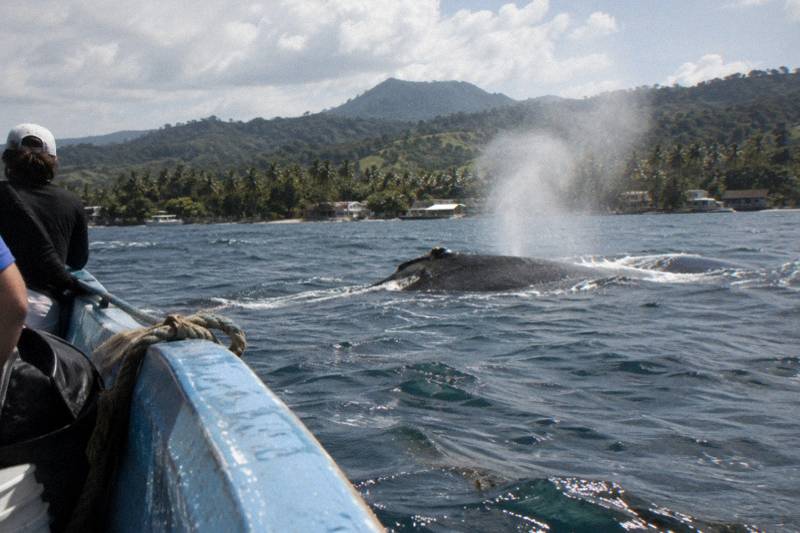
What Are The Odds Of Seeing A Whale On A Samaná Whale Watching Tour?
No operator, CEBSE or ministry sighting rate exists for Samaná Bay. Here is what the season data, the review lines and the peak-week logic actually say about your chances.
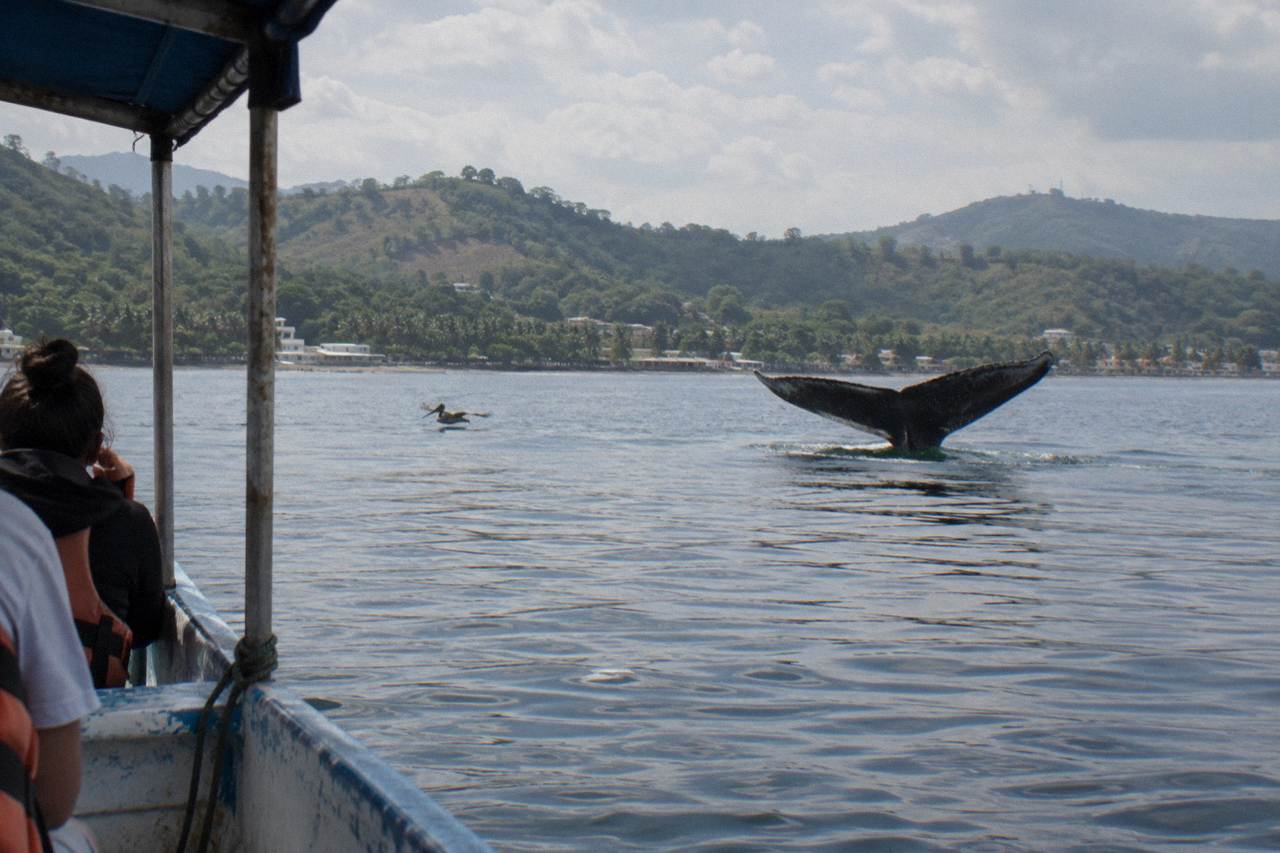
The question every reader asks a booking page is the same one no booking page can answer honestly. Type "what are the odds of seeing a whale on a whale watching tour" into a search engine and you will collect a pile of confident percentages, usually a suspiciously round number somewhere in the nineties, printed without a source, a date or a method. None of those numbers comes from the operators themselves, from CEBSE, the conservation body that has run the whale watching rules in Samaná Bay since 1996, or from the Ministry of Environment that licenses the boats.
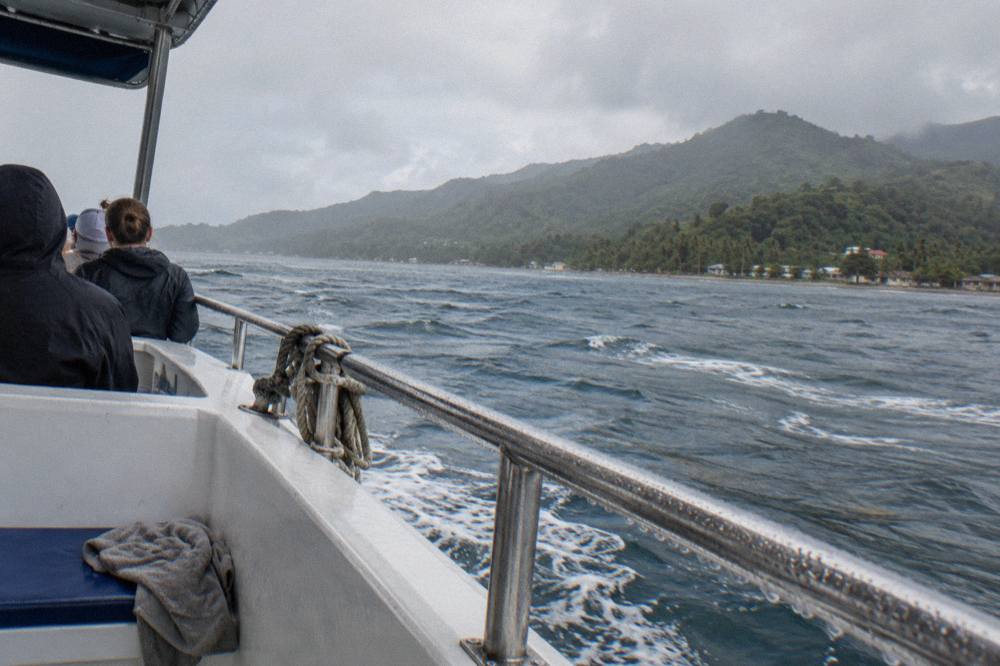
No honest number exists: no operator, CEBSE source, or ministry publication states a sighting rate for Samaná Bay, and no month-by-month count has been published, so any percentage you have read elsewhere is an invention. What is available is a season running mid-January through March, 46 environmental authorizations in 2026, 252 individual whales identified in the bay over time, and researchers describing peak concentrations from February to early March.
That answer frustrates people who want a number to plug into a decision, but it is the only defensible one. The whales are wild animals, the sea state varies by the hour, and the whale-watching rules in the bay are built around the animals' needs rather than around a viewer guarantee. A licensed boat holds its distance, 80 meters from a mother with a calf and 50 meters from any other group, spends at most 30 minutes with one group when other boats are waiting, and moves on. Nothing in that rulebook promises an encounter.
What a reader can do instead is stack the conditions in their favor, and that is a matter of timing, operator choice and expectations, not of a statistic. The rest of this article works through each of those, using only what the verified record supports. For the practical side of the day itself, from boarding to what the trip feels like on the water, the what to expect on the boat guide covers the details, and the site's best time for whale watching in Samaná page breaks the calendar down month by month.
The honest framing also matters for how you read tour listings. None of them promises a sighting, because none of them is allowed to.
Why No Honest Percentage Exists
A sighting rate would require a public, season-long count of trips and outcomes, and no such dataset exists. CEBSE, the Ministry of Environment and the licensed operators have published no per-trip success figures, no monthly sighting series and no season-wide totals for Samaná Bay, so there is nothing for a website to cite, which is exactly why invented percentages flourish in the gap.
The record is explicit on this point. The sanctuary bodies have published season openings, boat authorizations, rules and expedition reports, but not a running tally of tourist trips and whale encounters. A ministry expedition in early February 2026 surveyed Banco de la Navidad, a offshore bank, and recorded 644 sightings across an estimated 891 individuals in three days, but that is a scientific survey of a different body of water, not a measure of what a tourist boat in Samaná Bay sees, and it must never be presented as one. The temptation to borrow a big expedition number and turn it into a tourist promise is exactly how bad statistics get made.
There is also a structural reason operators stay quiet. The whale watching season in the Dominican Republic is regulated under the sanctuary management plan, and the licensed boats operate under observation-distance and time limits enforced by the authorities. A marketing claim that amounts to "whales on demand" would sit badly against a rulebook whose entire point is that the whales set the terms. When a listing describes the experience, it describes what guests commonly report, possible encounters in the whales' natural habitat, not an outcome.
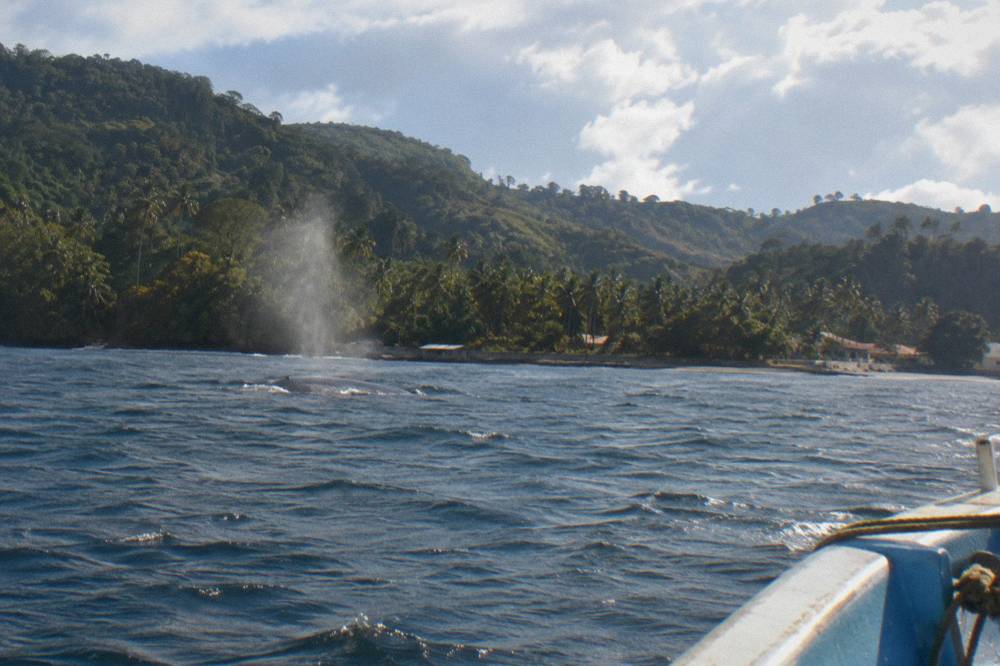
So when a third-party site prints a near-certain success rate, ask it one question: counted by whom, over how many trips, published where? The official ministry page on the 2026 season opening lists authorizations and rules, not success rates, and the CEBSE panel on Samaná Bay does the same. That silence is the finding.
Still on the fence after weighing the record? The half-day humpback trip is the smallest commitment listed here that puts you on the bay inside the season, and you can read the cancellation terms on the listing before you pay anything.
What The Season Data Actually Says
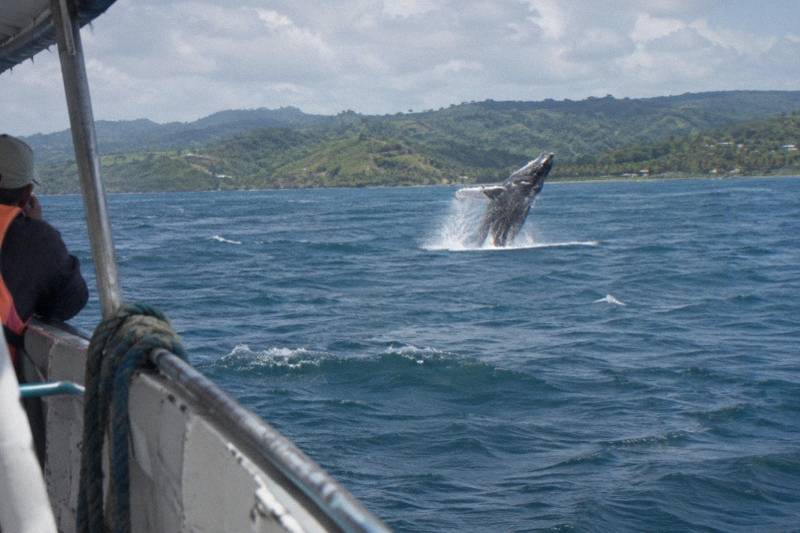
The data describes presence, not probability: the watching window runs mid-January through March, 46 boats carried environmental authorizations in 2026, a long-term photo-identification effort has catalogued 252 individual humpbacks in the bay, and a 2025 expedition logged 289 sightings, 34 of them mothers with calves. Presence in the season is well established; a per-trip percentage is not.
These are the numbers a reader can actually lean on. Humpbacks return to the Dominican Republic's marine mammal sanctuary each northern winter to mate and calve, and Samaná Bay is one of the places they concentrate. The photo-identification catalogue, built up over years from fluke photographs, is the strongest evidence that the same population comes back reliably rather than sporadically, and the 2025 expedition count, 289 sightings with 34 calf pairs, is a research snapshot of a single effort, not a tourist outcome table. Treat both as what they are: signs of a real, recurring population.
The regulatory numbers tell a second story. Forty-six environmental authorizations were issued for 2026, 43 thematic in Samaná with three dispatched from Puerto Plata, processed digitally for the first time. That is a managed, inspected fleet operating under a management agreement that creates a sanctuary committee covering boat inspection, captain training and scientific monitoring. A licensed boat is not a guarantee of whales, but it is a guarantee that the operator passed a licensing process designed around the animals, and that is the closest thing to a quality signal the system publishes.
| What the record states | Figure | What it does and does not tell you |
|---|---|---|
| Season window | Mid-January through March | Whales are present in these weeks; says nothing about any single trip |
| Licensed boats, 2026 | 46 environmental authorizations | The fleet is regulated and inspected; not a success metric |
| Photo-ID catalogue | 252 individual whales identified over time | A recurring population; not a per-trip count |
| 2025 expedition | 289 sightings, 34 with calves | One research effort; not a tourist outcome record |
| Peak weeks | February to early March, per researchers | Higher concentrations described; no month-by-month counts exist |
| Sighting rate | Not published by anyone | Any percentage you read elsewhere has no source |
Read that table as a stack of evidence rather than a probability. Every row confirms whales are in the system in numbers during the window. Not one row converts that presence into a promise for your Tuesday morning.
If the odds question is what stands between you and booking, the half-day format is the least committed way to test it: the Samaná half-day humpback trip runs from $95 per person for 3 to 6 hours, departing Restaurant Royal Samaná, with a guide, snacks, life jackets and entry tickets listed, and a 3.5 from 15 reviews on the listing.
Peak Weeks: February To Early March
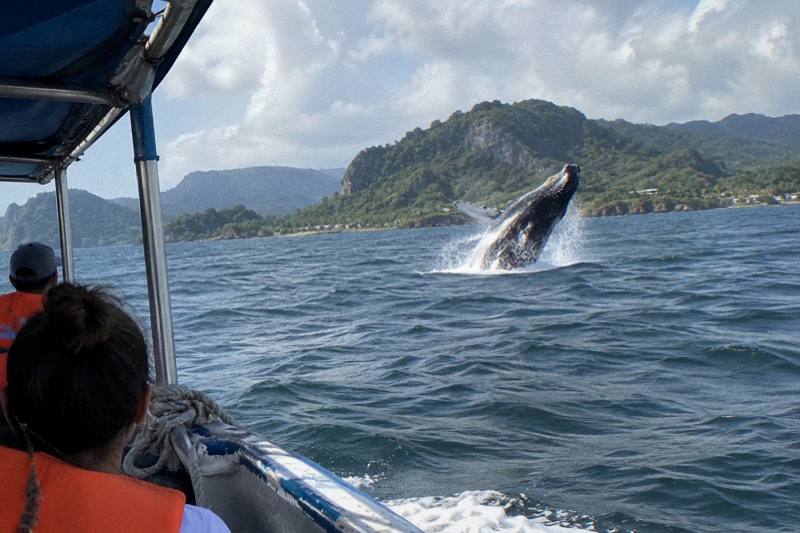
Researchers and ministry-linked reports describe the highest whale concentrations in Samaná Bay from February through early March, the weeks when mating and calving activity peaks, and that timing is the single most controllable factor a visitor has, worth more than any boat choice. If your dates can bend toward those weeks, bend them.
Whales and Cayo, Meal Included
Whale Watching From Samaná And Las Terrenas · 7 hours
★ 4.7 · 224 reviews · From $84
Check availability →The phrase to notice is "researchers describe." It is the honest attribution for a consistent finding: across ministry-linked reports and operator materials citing scientific monitoring, February carries the highest concentrations, with strong activity into the first days of March. No month-by-month sighting series exists to back a precise curve, and the directional claim is stable across sources.
Practically, the peak logic compounds with the season structure. The window opens mid-January, so early-season trips run against a smaller build-up of animals; by February the bay is at its busiest, and one operator's own published schedule reflects that rhythm, with a single daily trip in the earliest weeks, two daily departures through the February core, and back to one trip a day in the second half of March. An operator adding a second daily departure in February is an operational bet on demand and animals alike, and it is the kind of indirect signal a reader can use even without a percentage.
The counterargument is worth hearing too. Peak weeks mean peak crowds, on the boats and in the bay, and the three-boats-per-group rule means the fourth boat waits 250 meters away for up to 30 minutes. Travelers who hate the feel of a busy observation zone sometimes prefer shoulder weeks, trading described concentration for calm. That is a legitimate trade, and it is exactly the kind of decision no statistic can make for you.
How Reviews Hint At Outcomes
Guest reviews are the closest thing to a crowdsourced outcome record, and they skew positive in ways worth reading carefully: the featured whale and Cayo Levantado full day holds 4.7 from 224 reviews, the 3-hour bay cruise 4.5 from 126, and one guest review describes being "lucky enough to see whales," the word "lucky" carrying more honesty than any invented percentage.
The review lines are real numbers, printed with their counts, and they measure satisfaction rather than sightings. A 4.7 from 224 reviews tells you the day works as a day: the boat leaves, the guide performs, the lunch on Bacardi Island lands, the logistics hold together. It does not tell you a whale breached at 10:40. Still, a large review pool on a whale tour that stayed large and positive across a whale season is soft evidence that encounters happen often enough to keep customers writing.
A guest review of a Samaná whale trip describes being "lucky enough to see whales." That phrasing, from someone who actually went out and saw them, treats the encounter as fortune rather than entitlement, which is both the honest register and, tellingly, the register guests use even after a success.
For weighing one listing against another, the review count matters as much as the score. A 4.9 from 20 reviews on the whale watching tour with snacks is a fine rating, but twenty people is a small pool; the featured full day's 224 reviews is a body of evidence of a different weight. As a rule of thumb: prefer many reviews over few, read the most recent ones for season-specific detail, and treat any single review, rapturous or furious, as one data point.
How To Raise Your Odds Without A Number
Three levers are in your control: book inside the February to early March peak if you can, choose a listing with a large review pool and a licensed, inspected operation behind it, and read the cancellation terms on the listing before paying, because weather and sea state move trips and you want to know your options in advance.
The first lever is timing, covered above, and it dominates. The second is operator selection. Every boat listed here operates under the same sanctuary rules, but listings differ in what they include and how much feedback they have accumulated. The featured whale and Cayo Levantado full day, from $84 per person for 7 hours with buffet lunch, snacks, drinks, boat ride and guide listed, departs Av. La Marina 3 in Samaná town and carries those 224 reviews; the 3-hour bay cruise, from $69 per person with the same operator, coconut snacks and soft drinks listed, covers whales without the island stop; the budget tour with snacks, from $45 per person, is the cheapest way onto the water that the lineup shows. Price does not buy probability, it buys length, food and format.
| Lever | What you control | What the record says it is worth |
|---|---|---|
| Week of travel | Mid-January vs February vs late March | Peak concentrations described February to early March |
| Listing choice | Review pool size and inclusions | 224 reviews on the featured full day vs pools of 20 or fewer on some listings |
| Boat format | Half-day, full day, cruise with island stop | Format changes day length and value, not whale behavior |
| Terms | Reading cancellation terms on the listing | Weather and sea state move trips; know your options before paying |
The third lever is reading the fine print: cancellation terms live on each operator's listing and vary. Weather holds, sea state and season timing can all move a departure, and the whale season sits inside the January to March window when the bay is generally at its calmest, with the trade-off that hurricane season, 1 June to 30 November, is irrelevant to whale dates but very relevant if you travel outside them. Check the official government travel advisory page before booking any trip abroad.
One more lever is patience on the day itself. The rules give each boat group up to 30 minutes with whales when others are waiting, and boats rotate through. A guest who stays at the rail, watches for the fluke pattern the guide calls out, and keeps eyes on the water while others queue at the snack table is simply present for more of the day.
What A No-Sighting Day Means For Your Booking
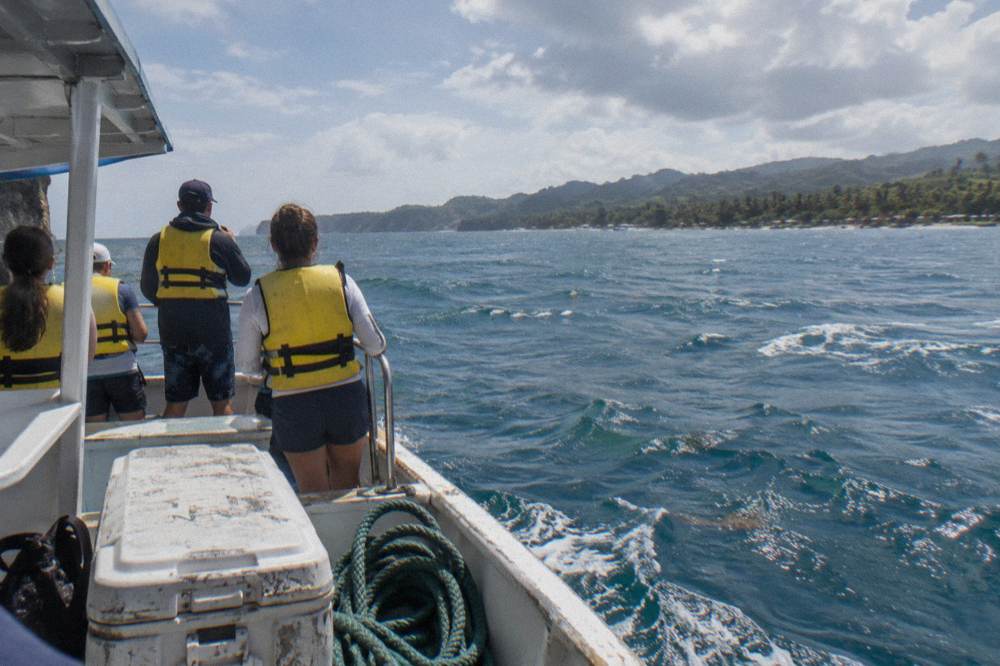
A day with distant or no sightings is a real possibility on any licensed trip, no operator promises otherwise, and the practical protection is not a refund guarantee but informed booking: read the cancellation and weather terms on the listing, pick dates in the described peak, and treat the bay, the island stop and the boat day itself as part of what you are buying.
The listings here describe whale watching as the experience, with inclusions like buffet lunch on Bacardi Island, coconut snacks, guides and boat rides printed line by line. Those inclusions are the floor of the purchase: they happen regardless of what the whales do. The full-day format is the strongest version of that floor, because even a quiet watch still delivers the crossing, the island time and the meal. If you want to see how the current options stack up on price, duration and inclusions before you commit, the side-by-side comparison of Samaná whale watching tours does that work for you.
It also helps to know what the rules do when whales are scarce. The CEBSE rules halve the observation time per group when whales are scarce. The three-boat rule also means a fourth boat waits its turn.
For anyone weighing the whole question of whether the day justifies the money, the is whale watching in Samaná worth it post takes the value question head on, and the odds-specific piece of that puzzle is simply this: the season data says the whales are there, the rules say the boats behave, the reviews say the days land well, and the only thing nobody can honestly sell you is a percentage.
Common Questions About Whale Sighting Odds
Do any Samaná operators guarantee a whale sighting?
No listing here promises one, and no licensed operator could honestly do so, since the sanctuary rules are built around the whales' needs. Any website printing a near-certain success percentage has no source behind it.
Which weeks have the best chances?
Researchers and ministry-linked reports describe the highest concentrations from February to early March. The window runs mid-January through March, so the February core and early March are the strongest weeks to target if your dates can move.
Does a more expensive tour mean better odds?
Not listed here. Prices from $45 to $210 per person buy different lengths, food, transport and formats, from a 3-hour cruise to a 12-hour combo day, not different whale behavior. Timing and a well-reviewed, licensed operation matter more than the ticket price.
What happens if no whales appear?
The trip still delivers everything the listing includes: the boat ride, the guide, the food and any island stop listed. Read the cancellation and weather terms on the listing before booking so you know where you stand if a departure moves.