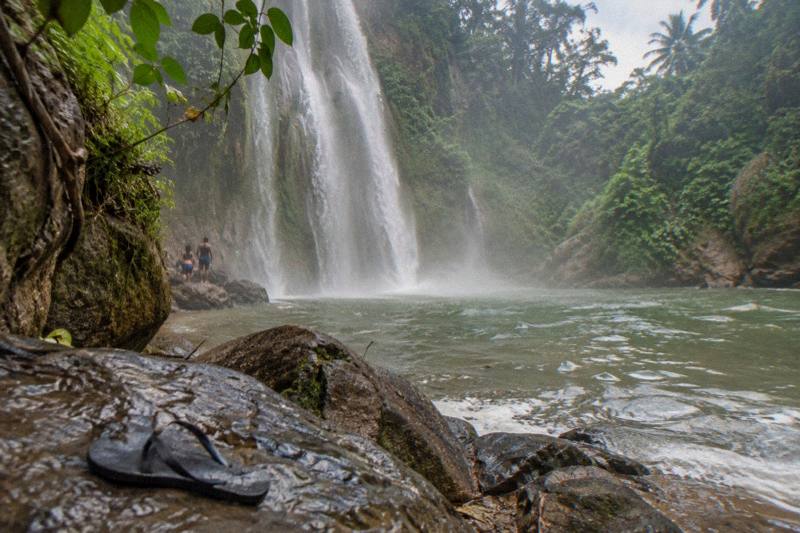
Is Los Haitises Worth It?
A clear-eyed verdict on Los Haitises National Park: what the crossing, the caves and the Taíno art actually deliver, what a trip costs, and when a whale and Cayo Levantado combo is the better day.
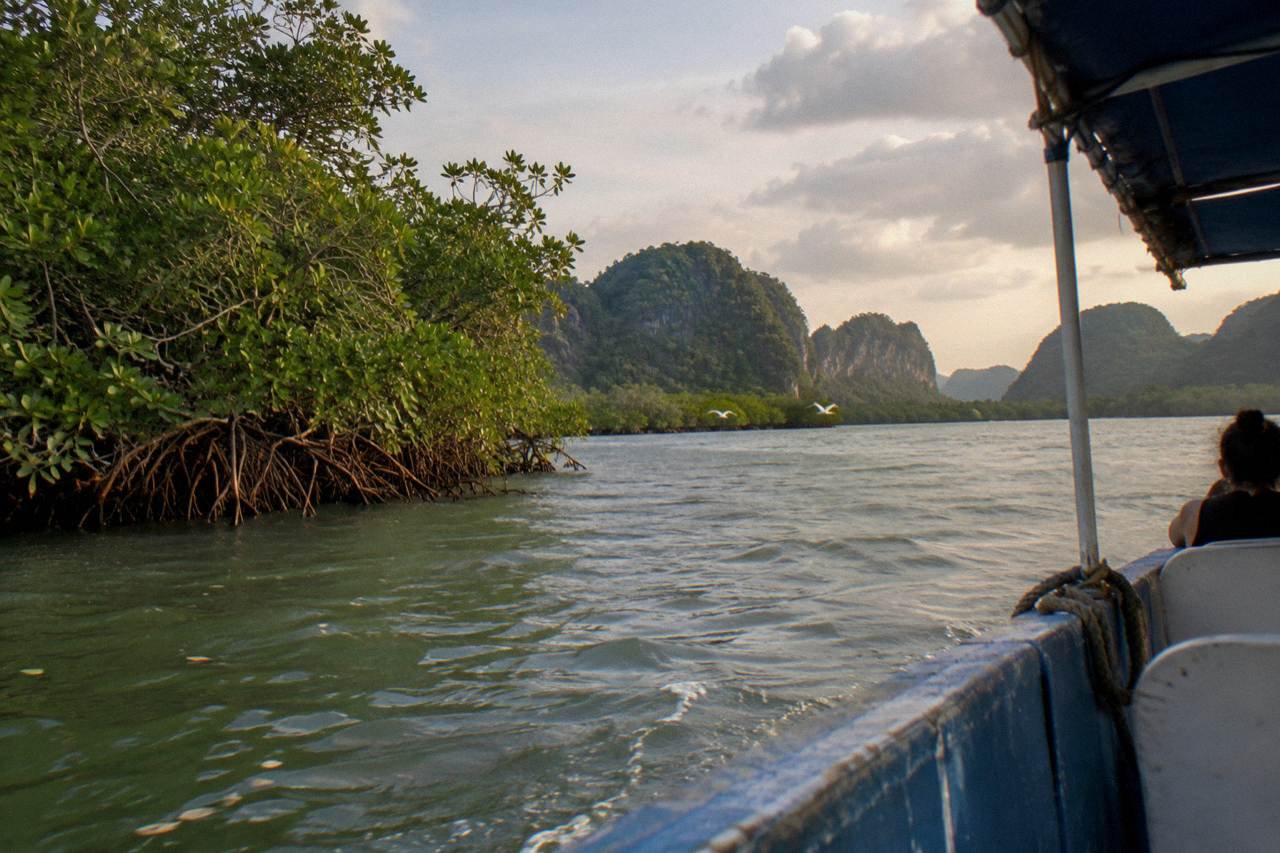
Yes, if you want rock art, caves and a wild mangrove shoreline rather than a beach day, and you accept that it is a half-day commitment reached only by boat. The honest caveat comes first: not a single tour here is a Los Haitises trip, so the park has to be judged on its own merits and booked separately or as a bespoke day, never assumed to ride along with a whale tour.
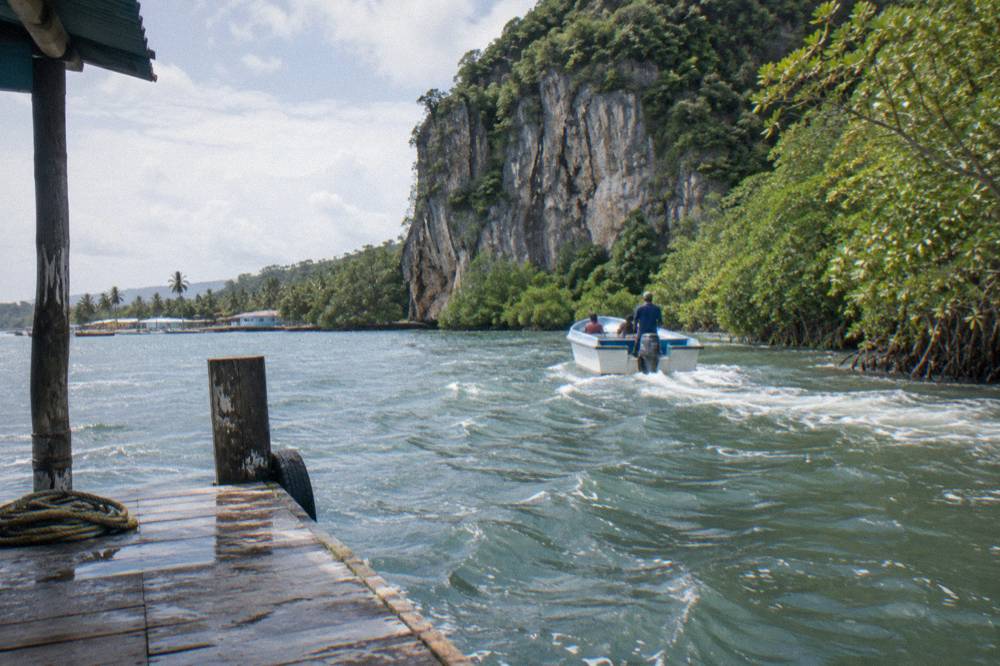
Los Haitises National Park sits directly across the bay from Samaná town, and its silhouette is part of every whale boat's horizon: clusters of limestone mogotes rising straight out of green water, fringed by mangrove. It is the scenery people photograph on the way to the whales. As a destination in its own right it offers something the whale season cannot, which is availability all year, because the caves and channels do not migrate.
The verdict depends on what kind of day you want. Travelers who love archaeology, birdlife and slow water tend to rank it among the highlights of the peninsula. Travelers who want a beach, a swim and a buffet tend to enjoy the crossing and then wonder what all the fuss was about at the cave mouth. Both reactions are fair, and this article lays out the facts so you can place yourself in one camp or the other before spending a day.
It also matters where you are coming from. If you are based in Samaná town or Las Terrenas, the park is a short boat ride away and slots neatly around a whale morning, such as the 3-hour bay cruise or the featured whale and Cayo Levantado full day. If you are commuting from Punta Cana for a single day, adding Los Haitises starts to compete directly with whale time, and that trade rarely favors the park in high season.
No whale day here includes Los Haitises, which is the single most important thing to understand about the park. The lineup's combos pair whales with Cayo Levantado, with El Limón, or with both, and the reasons why are worth understanding before you decide whether to carve out time for the caves.
What Is Actually In Los Haitises National Park?
The park's core attractions are its karst islands, dense mangrove channels and two accessible caves, Cueva de la Arena and Cueva de la Línea, which shelter Taíno petroglyphs and pictographs on their walls. It is a landscape and archaeology destination: there are no beaches to speak of, no whale watching inside the park, and the experience is almost entirely seen from a small boat moving slowly through water.
The mogotes are the signature. These steep limestone hills, dozens of them scattered across shallow water, were formed over millennia and honeycombed with caverns. Boat trips thread between them, and the guides who run these crossings know the channels, the bird roosts and the quiet coves. Frigatebirds, herons and pelicans are commonly reported by visitors, and the mangrove roots along the margins draw the eye on every turn.
The caves are the cultural payload. Cueva de la Arena and Cueva de la Línea both carry Taíno rock art: petroglyphs carved into the stone and pictographs painted on the walls, left by the people who lived on these islands before European contact. Guides point out faces, figures and symbols by flashlight. You do not need an archaeology background to feel the weight of standing in front of markings that predate the colonial city by centuries, but you do need realistic expectations: the visits are short, the caves are humid, and you stay in the boat's company throughout.
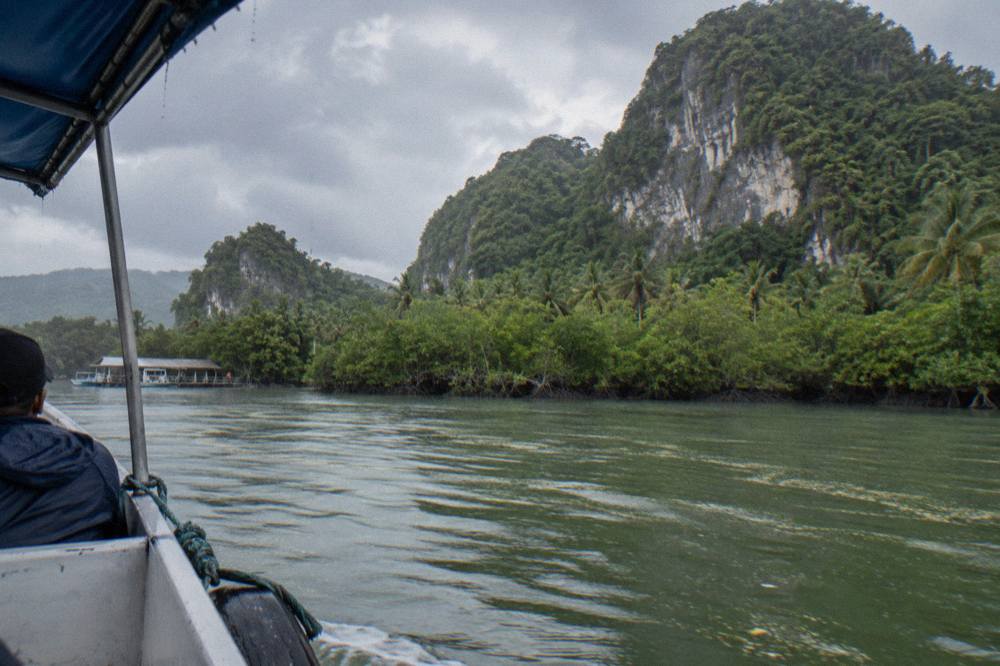
Entry to the park itself is reported as free or bundled into tour prices, with sources varying, and no official per-person figure turned up in ministry sources. The honest position is that the park entry is almost never a separate line item on your bill; the boat is the cost. That makes Los Haitises unusually cheap as a landscape, and unusually dependent on the quality of your boat and guide, because the park provides no infrastructure beyond the landing points.
One more framing helps: this is not a zoo and not a show. The art is where it has always been, the birds come and go on their own schedule, and the channels are as calm or as choppy as the weather decides.
How Do You Get To Los Haitises?
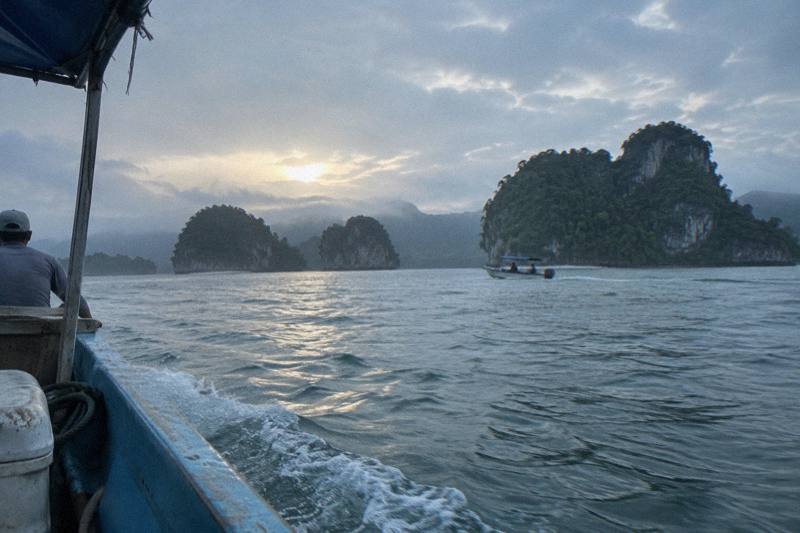
Boat is the only practical way in. From Samaná town the crossing takes roughly 30 to 45 minutes across the bay; from Sabana de la Mar, on the park's southern edge, it is the shortest crossing and the standard departure point for anyone driving from Punta Cana or Santo Domingo. There is no road into the park's cave and mangrove areas.
The two departure choices matter. Samaná town departures suit anyone already on the peninsula for whale season: you can step off a whale boat at the town dock on Avenida La Marina in the morning and, in principle, arrange a Los Haitises crossing from the same waterfront for another day. The crossing from Samaná crosses open bay water first, which means wind and chop are a factor, and the trip becomes a proper boat journey rather than a shuttle.
Sabana de la Mar sits on the park's doorstep and is the shortest hop to the caves, which is why it is the standard base for trips originating in Punta Cana or Santo Domingo. The drive there from Punta Cana runs roughly 3.5 to 5.5 hours one way depending on your exact destination, which is the same punishing arithmetic that shapes every Punta Cana day trip to this coast. Anyone booking from a Punta Cana resort should read the site's guide to getting from Punta Cana to Samaná before committing to a park-and-whale double header.
| Departure point | Crossing to the park | Best suited to |
|---|---|---|
| Samaná town | Roughly 30 to 45 minutes | Basing in Samaná or Las Terrenas; pairing with whale days |
| Sabana de la Mar | Shortest crossing | Day trips from Punta Cana or Santo Domingo |
| Las Terrenas | Drive roughly an hour to Samaná town first | Visitors staying on the north coast |
The Las Terrenas line deserves a note, because the peninsula's second whale-watching base sits on the opposite coast. Las Terrenas has its own direct whale departure, a 6-hour trip from $125 per person, but Los Haitises runs from the bay side, so Las Terrenas visitors reach the park by driving roughly an hour to Samaná town and taking the boat from there. It is doable as a day out; it is not a spur-of-the-moment add-on.
How Much Does Los Haitises Cost?
The honest answer is that no fixed price exists, because no tour listed here is a Los Haitises tour. Park entry is reported as free or bundled into tour prices, so your real cost is the boat, which varies by departure point, group size and negotiation. Treat any quoted figure as a boat fare, not an entrance fee, and check what the fare includes.
What can be said firmly is what surrounds it. If you build your own day from Samaná town, the known price anchors nearby are cheap: the 3-hour Bay of Samana whale cruise runs from $69 per person, the featured whale and Cayo Levantado full day from $84 with lunch and drinks on the listing, and the budget whale and Bacardi Island options from $65. A negotiated Los Haitises boat from the same waterfront is a separate conversation, and the shared-boat model that keeps those prices low applies to island hops, not always to park crossings.
For travelers who want a fixed, bookable day with everything stated up front, the practical route is to take a lineup combo and treat Los Haitises as a separate, locally arranged adventure, or to ask an operator about a bespoke pairing. The private whale watching option from Miches, from $95 per person for 3 to 6 hours with an optional Cayo Levantado visit, shows the shape of the private market: flexible, smaller, priced by the boat's logic rather than a shared seat. A private Los Haitises and whales day would follow the same pattern, and the only way to know the number is to ask.
Why The Tours Pair Whales With Cayo Levantado And El Limón Instead
The commercial logic is simple: whales, Cayo Levantado and El Limón waterfall combine cleanly into one door-to-door day with shared logistics, while Los Haitises needs its own boat, its own route and often its own departure side of the bay. So the bookable market standardized on the combo that works, and the park stayed a specialist product.
Look at what the combo listings actually do. The whale watching and El Limón waterfall day trip, from $169 per person over 13 hours with Runners Adventures, is the most straightforward: pickup, whales, waterfall, lunch, drop-off. The Punta Cana whale, Bacardi and Limón Falls day, from $110 per person over 10 to 12.5 hours, adds a safari truck and an island stop to the same skeleton. The whale and Bacardi Island day trip from Punta Cana, from $165 per person over 10 hours, is the pure whales-and-beach version. All three share one insight: a whale morning ends by noon, and the afternoon needs a destination within easy reach of the dock.
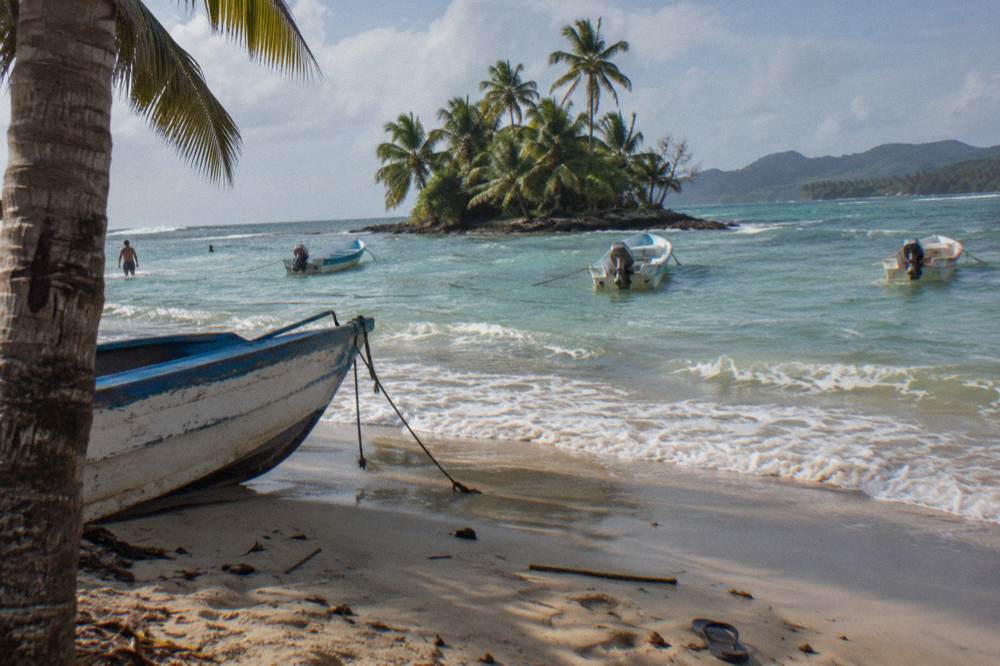
Cayo Levantado answers that need perfectly. It sits 15 minutes from Samaná port by boat, its public beach has no entrance fee, you pay only for the boat and anything you rent or order, and a shared boat from Samaná town is reported at roughly US$15 to 25 per person round trip. That is why the featured whale and Cayo Levantado full day, from $84 per person with coconut snacks, buffet lunch and drinks on the listing, is rated 4.7 from 224 reviews.
El Limón answers it too, from the land side: the waterfall's entry is about RD$100 and the horse ride RD$1,500 to 2,500, both cash-and-local affairs that combo operators bundle so you never handle them. Los Haitises cannot play that role, because it sits across open water, consumes a half-day on its own, and pulls the logistics away from the peninsula everyone is sleeping on. The site's deeper comparison of whale watching with the El Limón waterfall combo shows how tight that pairing has become.
| Bookable combo day | Price (per person) | Duration | What the listing includes |
|---|---|---|---|
| Whale watching and Cayo Levantado full day, Samaná | from $84 | 7 hours | Snacks, buffet lunch, drinks, guide, boat |
| Whales, Bacardi and Limón Falls, from Punta Cana | from $110 | 10 to 12.5 hours | Transport, whale trip, safari truck, lunch, island and waterfall stops |
| Whale watching and El Limón waterfall day trip | from $169 | 13 hours | Vehicle, lunch, water, fees and taxes |
| Whale and Bacardi Island day trip from Punta Cana | from $165 | 10 hours | Buffet lunch with a drink, guide, hotel pickup, water |
| Eco whale, Cayo and El Limón combo | from $199 | 12 hours | Transport, whale watching, Cayo Levantado, buffet lunch, open bar |
None of this diminishes Los Haitises; it explains the market. The park rewards travelers with time and curiosity, the combos reward travelers with one day and a fixed budget. For more on the island half of the question, the site's verdict piece on whether Cayo Levantado is worth it covers the beach stop in detail.
Who Should Skip Los Haitises?
Skip it if you have exactly one day on the peninsula during whale season, if you are traveling from Punta Cana on a fixed schedule, or if boats, humidity and rock art are not your idea of a holiday. In those cases a whale and island combo delivers more certainty per hour, and the park becomes the trip you save for a second visit rather than the one you rush.
The one-day arithmetic is unforgiving. A Punta Cana guest spends 7 to 11 hours of the day on the road before any activity happens, which is exactly why the lineup's Punta Cana days are built as single, complete experiences rather than menus. Cramming Los Haitises into that day means cutting whale time or island time, and the whale season runs only mid-January through March, while the park is there all year. The season is short; the caves are not going anywhere.
Families with young children should also weigh it honestly. The crossing plus a slow drift past rock art is a patient person's pleasure, and small kids often do better with the beach-and-swim shape of a Cayo Levantado day. Check the listing for each operator's age and health rules, since no listing states an age limit, and motion on open bay water affects children faster than adults. The site's guide to whale watching in Samaná with kids applies to any boat day on this coast, park or no park.
Finally, skip it if the goal is whales at all costs. Nothing inside Los Haitises substitutes for a whale morning, and no listing here claims it does. The dedicated whale products, from the $45 budget tour with coconut snacks to the cruise-port shore excursion from $100, are the certainty plays; the park is the bonus round. Anyone torn between the two on a short stay should take the whales, and let the mogotes wait.
For visitors who heed all of the above and still want the park, the play is two days: one whale morning, then a locally arranged Los Haitises crossing. The short 3-hour bay cruise from Av. La Marina leaves an entire afternoon free, which is the cleanest way to keep both options alive without exhausting anyone.
The 13-hour whales and waterfall day from Punta Cana is the counterweight for the other camp: one fixed booking, everything handled, and the peninsula's two headline experiences delivered in a single door-to-door package. Between these poles, most travelers find their answer.
Common Questions About Los Haitises
Can you visit Los Haitises and watch whales on the same day?
It is possible in principle from Samaná town, since whale boats and park boats share the same waterfront and the park crossing takes roughly 30 to 45 minutes. But no standardized listing combines them, so it requires a bespoke arrangement with an operator, and in peak season the whale trip usually fills the morning on its own.
How long is the boat crossing to Los Haitises?
Roughly 30 to 45 minutes from Samaná town across the bay. From Sabana de la Mar, on the park's southern side, the crossing is the shortest available and is the standard departure for trips driving in from Punta Cana or Santo Domingo.
Is there an entrance fee for Los Haitises?
Entry is reported as free or bundled into tour prices, and sources vary; no official per-person fee was found in ministry sources. Your real cost is the boat, so ask any operator exactly what the fare covers before you commit.
Which caves do you see in Los Haitises?
The two commonly visited caves are Cueva de la Arena and Cueva de la Línea, both sheltering Taíno petroglyphs and pictographs. Visits are short, guided, and done from your boat's landing point; there is no independent trail network inside the park.
Is Los Haitises open all year?
Yes. Unlike the whale season, which runs mid-January through March, the park's caves and channels are not seasonal, and no closures or major restrictions were reported for 2026. Boat conditions depend on weather, and hurricane season runs 1 June to 30 November, so check sea conditions before booking a crossing.
The final word is the same one that fits every peninsula decision: match the day to the traveler, not the brochure. Los Haitises is a fine park, a real cultural site and an easy half-day if you are already here.