Samana Weather By Month
Only January to March has climate figures for Samaná, and those months are exactly the whale season. Here is what the sources give, what they do not, and how the calendar and the sea state shape a whale watching trip.
Short answer
Verified sources give Samaná climate figures for January to March only: air highs 28 to 29 degrees, lows about 19 to 20, sea temperatures of 26 to 27 degrees, and rain on roughly 8 to 10 days a month. Hurricane season runs 1 June to 30 November, peaking August to October.
Samana weather by month sounds like a simple request, and most travel sites answer it with a confident twelve-row table. The honest answer is smaller: the verified climate figures for Samaná cover January to March only, because that is the whale season window every serious source bothers to document. Air highs of 28 to 29 degrees, lows around 19 to 20, sea temperatures of 26 to 27 degrees, and rain falling on roughly 8 to 10 days per month.
The weather question is really a boat question. Roughly an hour down the coast, Las Terrenas visitors drive to Samaná town for the departures, and every one of those boats, from the budget fare at from $45 per person to the featured whale and Cayo Levantado full day at from $84 per person, runs on the same bay under the same sky. When the trade winds pick up in the afternoon, the sea state changes, and that single fact shapes more of a whale watching day than any monthly average.
What Is The Weather Like In Samaná During Whale Season?
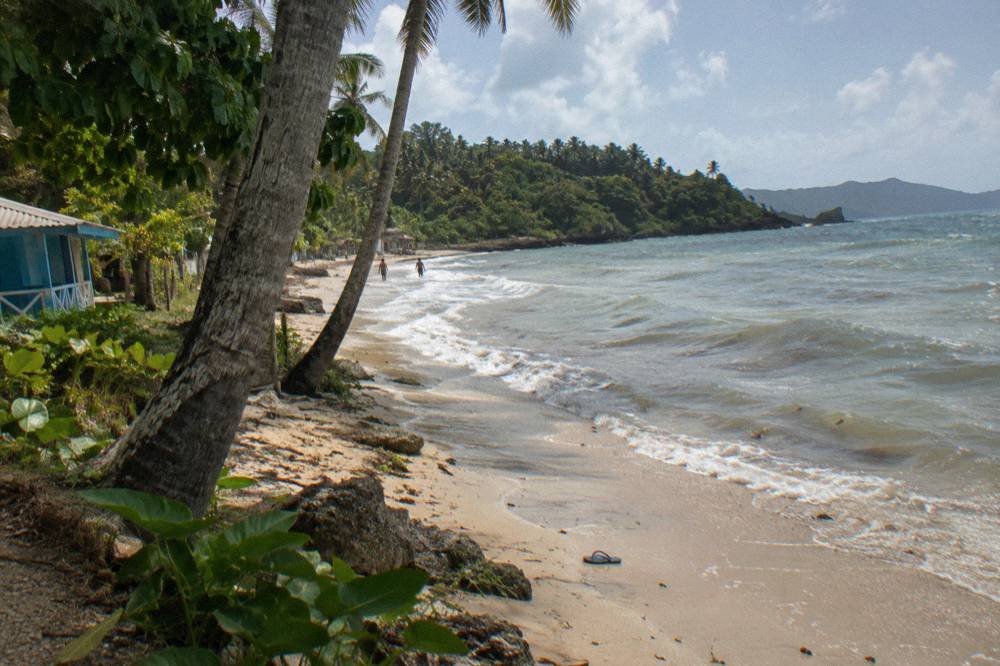
Whale season in Samaná runs mid-January to the end of March, and the verified figures for those months show air highs of 28 to 29 degrees, overnight lows of about 19 to 20 degrees, sea temperatures of 26 to 27 degrees, and rain on roughly 8 to 10 days per month, with January wetter at about 100 mm and March drier at about 75 mm. Those numbers come from reported climate summaries, not from a weather station archive, so treat them as planning ranges rather than promises. They describe a warm, mostly dry stretch of winter that is the reason the humpbacks and the visitors arrive together.
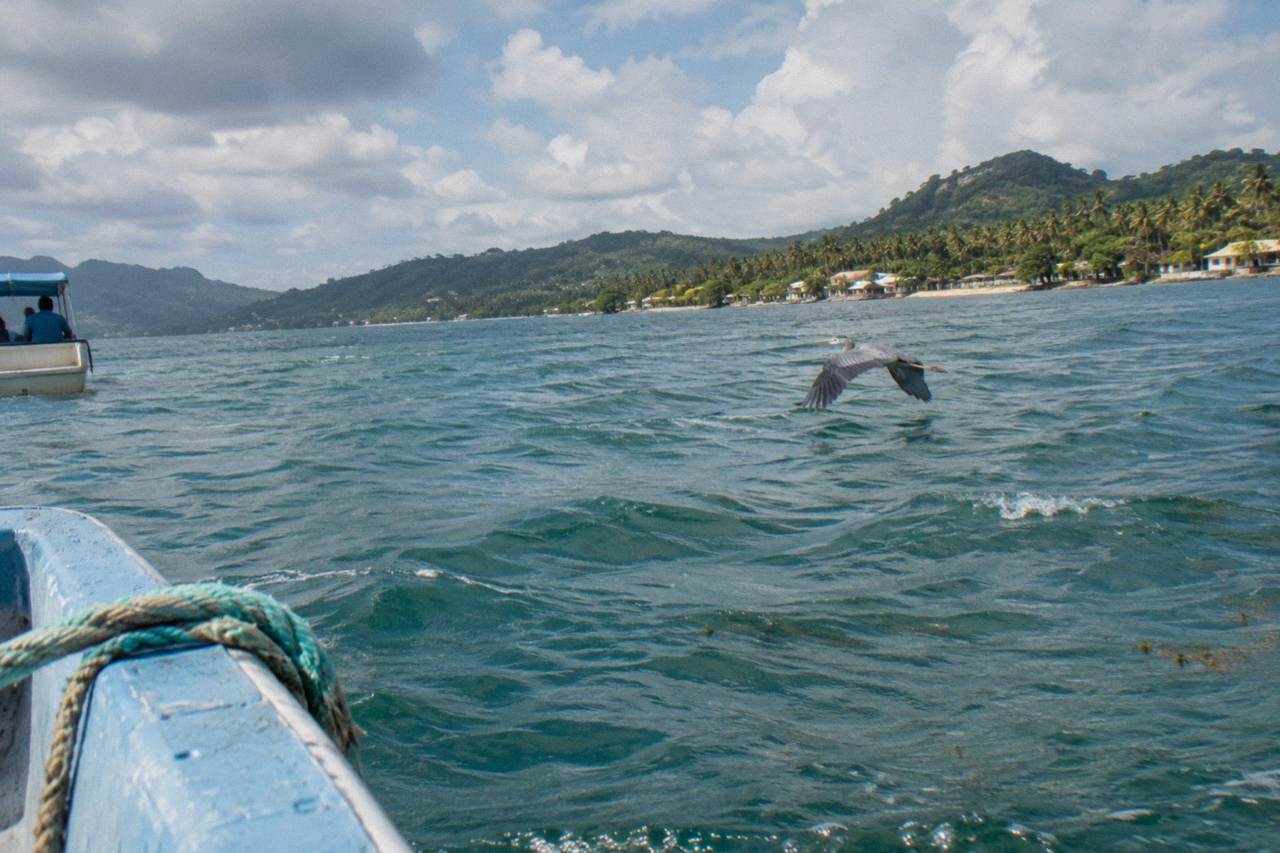
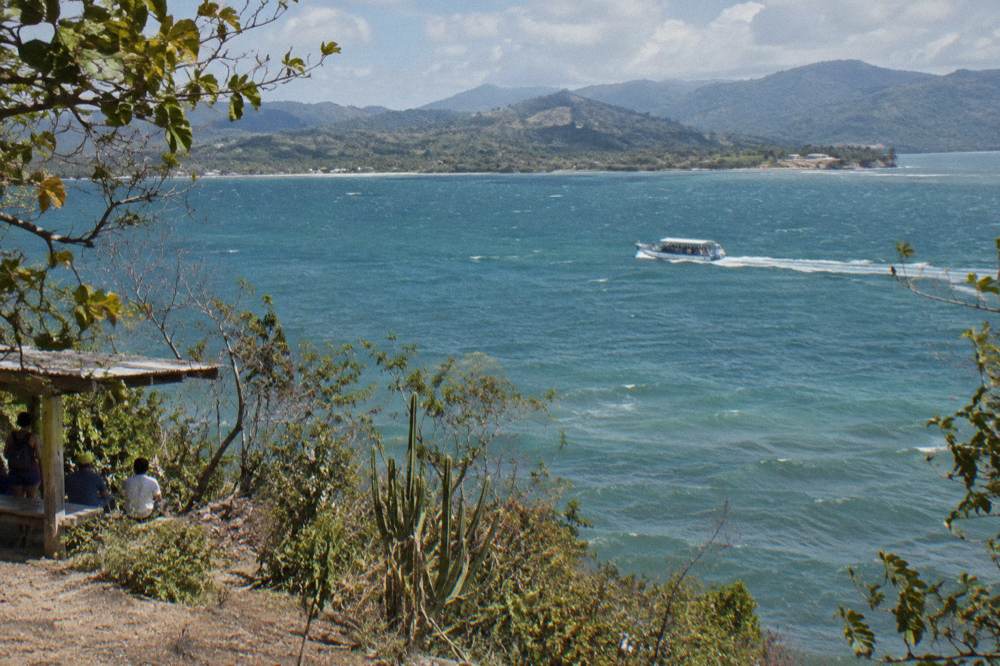
The detail worth knowing is the split within the day rather than between the months. Mornings on Samaná Bay are often the calmest time on the water, and afternoons can turn choppier as the trade winds build. Operators structure their schedules around it.

| Month | Air high | Air low | Sea temperature | Rain | Whale season |
|---|---|---|---|---|---|
| January | 28 C | about 20 C | about 26.6 C | about 100 mm over roughly 10 days | Opens mid-January |
| February | 28 C | about 19 to 20 C | about 26 C | similar to January in the summaries | Peak weeks, per researchers |
| March | 29 C | about 20 C | about 26 C | about 75 mm over roughly 8 days | Closes toward the end of March |
Peak concentrations of whales in the bay are described by researchers as falling February to early March, which conveniently overlaps the calmest, warmest part of the documented weather window. If you are choosing a week inside the season, the sources support February on both counts, with the caveat that whales, weather and sea state all vary and no sighting is ever promised. The season framework comes from the environment ministry, which opened the 2026 season with 46 environmental authorizations for licensed boats.
Are Samaná Bay Mornings Calmer Than Afternoons?
Yes, the pattern reported across the sources is that Samaná Bay is often calmest in the mornings, while afternoons can be choppier as trade winds pick up, which is why many whale boats favor morning departures and why the 3-hour bay cruise at from $69 per person is a comfortable morning commitment. The trade winds are a standing feature of the Caribbean winter rather than a Samaná quirk, and their afternoon build is the single most useful piece of weather intelligence for a boat day. Nothing in the sources promises a flat sea at 09:00, but the pattern is consistent enough that operators plan around it.
For a visitor this translates into a simple decision. If you book the short option, the Bay of Samana Whale Watching Experience from Moto Marina Tours, you are signing up for 3 hours on the water with a 4.5 rating from 126 reviews, coconut slices and soft drinks included, and you are done before the afternoon chop has time to build. If you book a full day, such as the whale watching and Cayo Levantado full day tour at from $84 per person, the itinerary spreads across both halves of the day, and the island stop absorbs whatever the afternoon brings.
| Time on the water | Typical sea state pattern | What it suits |
|---|---|---|
| Early morning | Often the calmest window reported | Whale observation, photography, nervous sailors |
| Midday | Transition as winds build | Whale watching plus transit to Cayo Levantado |
| Afternoon | Can be choppier with trade winds | Island time, beach time, boat rides back |
Travelers who worry about rough water may also want the practical preparation covered in the seasickness guide for Samaná boats, and the packing side is handled in what to wear and bring. The short version: mornings are your friend, and a band of clouds in the afternoon forecast is not a reason to skip the bay.
When Is Hurricane Season In The Dominican Republic?
The official Atlantic hurricane season runs 1 June to 30 November, with peak activity August to October, and the entire window sits outside Samaná's whale season, so a mid-January to March whale trip carries no hurricane season overlap at all. That separation is the cleanest fact in this guide and the one most worth stating plainly, because travelers often conflate "Caribbean summer" with "storm risk" without checking the calendar. The dates are official, aligned across US Embassy and meteorological sources, and they do not change year to year.
The whale calendar and the storm calendar never meet. Whales arrive from mid-January and the season runs to the end of March; the first named-storm possibility is two months after the last whale boat of the season docks.
| Calendar window | What it is | Overlap with whale season |
|---|---|---|
| Mid-January to end of March | Whale watching season, 46 licensed boats in 2026 | The season itself |
| 1 June to 30 November | Official hurricane season | None |
| August to October | Peak hurricane activity | None, and no whale boats run |
The storm window matters to whale planning in exactly one way: it explains why the whale season sits where it does on the calendar, in the dry, cooler, calmer months. For the regulatory side of that season, CEBSE, the conservation body that has run the bay's whale watching rules since 1996, publishes the framework on its Samaná Bay panel page, including the 80-meter distance rule for mothers with calves.
What Do The Sources Say About Samaná From April To December?
Nothing month by month, and this guide will not invent it: no verified April to December climate figures for Samaná are available, no monthly sea temperatures are published for it, and any site printing a confident twelve-month table for this coast is filling gaps that the underlying sources do not contain. That is an uncomfortable sentence for a page titled by month, but it is the honest one.
What can be said about the off-season is structural rather than meteorological. No whale boats run, because the season authorizations cover mid-January to March only. The sea temperature information that is available, including the January average of about 26.6 degrees, is a winter figure and cannot be extrapolated to July. Travelers visiting outside whale season come for Cayo Levantado's public beach, which has no entrance fee but needs a paid boat, roughly US$15 to 25 per person round trip as a reported shared-boat range, and for Los Haitises, reported as free to enter but reachable only by boat.
There is a planning logic here that beats a fake monthly table. Decide first whether whales are the point of the trip. If yes, the season is your window and the January to March figures above are your weather.
Does Weather Change Which Whale Tour You Should Book In Samaná?
Yes, in one specific way: because afternoons can be choppier, short morning options like the 3-hour Bay of Samana cruise at from $69 per person suit weather-sensitive travelers, while longer days such as the whale and Cayo Levantado full day at from $84 per person trade a full schedule for more hours exposed to whatever the wind does. The weather does not change which tours exist, but it changes which of them fits you. Duration is the variable to look at, and the lineup spans 3 hours to 13 hours.
Compare the two extremes. The Bay of Samana Whale Watching Experience is 3 hours, shared, from the departure point on Avenida La Marina, snacks and drinks included, lunch not. At the other end, the whale watching and Limón waterfall day trip runs 13 hours from Punta Cana and Bávaro hotels, from $169 per person, with a 4.5 rating from 146 reviews, and it commits you to a full day that includes mountain roads and a boat, in whatever conditions the day serves up. Between them sit the half-day humpback trip at from $95 per person and the whale plus Cayo Levantado days.
| Tour | Duration | From (per person) | Weather exposure |
|---|---|---|---|
| Bay of Samana cruise | 3 hours | $69 | One morning window |
| Half-day humpback trip | 3 to 6 hours | $95 | Half a day, timing varies |
| Whale and Cayo Levantado full day | 7 hours | $84 | Morning boat, afternoon island |
| Whale and Limón waterfall day trip | 13 hours | $169 | Full day, boat plus mountain road |
The half-day humpback trip, run by Whale Punta Cana from Restaurant Royal Samaná, splits the difference and carries a 3.5 rating from 15 reviews, a modest pool worth reading before you book. Whatever you choose, read the cancellation terms on the listing, and check the operator's age and health rules there too. When in doubt about the water itself, the what to expect on the boat guide walks through a typical departure morning.
Where Does The Weather Matter Most: Samaná Bay, Cayo Levantado Or Punta Cana?
Samaná Bay is where weather bites, because every whale boat crosses open water there; Cayo Levantado softens it, since its beach stop sits minutes from shelter; and Punta Cana mostly adds drive time, 3.5 to 5.5 hours one way to Samaná, which turns a weather-delayed departure into a very long day. Geography, not the forecast, is the real variable. The same January afternoon breeze is a non-event on a Bacardi Island sun lounger and a real factor on a bay crossing.
Punta Cana departures deserve special mention because the lineup is large, ten tours from $110 to $200 per person, and every one of them spends most of its duration on a bus. The 10-hour Bacardi Island day at from $165 per person, with a 4.4 rating from 47 reviews, and the 11 to 13-hour whale watching day from Puerto Plata at from $132 per person both bundle hours of road before any boat. On a calm, bright morning that is a scenic trade. On a gray, choppy one it is a long day with a short sail,
Cayo Levantado itself is weather-forgiving in one direction only. The crossing is short, reported at about 15 minutes, and the island sees a reported 400 to 600 visitors a day in season, so it functions in most conditions. What it does not do is shelter you from an organized tour's schedule: if the bay is rough, the whale leg shortens, not the beach leg. Las Terrenas-based travelers, roughly an hour from Samaná town by road, have the flexibility locals enjoy: they can watch the morning sky and pick a departure on short notice, a point expanded in whale watching from Las Terrenas.
How Should You Plan Around The Samaná Calendar?
Plan in this order: pick a week between mid-January and the end of March, aim for February if you want the weeks researchers describe as peak concentrations, book a morning-departure tour so the trade winds work for you, and read the cancellation terms on the listing so a weather change costs you nothing you did not agree to. That sequence uses every calendar fact without inventing a single monthly number for the months nobody has documented.
The one practical anchor most visitors use is the featured whale and Cayo Levantado full day: from $84 per person, 7 hours, a 4.7 rating from 224 reviews, buffet lunch on the island included, hotel pickup not. It is the tour the calendar favors, since its island stop absorbs an afternoon and its whale leg rides the morning. Book it, or any tour, inside the season and the weather facts in this guide are the ones that apply to your day.
A final word on expectations, because weather writing drifts toward promise-making. The honest version of a Samaná weather plan is a season, a morning, a short-listed tour, and cancellation terms you have actually read. The best time for whale watching guide extends this calendar into the full planning picture if you are choosing dates from scratch.
What Is Samaná Bay Like On A Whale Morning?
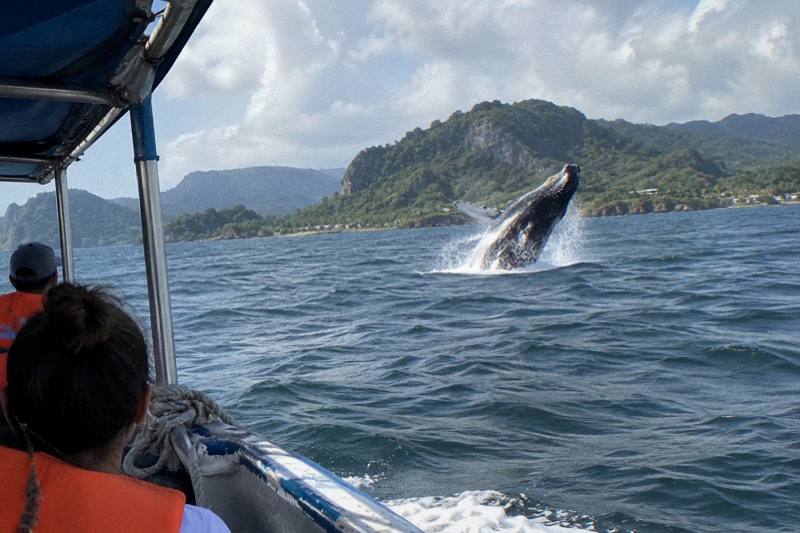
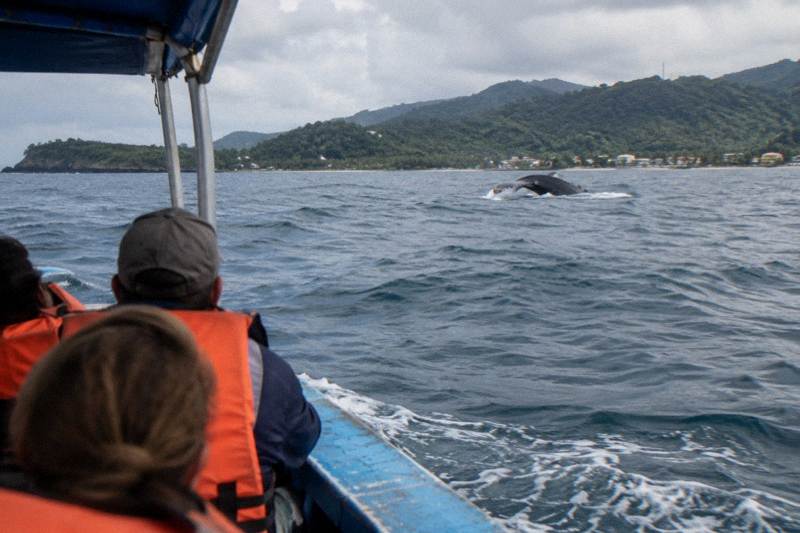
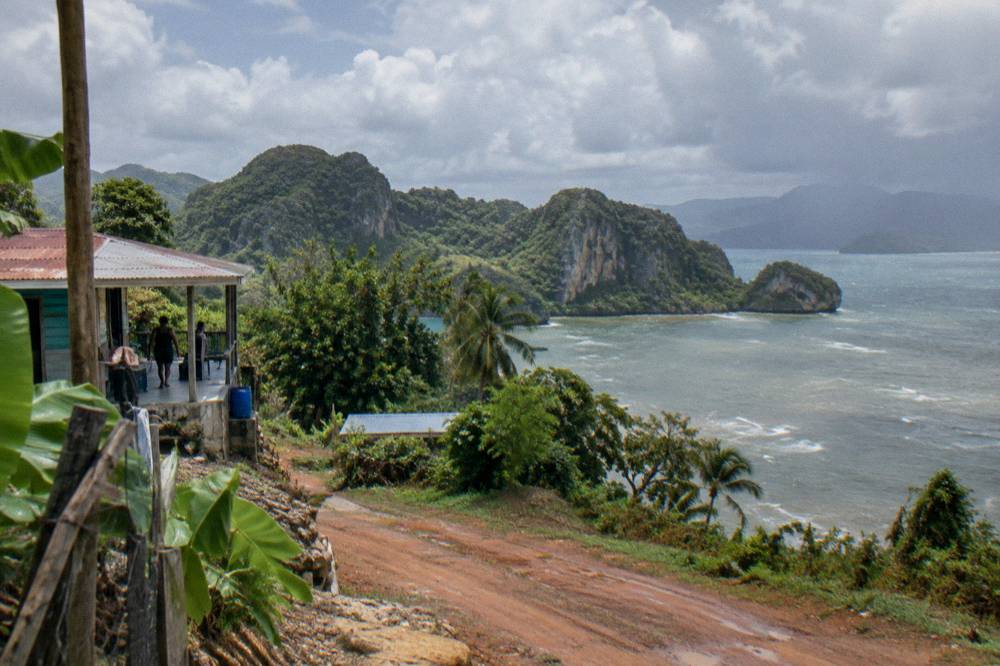
Samana Bay wakes gently in whale season, which opens on 15 January and runs into late March. Mornings on the bay are often calmest, before trade winds build and the water turns choppier in the afternoon. Trips with the Whale Samana operator last 3 to 4 hours and leave from the main town dock, directly across from its office. Air temperatures climb toward highs of 28 to 29 degrees by day, the sea sits at 26 to 27, and rain falls on roughly 8 to 10 days a month. The crossing past Cayo Levantado takes about 15 minutes.
Rules govern every approach on the water. Boats hold 80 metres from mothers with calves and 50 metres from any other group. No more than 3 boats may gather around a single group at once; a 4th boat waits 250 metres away and holds there for 30 minutes until one of the others moves off. Engines are never switched off inside the observation area. In a 2026 pilot, licensed whale boats carried voluntary GPS devices on the Earth Ranger platform, giving authorities a real-time picture of where each vessel sat relative to the whales.
Observation time follows its own logic. A group of whales receives a maximum of 30 minutes of viewing when other boats are waiting nearby, and that window is cut in half when whales are scarce. Swimming with whales is prohibited throughout Samana Bay, and drones may not be flown inside the sanctuary without ministry permission. The result is watching at a respectful remove: mothers with calves held at 80 metres, engines kept running, and the boat holding its distance while the whales move through the bay.
The schedule leans into the calm of morning. From 15 January to 5 February, one trip sails each day at 10:00. From 6 February to 13 March, two departures run daily, at 09:00 and 13:30, the only stretch with an afternoon option. From 14 March, the timetable returns to a single 10:00 trip. Morning departures match the bay at its smoothest, before trade winds build and the surface turns choppier, and the 09:00 start puts watchers on the water at the gentlest hour of the day. Nights dip to about 19 to 20 degrees, so a light layer for the ride out earns its place in the bag.
What Should You Pack For A January To March Whale Trip?
Pack for warm days and mild evenings. January through March, air highs sit at 28 to 29 degrees, which calls for light, breathable shirts, shorts or loose trousers, and sandals that can handle a wet dock. Nights dip to about 19 to 20 degrees, cool enough on the water that a fleece or long-sleeved layer earns its place in a daypack. Choose quick-drying fabrics over heavy cotton, since salt and damp linger on the ride back. A spare set of clothes kept dry on shore helps after a spray-soaked morning. Nothing elaborate is needed, just layers that can be shed as the sun climbs.
The sea holds at 26 to 27 degrees through the season, warm for splashes and shoreline dips, and swimming with whales is not permitted in Samana Bay, so swimwear is for time ashore rather than the water near the animals. Trips last 3 to 4 hours, long enough for damp clothes to chill you once the boat picks up speed. A light rain shell or windbreaker blocks spray better than an umbrella ever could on deck. Bring a dry bag or zip-sealed pouch for phones and documents; wave splash reaches seats without warning. A small towel stashed in the pack dries hands and glasses between sightings.
Mornings on the bay are often calmest, and afternoons can turn choppier as trade winds build, so gear should cover both moods. A hat with a chin strap stays put when the breeze freshens after midday. Sunglasses on a retainer cord survive the gusts that come with an open boat. Footwear matters more than style: non-slip soles grip a wet deck, and heels or slick-soled shoes do not. The crossing to Cayo Levantado takes about 15 minutes, short enough that light layers suffice, though a long-sleeved shirt shields arms from sustained wind on faster legs.
Rain falls on roughly 8 to 10 days a month, so a packable poncho or foldable rain jacket earns its space without weighing the bag down. Sun exposure is the bigger daily concern out on open water for hours at a stretch. Pack sunscreen, a lip balm with similar protection, and sunglasses that cut glare off the sea. A wide-brim hat shades the ears and neck that a cap leaves bare. Binoculars help too, since boats hold back from whale groups and mothers with calves are viewed from 80 m. Add motion-sickness remedies as a personal precaution, taken before boarding.
Common Questions About Samaná Weather By Month
What is the weather like in Samaná during whale season?
Verified figures for January to March show air highs of 28 to 29 degrees, lows of about 19 to 20, sea temperatures of 26 to 27 degrees, and rain on roughly 8 to 10 days per month, with January around 100 mm of rain and March around 75 mm.
When is hurricane season in the Dominican Republic?
Officially 1 June to 30 November, with peak activity from August to October. The window does not overlap the whale season, which runs mid-January to the end of March.
Does Samaná have climate figures for every month?
Only January to March figures are verified here; no monthly numbers for April to December are available, and this guide states that plainly rather than filling the gap.
Is the sea calmer in the morning in Samaná Bay?
The reported pattern is calmer mornings and choppier afternoons as trade winds build, which is why many operators favor morning departures and why short morning tours suit weather-sensitive travelers.
Which month is best for whales in Samaná?
Researchers describe peak concentrations as February to early March. No month-by-month sighting counts exist in any official source, and no sighting is ever guaranteed.
Does weather change which whale tour I should book?
It changes the fit. Short morning options like the 3-hour bay cruise limit exposure to afternoon chop, while 10 to 13-hour days from Punta Cana or Puerto Plata commit you to a full schedule in whatever conditions the day brings.