Whales and Cayo, Meal Included
Whale Watching From Samaná And Las Terrenas · 7 hours
★ 4.7 · 224 reviews · From $84
Check availability →Every licensed whale boat in Samana Bay works under rules written for the whales, not the passengers. Here is what those rules say, who enforces them, and how they shape the trip you actually buy.
Short answer
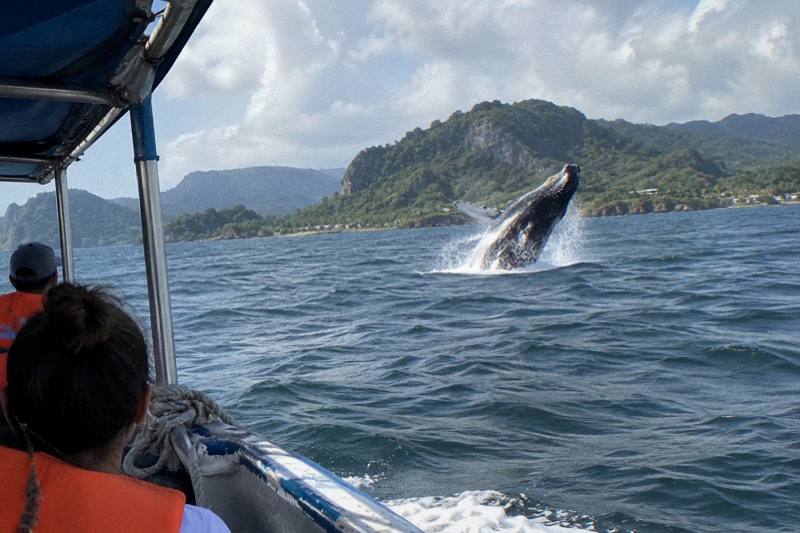
Samana Bay is part of the Dominican Republic's Marine Mammal Sanctuary, where boats run under CEBSE rules in force since 1996: 80 m from mothers with calves, 50 m from other groups, at most 3 boats per group, and no swimming with whales. In 2026 the ministry added a management committee and 46 digital authorizations.
Every January, humpback whales arrive in Samana Bay after a migration from northern feeding grounds, and every boat that goes out to watch them does so inside a protected area with written rules. The Centro para la Conservación y Ecodesarrollo de la Bahía de Samaná y su Entorno, known as CEBSE, has applied those rules in the bay since 1996, and the Ministry of Environment and Natural Resources licenses and regulates them. That framework is the reason a whale trip in Samana looks the way it does: boats keep their distance, take turns, and never put swimmers in the water. If a humpback swims right up to your boat, the rules about touching whales in Samana Bay explain exactly what is and is not allowed.
This matters before you book anything. The featured whale watching and Cayo Levantado full day from $84 per person, the 3-hour bay cruise from $69, the Las Terrenas departure from $125 and the Punta Cana day trips all operate under the same sanctuary rules, whoever drives the boat. Understanding the rules sets fair expectations: you will watch whales from a vessel at a regulated distance, on a licensed operation, and that is by design. This guide lays out the distances, the boat limits, the 2026 management changes and the honest limits of enforcement, with links to the official pages behind each rule. If you're weighing Samaná against other spots in the region, the guide to the best Caribbean island for whale watching applies the same scrutiny to every option.
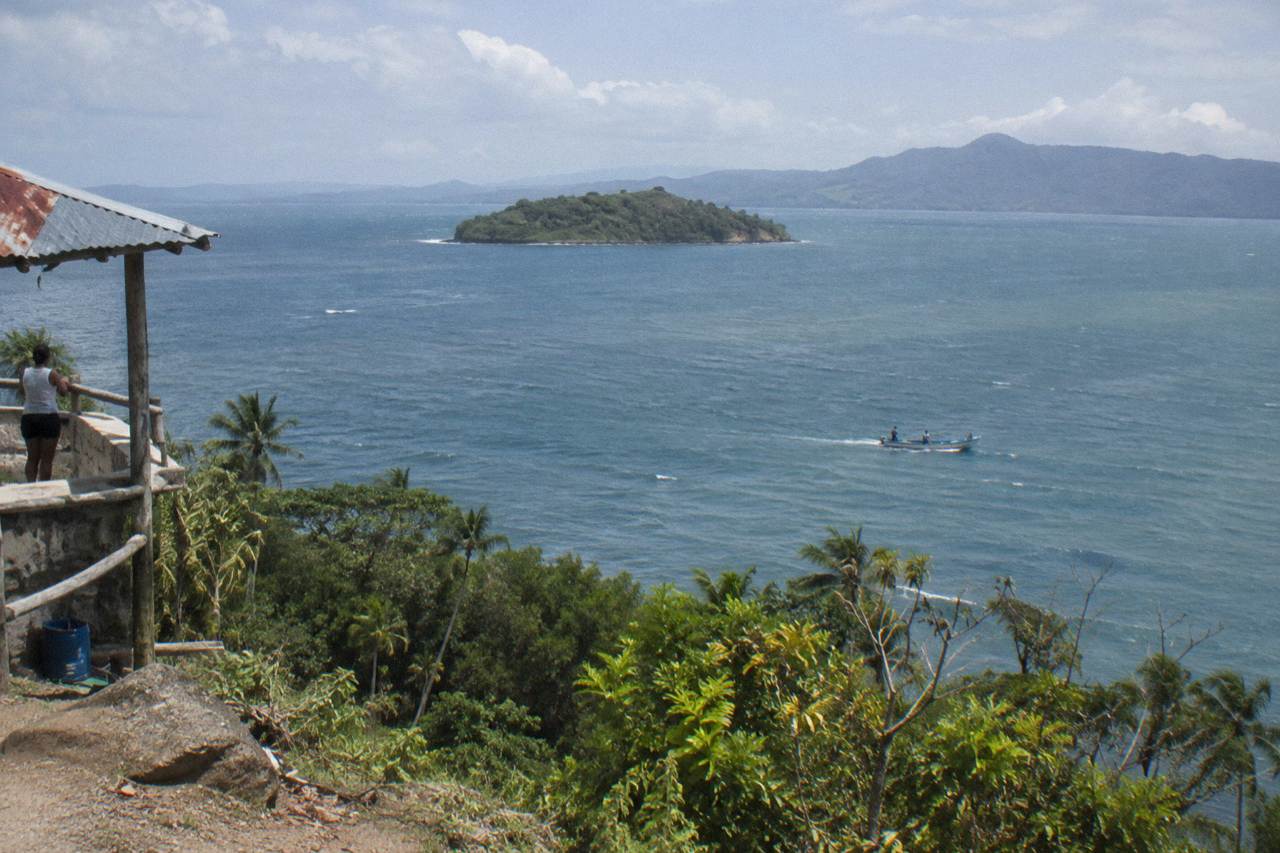
The sanctuary is a legally protected marine zone, the Santuario de Mamíferos Marinos, that covers Samana Bay together with the offshore Banco de la Plata and Banco de la Navidad, established under Dominican environmental law and managed through an annual agreement between the ministry and local institutions. Humpbacks travel to these waters each winter to mate and calve, and the sanctuary framework exists to keep that possible alongside a whale watching industry that runs from mid-January through March. The legal basis combines Ley 64-00, the general environmental law, with a sanctuary management plan and yearly operating agreements.
Whales and Cayo, Meal Included
Whale Watching From Samaná And Las Terrenas · 7 hours
★ 4.7 · 224 reviews · From $84
Check availability →CEBSE, a local conservation and development organization, is the body whose observation rules have governed boat behavior in the bay since 1996. Its panel page on the bay sets out the distances, boat counts and time limits that every licensed captain works under, and states plainly that the rules are regulated and licensed by the Ministry of Environment. This is not a voluntary code of conduct. It is the operating condition attached to every one of the 46 environmental authorizations issued for the 2026 season.
For visitors, the practical effect is that the whole bay functions as a managed wildlife area rather than a free-for-all. The season window, mid-January through to the end of March, comes from the ministry's opening each year: the 2026 season opened officially on 15 January under an inter-institutional management agreement. If you are working out when to travel, the deeper month-by-month picture is in the guide to the best time for whale watching in Samaná.
The sanctuary also covers the offshore banks, which matters for one specific question. Swimming with humpbacks is legal in the Dominican Republic only at Banco de la Plata, under strict permits held by live-aboard dive boats, roughly US$3,500 to 5,500 for a week, reported. It is not a day trip from Samaná, and it is not what any boat in the bay sells.
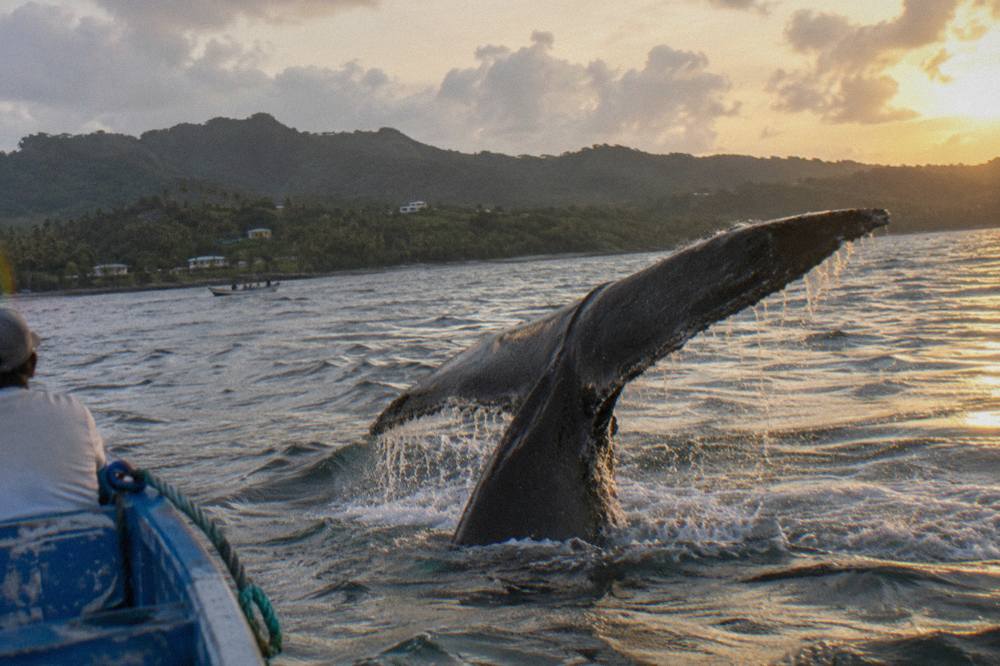
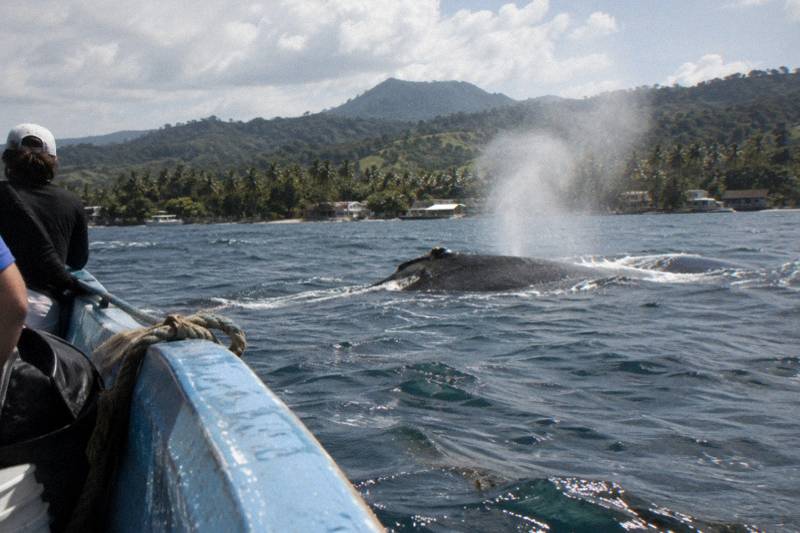
Licensed boats keep 80 meters from any mother whale with a calf and 50 meters from any other whale group, distances set by CEBSE and enforced through the ministry licensing system, and no boat may close that gap to give passengers a better look. The 80-meter rule for mother-and-calf pairs is the strictest of the two, because a calf resting in shallow bay water is the most vulnerable animal on the water. The 50-meter rule applies to all other groups, including competitive groups of males pursuing a female.
| Situation | Minimum distance | Why |
|---|---|---|
| Mother with calf | 80 m | Calves rest at the surface and are most easily disturbed or injured |
| Any other whale group | 50 m | Protects resting, mating and competitive behavior |
| Waiting boats (4th boat or more) | 250 m | Stands off until a watching boat leaves |
| Drones | Not permitted without ministry permission | Unauthorized drone flights near whales have been reported |
These distances explain a great deal of what a first-time visitor perceives as a shortcoming of a tour. Whales appear at whale-scale, not aquarium-scale, and a good guide with a licensed boat positions within the rules and lets the whales' own behavior fill the frame. The guide to what to expect on a Samaná whale watching boat covers how this plays out on the water, from viewing decks to sighting calls.
Every departure in the bay runs under the same numbers. The 3-hour bay cruise from Samaná town, from $69 per person, 4.5 from 126 reviews, and the featured whale watching and Cayo Levantado full day from $84 per person, 4.7 from 224 reviews, both operate from the Marina district of Samaná under these distance rules, whoever runs the boat that day. The private whale watching option out of Miches, from $95 per person, is bound by them too: a private charter buys exclusivity, not proximity.

The distances are also why binoculars earn their space in your bag. A breach at 80 meters is spectacular; a fluke at 50 meters is unmistakable; but long stretches of any trip are watching animals surface and dive inside a wide bay, and magnification turns specks into whales. Nobody on a licensed boat will chase a whale to make it bigger.
At most 3 boats may watch a single whale group at one time; a fourth boat must wait 250 meters away for up to 30 minutes until one of the watching boats leaves, and each boat gets a maximum of 30 minutes with a group when others are waiting, halved when whales are scarce. The rule exists because the bay can be busy at the February peak, when researchers describe the highest concentrations of whales and the highest demand from visitors in the same weeks. Without a turn system, popular groups would be ringed with boats all morning.
The rotation changes the rhythm of a trip in ways worth knowing before you board. Your captain may hold position at a distance while other boats take their turn, then move in for the watching window. The 30-minute cap is a maximum, not a promise: when whales are scarce in the area, the watching time is halved so that every licensed boat gets fair access during the day.
| Rule | Limit | Condition |
|---|---|---|
| Boats per whale group | 3 maximum | Applies at all times in the observation area |
| Waiting distance for the 4th boat | 250 m | Also waits 30 minutes until a boat leaves |
| Watching time per group | 30 minutes maximum | When other boats are waiting |
| Watching time when whales are scarce | Halved | Set by CEBSE rule |
| Engines | Must stay on | Switching off in the observation area is prohibited |
The engines-on rule surprises people. It sounds quieter and gentler to cut the engine near whales, but CEBSE prohibits it for safety. Silence is not the safety measure here, control is.
All of this is easiest to see on the shorter trips that stay inside the bay. The Samaná whale watching tour with snacks, from $45 per person, 4.9 from 20 reviews, and the half-day humpback trip from $95 per person, 3.5 from 15 reviews, both spend their whole running time inside this turn-taking system. Longer days, like the Punta Cana Bacardi day trips from $165 per person or the El Limón waterfall combos from $169 per person, 4.5 from 146 reviews, compress their whale watching into the same regulated window before moving on to the island or the falls.
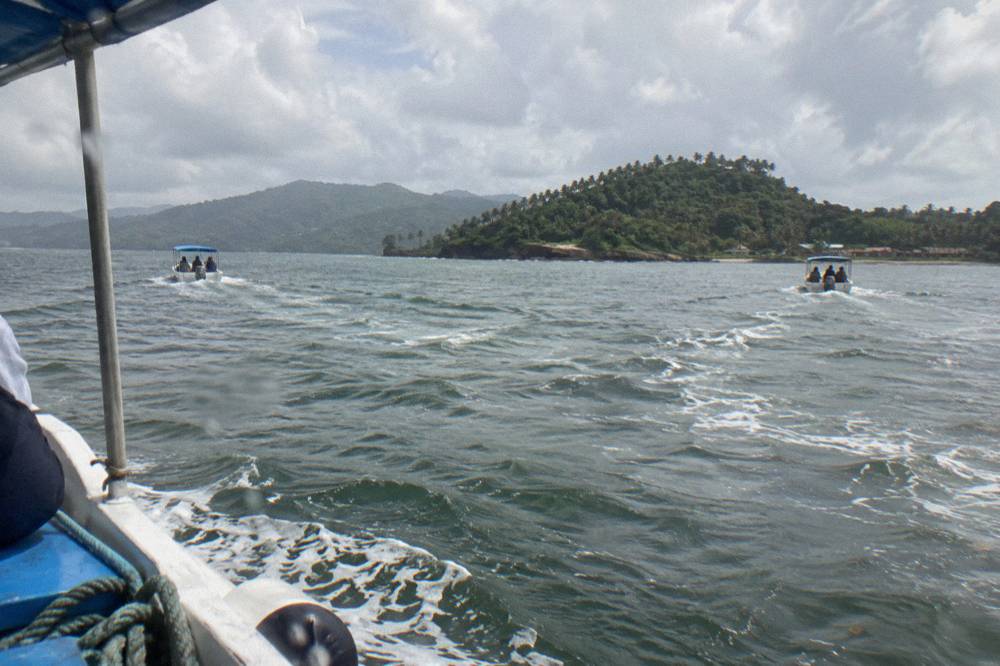
If you are choosing between formats, the trade-offs between crowded and quiet boats are laid out in the guide to small group or large boat whale watching in Samaná. The sanctuary rules cap boats per whale group, not passengers per boat, and each listing states its own maximum group size where given.
The 2026 season opened on 15 January with an inter-institutional management agreement that created a Marine Mammal Sanctuary Management Committee covering authorizations, boat inspections, captain training, scientific monitoring and end-of-season reporting, and issued 46 environmental authorizations processed digitally for the first time. The ministry release on the 2026 opening describes the agreement and the authorization count; the practical effect is a single committee now owns the whole compliance chain that used to sit across several offices.
| What the 2026 agreement covers | What it means on the water |
|---|---|
| Sanctuary Management Committee | One body plans, supervises and reports on the season |
| 46 authorizations, 43 thematic plus 3 from Puerto Plata | A fixed, countable fleet of licensed boats |
| Digital permit processing, first time | Authorizations tracked transparently rather than on paper |
| Boat inspection and captain training | Licensed skippers are drilled on the CEBSE rules |
| Scientific monitoring and technical reports | Season data feeds back into next season's rules |
| Voluntary GPS pilot (Earth Ranger) | Real-time tracking on participating licensed boats |
The 46 number is worth remembering when you evaluate operators. Anybody selling whale trips in the bay during the season should be running under one of those authorizations, either directly or as a reseller of a licensed boat's seats.
Enforcement reporting in 2026 was not spotless. Press coverage during the season described ongoing challenges: illegal swimming-with-whales offers from Las Galeras, unauthorized drone flights near whales, and fishing nets found inside sanctuary waters against the management plan. None of that is unique to 2026, and naming incidents is not the point; the point is that the rules, the licence check and the committee exist precisely because pressure on the bay is real. Checking that your operator is licensed is not bureaucratic fussiness, it is the single consumer action that funds the compliant fleet.
The GPS pilot is the newest layer. Voluntary Earth Ranger devices on licensed boats gave the authorities real-time positions during the 2026 season, coordinated with the Dominican Navy, which makes distance and time rules checkable after the fact rather than a matter of a captain's word. For 2027, dates had not been announced as of late October 2026; the ministry's permit call for the 2027 season ran 16 October to 13 November 2026, open to boat owners and tour companies across Samana Bay, Las Galeras, Miches, Sabana de la Mar and Las Canitas.
Catamaran, Beach Lunch, Bacardi
8 hours 30 minutes
★ 4.0 · 17 reviews · From $65
Check availability →
Swimming with whales is prohibited in Samaná Bay under the CEBSE rules, because the bay is a breeding and calving ground where close human contact stresses the very animals the sanctuary protects; the only legal in-water humpback encounters in the Dominican Republic happen at Banco de la Plata under strict permits. That prohibition is absolute for the bay, and it applies to every operator, every boat and every price point. If a seller in Las Galeras or anywhere on the peninsula offers to put you in the water with whales, the offer is illegal, and press reports during 2026 confirmed such offers circulate.
The distinction with Banco de la Plata matters, because the two get conflated in travel content. The Silver Bank, offshore and hours away by live-aboard, hosts a small number of permitted operators running week-long trips from Puerto Plata, roughly US$3,500 to 5,500, reported. Those trips are swim encounters under strict protocols in open ocean water. Nothing of the kind is legal or on offer from Samaná, and no boat listed here sells it.
What the bay does offer instead is surface observation under the distance rules, and by most guest accounts that is the right register for the place. The rules for approaching, waiting and leaving are written around what the whales are doing that day, not around a passenger timetable.
The drone rule follows the same logic. Drones are not permitted inside the sanctuary without ministry permission, because low-flying aircraft over resting whales disturb them in ways a boat at 50 or 80 meters does not. Unauthorized drone flights near whales were among the compliance problems reported in 2026. Leave the drone ashore unless you hold ministry permission; no tour listing on this site includes drone filming as an inclusion.
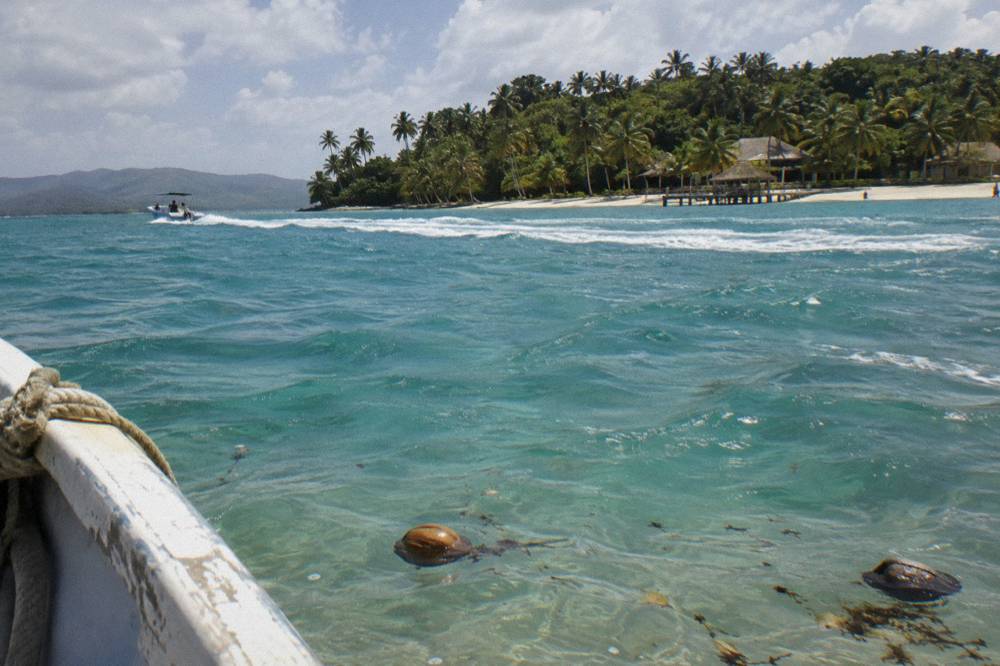
The rules explain the shape of every trip sold from Samaná, Las Terrenas, Punta Cana and Santo Domingo: fixed departure points, licensed guides on board, a watching window measured in minutes rather than hours, and itineraries that pair the whale portion with Cayo Levantado or El Limón because the bay visit itself is deliberately bounded. The rest is transit, lunch and the second stop.
Known departure points: the town dock on Avenida La Marina in Samaná, the Whale Samana office on Calle Mella, Santorino restaurant, Zabora Bistro, Restaurant Royal Samaná, the cruise port at Puerto de Samaná for the shore excursion from $100 per person, and hotel pickup in Punta Cana and Bávaro, Santo Domingo, Boca Chica and Puerto Plata. The Las Terrenas departure from $125 per person drives roughly an hour to Samaná town before the boat leg even starts. Each of these is verified per listing; where a listing does not state a departure, say so and check before booking. If you're bringing children, the family guide to whale watching in Samaná with kids covers trip lengths, life jackets, meals, and the shortest boat options to check before you book family tickets.
| Departure area | Price range across the tours listed here | What the sanctuary rules add |
|---|---|---|
| Samaná and Las Terrenas | $45 to $125 per person | Shortest transit, most time inside the regulated bay |
| Punta Cana and Bávaro | $110 to $200 per person | 3.5 to 5.5 hours one way, whale window is a slice of a long day |
| Santo Domingo, Boca Chica, Puerto Plata | $130 to $210 per person | About two hours from Santo Domingo; Puerto Plata roughly 3 h 48 min |
| Cruise port, Samaná | from $100 per person | Timed to ship calls, 6 hours, no meal listed |
The pairing logic is commercial, but it is also conservation-shaped. Because the bay caps watching time per group, operators build value around the whale window: buffet lunch at Bacardi Island, the horse ride to El Limón, a catamaran sail. The featured whale watching and Cayo Levantado full day from $84 per person, 4.7 from 224 reviews, is the most reviewed pure Samaná-departure product on this site and its shape is exactly this: the regulated whale watching experience, then coconut snacks and a buffet lunch on the island, with hotel pickup and drop-off listed as excluded so you arrange your own arrival in town.
For the same reason, the private option from Miches, from $95 per person, does not buy a longer or closer encounter. It buys a boat to yourselves, with a captain and guide on board and sanctuary fees included, still inside every distance and time rule.
If your day pairs whales with the waterfall, the costs beyond the boat fare are separate and small: El Limón entry is about RD$100, reported, and the horse ride runs roughly RD$1,500 to 2,500, check on the day. No sanctuary or whale watching fee turned up in official sources, check the listing for what your ticket includes.
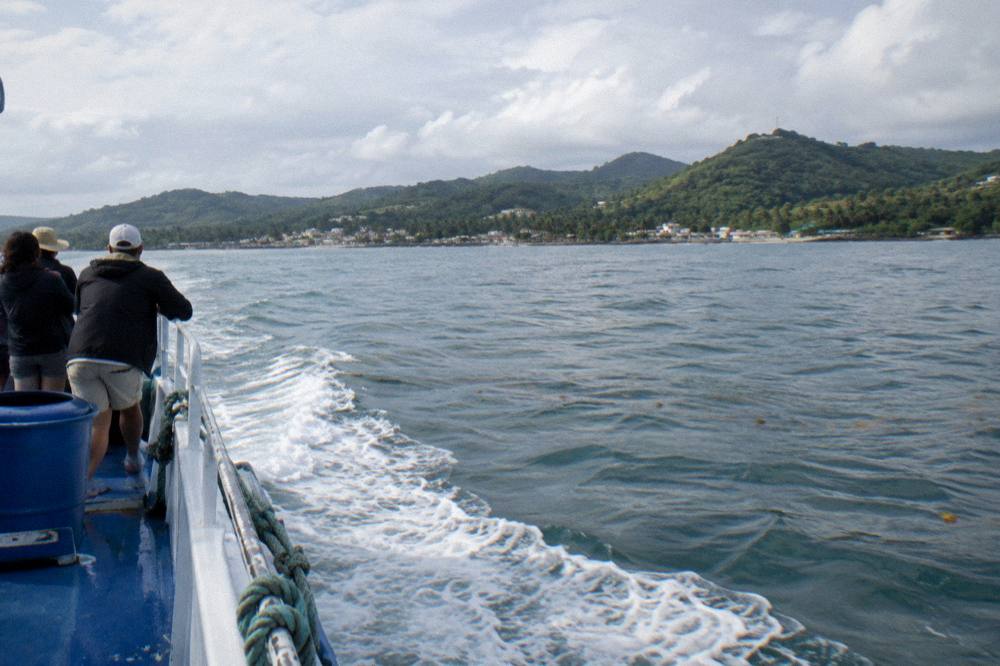
The combos are covered in detail elsewhere on this site: see the whale watching and Cayo Levantado combo guide for how the island half of these days works, including the shared boat at roughly US$15 to 25 per person round trip if you go independently.
**Breaches reported in 2026 included illegal swimming offers from Las Galeras, unauthorized drones over whales and fishing nets inside sanctuary waters, and the response combined the new committee, navy-coordinated tracking and ** The system's real teeth are structural: a boat that loses its authorization loses its season, and the 2026 shift to digital permits makes the licensed fleet a clean, auditable list rather than a paper archive.
Visitors play a role without ever confronting anyone. Booking through licensed operations keeps revenue inside the compliant fleet. Reading a listing's inclusions tells you what the operator itself commits to, and where an inclusion is absent, treat it as absent rather than assumed. No listing on this site promises a sighting, and no honest operator anywhere can: whales, sea state and weather vary, and the rules are built for the animals' benefit on the animals' schedule.
A mother resting with a calf in shallow water, competitive males chasing, a full breach throwing spray: these are watched from the boat, and the CEBSE rules page is explicit that protecting the animals' tranquility is the reason the privilege of watching them exists at all. And take the weather seriously: hurricane season runs 1 June to 30 November with its peak August to October, well before the whale season, but morning calm and afternoon chop from the trade winds shape any single day on the bay in season.
The deeper background on why the whales come, and why this bay in particular, is in the guide to humpback whales in the Dominican Republic. The sanctuary is the legal expression of that biology: a breeding ground worth protecting, protected by rules that every ticket sold from Samaná helps fund.
Licensed boats keep 80 meters from mothers with calves and 50 meters from any other whale group, under CEBSE rules in force since 1996. Waiting boats stand off at 250 meters. No licensed operator closes those distances for a better view.
No. Swimming with whales is prohibited in Samaná Bay. The only legal in-water humpback encounters in the Dominican Republic take place at Banco de la Plata under strict permits on live-aboard trips, roughly US$3,500 to 5,500 for a week, reported. Offers to swim from Las Galeras are illegal.
At most 3 boats per group. A fourth boat waits 250 meters away for up to 30 minutes until one watching boat leaves, and each boat gets at most 30 minutes with a group when others are waiting, halved when whales are scarce.
CEBSE wrote the observation rules and the Ministry of Environment licenses and regulates them. In 2026 a Marine Mammal Sanctuary Management Committee took over authorizations, boat inspection, captain training and monitoring, supported by a voluntary GPS tracking pilot coordinated with the Dominican Navy.
No per-person sanctuary or whale watching fee was found in any official source for authorized tours. Check the listing for what your ticket includes; separate costs like the Cayo Levantado shared boat, roughly US$15 to 25 round trip, are paid on the day if you go independently.
No, not without ministry permission. Drones are prohibited inside the sanctuary, and unauthorized drone flights near whales were among the compliance problems reported during the 2026 season.
Before you go, the pick for this guide:
3-Hour Short Bay Cruise
★ 4.5 126 reviews · From $69
Check availability →