Is The Dominican Republic Good For Whale Watching?
A research-based answer: the Dominican season, the sanctuary rules in Samaná Bay, what trips cost from $45 to $210, and the honest limits before you book.
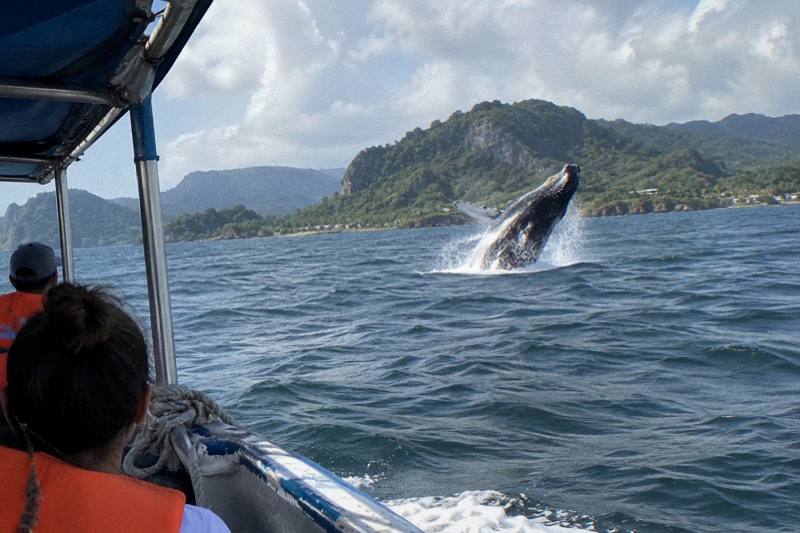
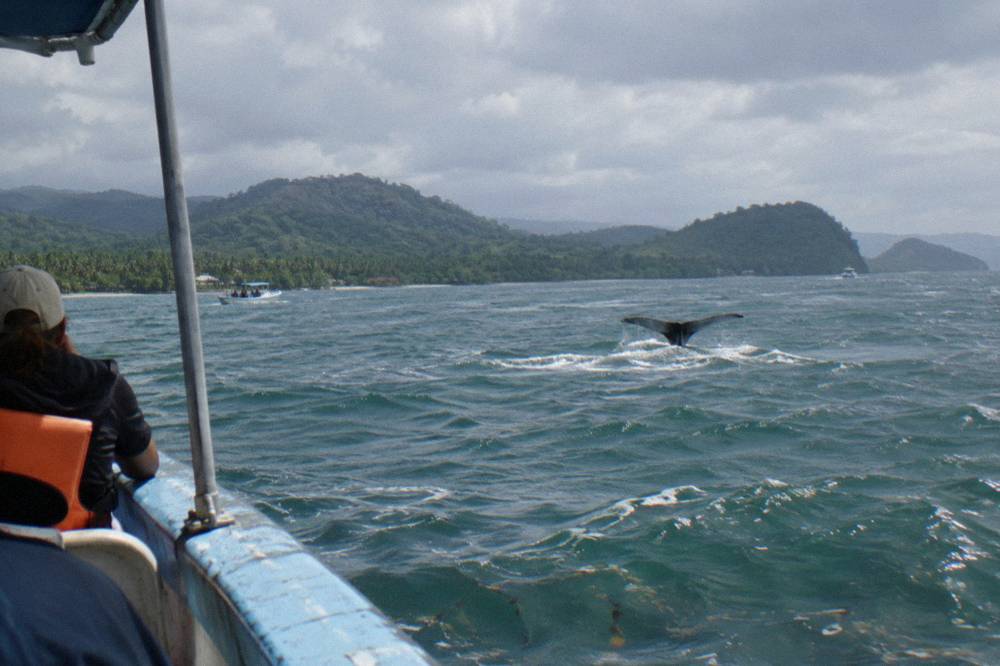
Yes, for one specific window each year: humpback whales gather in Dominican sanctuary waters from mid-January through March, and Samaná Bay is the country's watching hub, with 46 environmental authorizations in 2026 and bookable trips from $45 to $210 per person. Outside that window there is no season to speak of, no operator promises a sighting, and 2027 dates have not been announced. For the full picture on where the whales gather and how to see them from Samaná, Punta Cana and Santo Domingo, our guide to humpback whales in the Dominican Republic covers the sanctuary in detail.
The honest answer starts with geography. The Dominican Republic sits on the southern edge of the Silver Bank, Navidad Bank and Samaná Bay, a marine mammal sanctuary where North Atlantic humpbacks come each winter to mate and calve. The ministry that regulates the season opened 2026 with an inter-institutional management agreement and 46 environmental authorizations, 43 of them for Samaná operations and 3 dispatched from Puerto Plata. That is a real, supervised watching infrastructure, not a loose collection of fishing boats, and it is the strongest single argument that the country takes this seriously. If you're weighing the Dominican Republic against other spots in the region, our guide to the best Caribbean island for whale watching compares seasons, boat rules, and what to expect from operators elsewhere.
For a first-time buyer the practical question is narrower: does a trip fit your dates, your budget and your departure point. Listings here cover Samaná and Las Terrenas departures from $45 to $125 per person, Punta Cana day trips from $110 to $200, and combo days pairing whales with Cayo Levantado or El Limón waterfall from $110 to $199. The cheapest listing is the whale watching tour with snacks at from $45 per person, and the featured whale and Cayo Levantado full day from Moto Marina Tours runs from $84 with a 4.7 rating from 224 reviews.
Whether that adds up to "good" depends on what you are comparing it against, which is exactly what the rest of this article does: the season, the rules, the prices and the limits, each with the figures. A destination can have whales and still be a poor choice if the operation is unregulated, the season is vague or the price structure is opaque. The Dominican product scores well on all three counts, and the sections below show the evidence rather than asking you to take the conclusion on faith.
One framing note before the details. "Good for whale watching" can mean good for the visitor, good for the whales, or both. The Dominican case is unusually strong on the second half of that sentence: the watching happens inside a designated marine mammal sanctuary, under rules written by a conservation body that has policed the bay since 1996, with a ministry committee now supervising boat inspections and captain training. A trip here is not a neutral act for the animals; it happens inside a system built around their protection, and your fare supports a licensed, inspected fleet.
When And Where Does The Dominican Season Run?
The announced window runs 15 January to 31 March, with the 2026 season opened officially by the environment ministry; CEBSE's own panel prints 30 March, so plan on mid-January through to the end of March without betting on a specific final day. Watching happens in Samaná Bay, centered on the town dock on Avenida La Marina in Santa Bárbara de Samaná.
The season is not a marketing construct; it is set by the ministry and tied to when the whales are actually present. The 2026 opening was formalized through a management agreement that created a Marine Mammal Sanctuary Management Committee covering authorizations, boat inspections, captain training and scientific monitoring, as documented on the ministry's own season page. Permits for 2027 were being accepted between 16 October and 13 November 2026, but the 2027 season dates themselves have not been announced. If you are planning far ahead, that is the single most important caveat on this page.
Researchers describe peak concentrations from February to early March, when mating and calving activity is highest. No month-by-month sighting count for the bay exists in any official source, so any page offering you one is guessing. The details behind that timing are covered in the guide to the best month for whale watching in Samaná.
Where you watch matters as much as when. Boats leave from the town dock across from the Whale Samana office, from a Las Terrenas meeting point on the north coast, from Punta Cana and Bávaro on long day trips, and from Puerto Plata and Santo Domingo. The whale and Cayo Levantado full day from Moto Marina Tours, the most reviewed product in its category at 4.7 from 224 reviews, departs from Avenida La Marina 3 in Samaná town, a few minutes from the main dock. Our article on why humpback whales go to Samaná explains the migration logic in depth.
One operator detail helps with planning. Whale Samana, whose office faces the town dock, publishes its own schedule: one trip daily at 10:00 from mid-January into early February, two trips daily at 09:00 and 13:30 through mid-March, then a single 10:00 trip to the end of March. That is one operator's page, not a universal timetable, but it shows how the fleet scales up when the bay is busiest, and it lines up with the researcher-described February peak. The typical boat day runs 3 to 4 hours including transit, with reported capacities of 40 to 60 passengers on premium boats and up to 80 or occasionally 100 on others, figures that are reported rather than tied to any specific listing.
What Rules Protect The Whales In Samaná Bay?
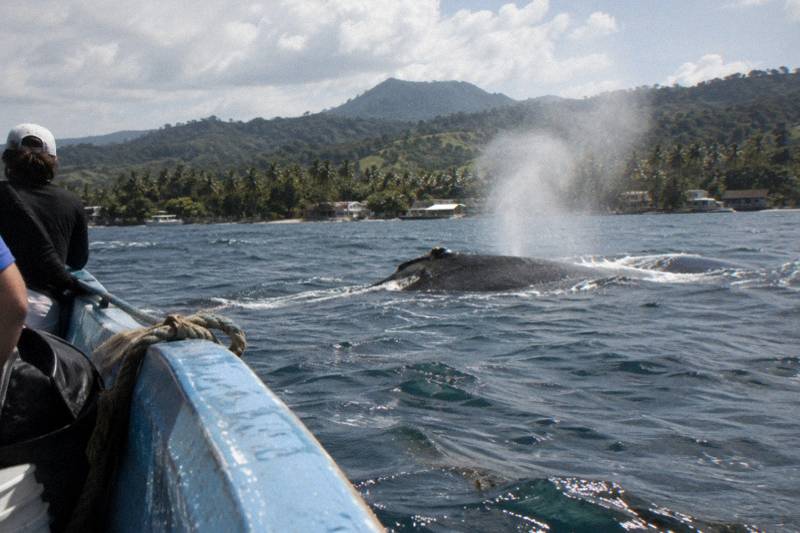
Samaná Bay has operated under CEBSE observation rules since 1996, licensed by the environment ministry: boats stay 80 m from mothers with calves and 50 m from other groups, at most 3 boats watch a group at a time, and swimming with whales is prohibited in the bay, allowed only at Banco de la Plata under strict permits.
The CEBSE panel on the bay sets the operating norms. Boats hold a maximum of 30 minutes with a group when others are waiting, halved when whales are scarce; a fourth boat waits 250 m away; engines stay on in the observation area; and drones are not flown in the sanctuary without ministry permission. These rules matter to you as a visitor for two reasons: they keep the experience legitimate, and they tell you what a compliant trip looks like.
| Rule | What it means on the water |
|---|---|
| Distance | 80 m from mother-calf pairs, 50 m from other groups |
| Boat limit | 3 boats per group; a 4th waits 250 m away, 30 minutes |
| Time limit | 30 minutes per group, halved when whales are scarce |
| Engines | Must stay on in the observation area |
| Swimming | Prohibited in Samaná Bay; only Banco de la Plata, with permits |
| Drones | Not allowed without ministry permission |
Enforcement had teeth in 2026: the ministry ran a pilot placing GPS trackers on licensed boats for real-time monitoring, and 46 authorizations were processed digitally for the first time. Illegal swimming offers from Las Galeras and unauthorized drone flights have been reported, which is exactly why checking that your operator is licensed matters. No per-person sanctuary fee turned up in official sources; if a listing mentions one, read the terms on the listing itself.
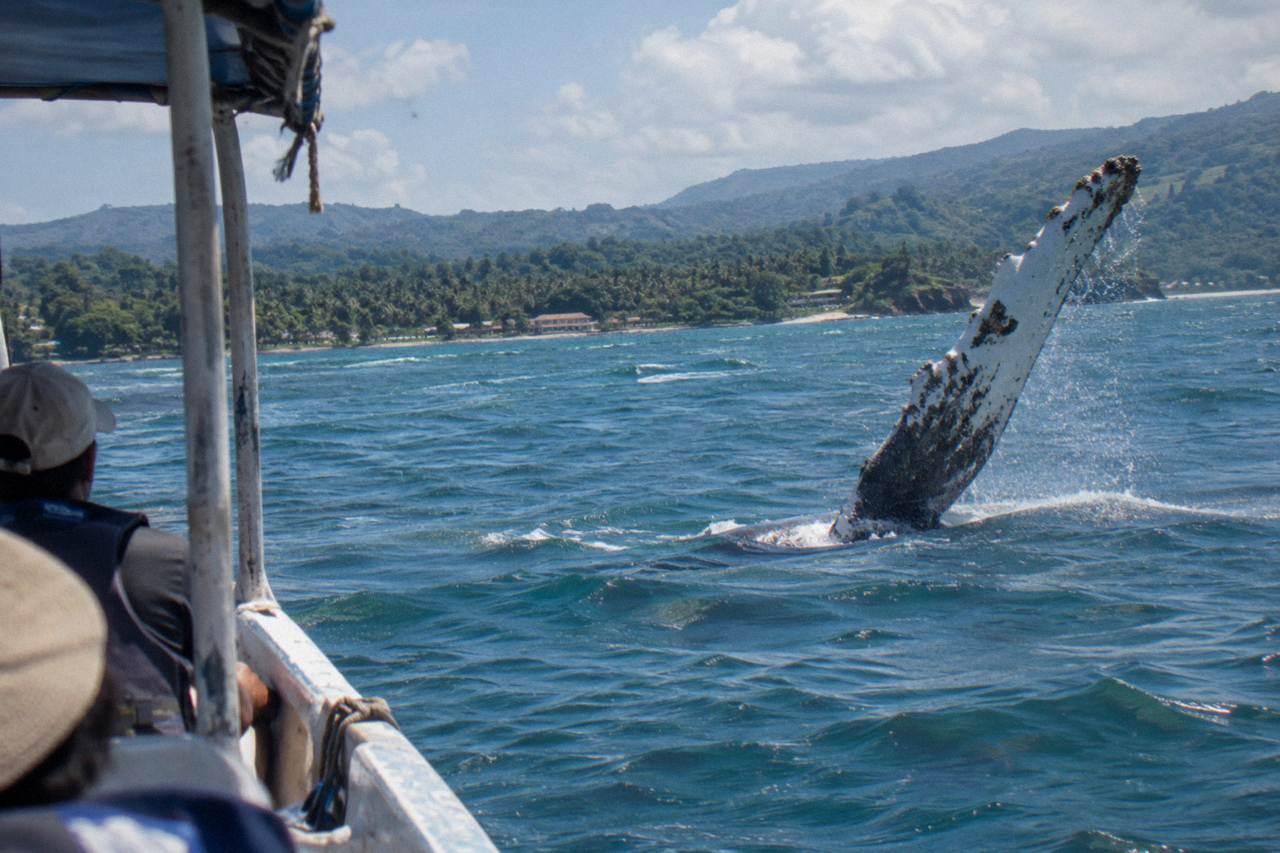
The 2026 monitoring regime also produced real science. An early February expedition to Banco de la Navidad, about 500 km of transects over three days, recorded 644 sightings and an estimated 891 individuals, with a peak of more than 500 whales in a single day, per the ministry's expedition report. One caution: that is a survey of a offshore bank, not Samaná Bay counts, and the two should never be conflated. Researchers also describe a cumulative photo-identification catalogue of 252 individual humpbacks in the bay, built from fluke photographs over many seasons, which is the kind of long-run dataset that only a sustained, regulated watching economy produces.
The rules also shape what you should expect from the crew. A licensed captain in the bay knows the distance limits by heart, coordinates with other boats on the water, and moves on when the time limit is reached. If a boat you are on cuts toward a mother and calf or lingers past the window, you are watching a violation, not a bonus.
What Does Whale Watching In The Dominican Republic Cost?
Across the lineup of 35 bookable products, prices run from $45 to $210 per person. Samaná and Las Terrenas departures span $45 to $125, Punta Cana day trips $110 to $200, combos pairing whales with the island or waterfall $110 to $199, and Santo Domingo, Boca Chica and Puerto Plata departures $130 to $210. For a closer look at those southern departures, the Santo Domingo whale watching day trip guide covers drive times and the rules that shape the day.
The spread is wide because the products are genuinely different. At the bottom, the whale watching tour with snacks from Tour Whales Samana, from $45 per person, lists coconut slices, water, soft drinks, a boat ride, an expert guide and the whale watching itself, with lunch excluded; it carries a 4.9 rating from 20 reviews, the strongest rating among Samaná listings with more than a handful of reviews. In the middle sits the whale and Cayo Levantado full day from $84 with 4.7 from 224 reviews, and at the top end full-day Punta Cana excursions reach from $200 per person with hotel pickup included.
| Departure base | Price range per person | Example listing |
|---|---|---|
| Samaná and Las Terrenas | $45 to $125 | Whale watching tour with snacks, from $45 |
| Punta Cana and Bávaro | $110 to $200 | Whale and Bacardi Island day trip, from $165 |
| Combos with island or waterfall | $110 to $199 | Whales, Bacardi and Limón Falls, from $110 |
| Santo Domingo, Boca Chica, Puerto Plata | $130 to $210 | Full day from Santo Domingo, from $200 |
Duration varies as much as price. The 3-hour bay cruise from Moto Marina Tours, from $69 with 4.5 from 126 reviews, is the short option for anyone prone to seasickness or short on time. Punta Cana days run 8 to 13 hours door to door because the drive alone takes 3.5 to 5.5 hours each way. If your base is Punta Cana, the whale and Bacardi Island day trip from $165, rated 4.4 from 47 reviews, includes buffet lunch with one drink, hotel pickup, an air-conditioned vehicle and bottled water.
What you get for the money is consistent across the category: a licensed boat, a guide, and in most cases food or drink of some kind. What no listing anywhere listed here can sell you is a sighting, and any operator promising one is overpromising. The guide to what whale watching in Samaná costs breaks the value logic down further.
It helps to think of the price ladder as three rungs rather than thirty-five separate products. The first rung is the bay-only trip: you drive or walk to Samaná town, board at the dock, watch whales for a few hours, and go; these are the $45 to $95 listings, and they suit anyone already on the peninsula. The second rung adds the island: a whale watching leg plus time on Cayo Levantado's public beach, which carries no entrance fee but is reached only by paid boat. The third rung is the long combo from a resort base, where transport from Punta Cana or Santo Domingo dominates both the price and the length of the day. Knowing which rung you want eliminates most of the tours listed here in a minute.
A budget note on the do-it-yourself version: a shared boat from Samaná town to Cayo Levantado runs roughly US$15 to 25 per person round trip if you skip the tour entirely, and the entry to El Limón waterfall is about RD$100 with the horse ride reported at RD$1,500 to 2,500. Those figures are reported ranges, not listing prices, and checking on the day is the only reliable rule. None of those options includes whales, which is the part that requires a licensed operator inside the season.
How Does The Dominican Republic Compare With Other Whale Watching Destinations?
There is no verified data for other Caribbean islands, Hawaii, Alaska or anywhere else, so no honest scoring is possible. What can be said: the Dominican Republic combines a protected sanctuary, a ministry-licensed fleet and a compact season, a package few warm-water destinations can document to the same standard.
Comparison content is where most whale watching writing goes wrong. A page claiming Samaná beats Silver Bank, or that Hawaii's season outranks it, without data is selling you an opinion. The verifiable facts here are Dominican: the CEBSE rules in force since 1996, the 46 authorizations, the sanctuary management committee, the Banco de la Navidad survey numbers. Other places can be named only as places to verify, with no dates, prices or counts. Before you plan the trip itself, the guide to safety in Samaná covers the licensed whale boats, the rules they follow, and where to check official advisories.
What the comparison question usually hides is a fit question. The expedition data above shows the population aggregates in the Dominican sanctuary. If you want to swim with humpbacks, that is not a Dominican bay product at all: it happens only at Banco de la Plata under strict permits on live-aboard trips, roughly US$3,500 to 5,500 for a week, departing from the Puerto Plata side, not a day trip from Samaná.
If you are already committed to the region, the practical read is simpler still. The country's whale product is concentrated, seasonal and well regulated, which makes it easy to book with confidence inside the window and easy to waste money outside it. That balance is what makes the answer "good, conditionally" rather than a flat yes.
What Are The Honest Limits Before You Book?
Three limits matter: the season is short, mid-January through March, with 2027 dates unannounced; no sighting, sea state or weather outcome is ever guaranteed; and the experience is boat-based, with swimming with whales prohibited in Samaná Bay. Everything good about the Dominican product sits inside those boundaries.
The seasonal limit is the biggest one. A trip in November or December is not a cheap version of a trip in February; it is a different product entirely, and no licensed whale watching operates outside the authorized window. Book flexible travel dates if whales are the reason you are coming, and treat the trip picker on the Whale Tours Samana homepage as the fastest way to match a listing to your departure point.
The no-promise limit is not a disclaimer; it is biology. Humpbacks are wild animals in an open bay, and sea state varies week to week, calmest on many mornings and choppier with the afternoon trade winds. A 4.9 or 4.7 rating tells you how guests judged the operation, not what the whales did on any given departure. Reviews reward the crew, the boat and the handling, which is the part an operator controls.
The third limit is scope. The Dominican product is watching, not interaction: no touching, no feeding, no swimming, no drones without permission. For visitors who want more of the peninsula on the same day, the combos are the answer: the whales, Bacardi and Limón Falls day from $110, rated 4.1 from 233 reviews and the most reviewed product listed here, packs the waterfall, a safari truck ride, lunch and the island into a 10 to 12.5 hour day from Punta Cana. For a full cost-of-combo breakdown, see the guide to whale watching and the El Limón waterfall combo.
Weather adds a fourth, smaller limit worth naming. Hurricane season runs 1 June to 30 November with peak activity from August to October, which ends weeks before the whale season opens; January to March, by contrast, sits in the drier, calmer part of the year, with sea temperatures described at roughly 26 to 27 degrees and air highs around 28 to 29. None of that promises a flat sea on your date, but it does mean the watching window and the friendliest weather window largely coincide, a quiet advantage the Dominican calendar has over destinations whose seasons run into storm months.
Read the cancellation terms on the listing before you pay, especially for long Punta Cana day trips where weather shifts can move schedules.
Common Questions About Whale Watching In The Dominican Republic
When Is Whale Watching Season In The Dominican Republic?
The announced window runs 15 January to 31 March per the ministry's 2026 opening, though CEBSE's panel prints 30 March, so plan on mid-January through to the end of March. The 2027 season dates have not been announced.
Can You Swim With Whales In Samaná Bay?
No. Swimming with whales is prohibited in Samaná Bay under the sanctuary rules. In-water encounters with humpbacks are allowed only at Banco de la Plata, offshore, under strict permits on live-aboard trips, roughly US$3,500 to 5,500 for a week. Offers to swim from Las Galeras are illegal.
What Is The Cheapest Whale Watching Tour In Samaná?
The whale watching tour with snacks from Tour Whales Samana, from $45 per person, lists coconut slices, water, soft drinks, a guide and the boat ride; lunch is not included. It carries a 4.9 rating from 20 reviews.
Are You Guaranteed To See Whales In The Dominican Republic?
No operator can guarantee a sighting, and none listed here claims to. Humpbacks are wild animals in an open bay, and sea state and weather vary. Ratings on the listings reflect how guests judged the crew and operation, not a promise of any encounter.