Which Caribbean Island Is Best For Whale Watching?
The honest answer to which Caribbean island is best for whale watching, built from the facts on Samaná Bay, the Dominican sanctuary, boat rules, and what to check for any other island.
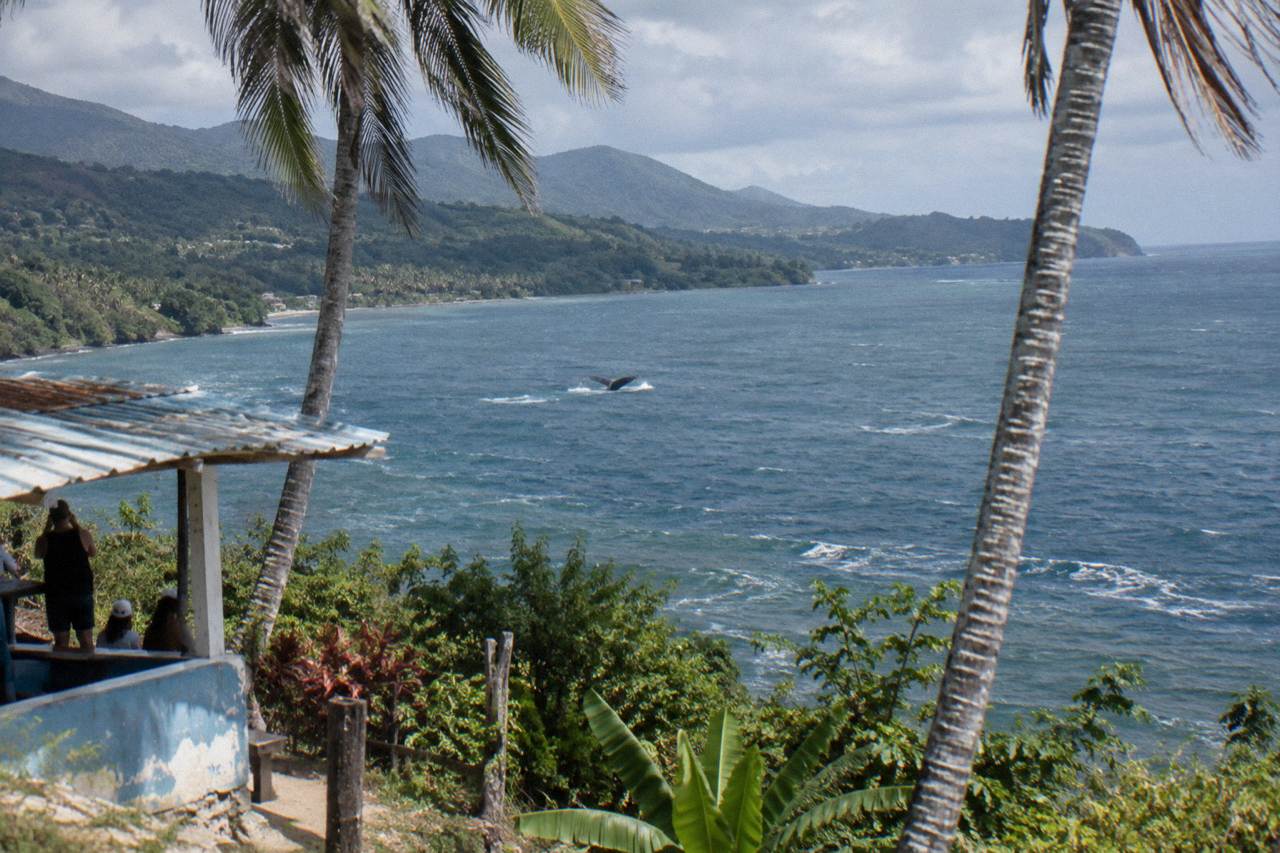
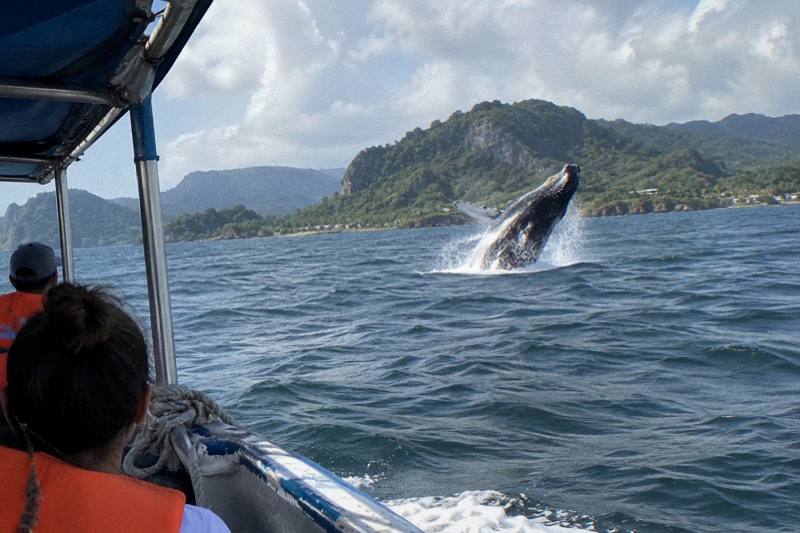
The only Caribbean island that can be argued as best from the facts is the Dominican Republic. Its Samaná Bay season runs mid-January through March under ministry rules, with 46 licensed authorizations in 2026. No other island in the region has data to score, so this page builds the Dominican case and gives you a checklist for judging anywhere else.
The Caribbean has several places where humpback whales gather in winter, but honest comparison needs more than a brochure line. It needs a regulated season, a monitored sanctuary, licensed boats, published rules, and a range of bookable trips at known prices. On those measures, the documented record supports one candidate: the Dominican Republic, centered on Samaná Bay and the offshore banks of the Marine Mammal Sanctuary. If the Dominican Republic is now on your shortlist, our plain-language review of Dominican whale watching covers the season, the sanctuary rules in Samaná Bay, and what a fair trip price looks like before you book.
The Dominican season is not an informal arrangement. The Ministry of Environment and Natural Resources opened the 2026 season officially in mid-January with an inter-institutional management agreement, and issued 46 environmental authorizations, 43 thematic permits for Samaná operations plus 3 dispatched from Puerto Plata. The ministry's own season opening release sets the frame, and the permits were processed digitally for the first time, which matters if you care whether the boat you board is legal.
For travelers, that structure translates into a real, bookable range. The featured Samaná whale watching and Cayo Levantado full day tour runs from $84 per person with a 4.7 rating from 224 reviews, the most reviewed day listed here after one combo. A shorter 3-hour bay cruise from the same operator starts from $69. Day trips from Punta Cana, Santo Domingo and Puerto Plata stretch the price band from $110 to $210 per person. You can compare the three strongest options below. If the standard bay trip feels too limited, the guide to pairing Los Haitises with Samaná whale watching explains what the park adds, how far the boat run is from Samaná, and which combos match whales with other stops.
If you are comparing islands before comparing tours, the deeper background is in why humpback whales choose Samaná, which explains what draws the animals to this bay in particular.
Why The Dominican Republic Has The Strongest Case
The Dominican Republic combines a defined season, a government-run permit system, a dedicated sanctuary, and enforceable boat rules, and few Caribbean destinations can document all four. The 2026 season ran from 15 January under 46 authorizations, and the CEBSE boat rules have applied in Samaná Bay since 1996. That paper trail is the argument.
Start with the sanctuary itself. The Marine Mammal Sanctuary of the Banks of la Plata and la Navidad, together with Samaná Bay, is a legally protected area with a management plan and an annual management agreement signed at each season opening. The 2026 agreement created a sanctuary management committee covering authorizations, boat inspections, captain training, scientific monitoring and end-of-season technical reporting. A pilot program even placed GPS devices on licensed boats for real-time tracking during the season. These are the mechanics of a destination that takes whale watching seriously as a managed activity, not a free-for-all.
Second, the science is ongoing and official. Ministry-led expeditions survey the offshore banks, and researchers maintain a photo-identification catalogue of individual humpbacks in the region. Researchers describe peak concentrations in the bay from February to early March, tied to mating and calving activity. No month-by-month sighting count for Samaná Bay is published, but the presence of an active research program is itself a differentiator among Caribbean islands. If you're wondering why humpbacks travel all the way to these warm, shallow waters to calve, our article on why Samaná Bay is a whale calving ground explains the biology and what it means for a boat trip.
Third, the Dominican Republic permits in-water encounters with humpbacks only narrowly. Swimming with whales is allowed only at Banco de la Plata, offshore, and only for authorized live-aboard operators under strict permits. Those trips are reported at roughly US$3,500 to 5,500 for seven nights.
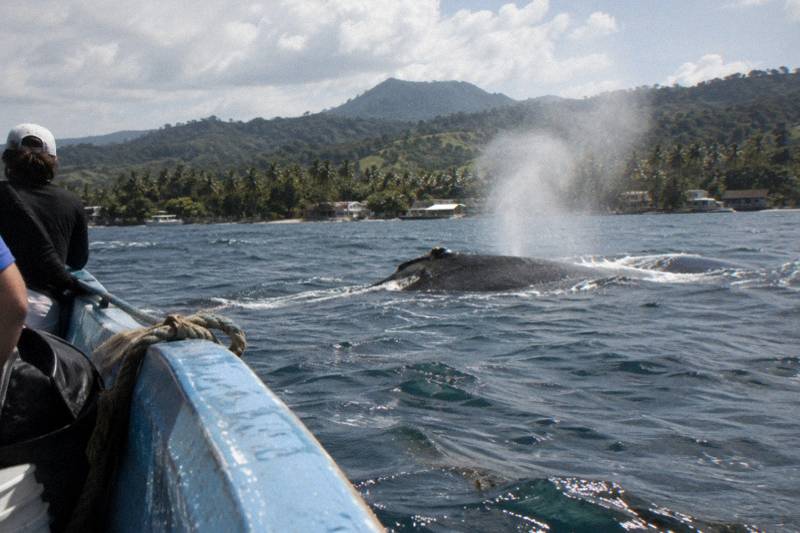
Closer to shore, the everyday product is the Samaná Bay boat trip. A budget whale watching tour with snacks runs from $45 per person, and a whale watching cruise with breakfast from $95, so the island's whale offer spans everything from a cheap half day to a live-aboard week on the offshore banks. Read the cancellation terms on the listing for whichever you choose, since terms vary by operator and no uniform policy exists across the tours listed here.
What Samaná Bay Offers That Other Islands Have To Match
Samaná Bay delivers a regulated boat season minutes from a working town, with trips from $45 to $125 per person departing Samaná and Las Terrenas, plus an island beach stop at Cayo Levantado on many tours. Roughly two hours from Santo Domingo by highway, it is the most accessible serious whale destination in the Dominican Republic.
The practical anatomy of the bay matters when you compare islands. Boats leave from the town dock on Avenida La Marina in Santa Bárbara de Samaná, and several listings depart from named points in town or offer hotel pickup in Punta Cana and Bávaro, Santo Domingo, Boca Chica and Puerto Plata. Drive times are real but manageable: about two hours from Santo Domingo, 3.5 to 5.5 hours one way from Punta Cana, about 3 hours 48 minutes from Puerto Plata, and roughly an hour from Las Terrenas to Samaná town.
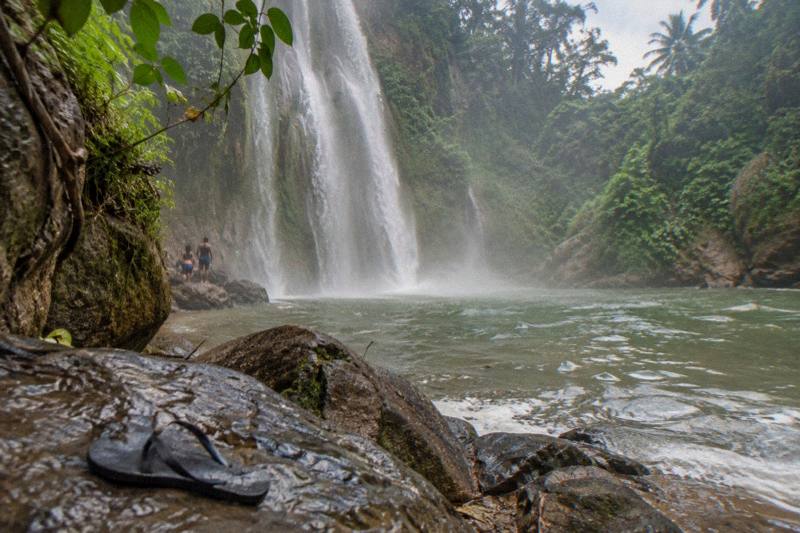
The product range is where the island earns its case. The featured whale and Cayo Levantado full day, from $84 per person, includes a buffet lunch on the island, snacks, drinks and a guide, and carries that 4.7 rating from 224 reviews. A standalone whale watching and Bacardi Island day trip from Punta Cana, from $165 per person, is rated 4.4 from 47 reviews and includes a buffet lunch with one drink, hotel pickup and bottled water. If you want whales plus a waterfall, the whale watching and Limón waterfall day trip, from $169 per person, is rated 4.5 from 146 reviews, the deepest review pool on the Punta Cana combo side.
Not every listing carries a rating worth printing. Several day trips show a handful of reviews, and the honest way to read those is as small pools, not verdicts. The table below pulls the Dominican options with real review depth, so you can see the strongest documented picks at a glance.
| Tour | Departs | From (per person) | Duration | Rating |
|---|---|---|---|---|
| Whale watching and Cayo Levantado full day | Samaná, Avenida La Marina | $84 | 7 hours | 4.7 from 224 reviews |
| Whale watching and Limón waterfall day trip | Punta Cana hotel pickup | $169 | 13 hours | 4.5 from 146 reviews |
| Bay of Samaná whale watching experience | Samaná, Avenida La Marina | $69 | 3 hours | 4.5 from 126 reviews |
| Whale watching and Bacardi Island day trip | Punta Cana hotel pickup | $165 | 10 hours | 4.4 from 47 reviews |
| Whale watching tour with snacks | Samaná, meeting point on the listing | $45 | 6 to 7 hours | 4.9 from 20 reviews |
| Samaná whale watching + Cayo Levantado (Bacardi Island) | Santorino restaurant, Samaná | $65 | 8 hours 30 minutes | 4.0 from 17 reviews |
The island stop deserves its own word. Cayo Levantado, the island the listings call Bacardi Island, has no entrance fee; you pay for the boat and anything you rent or order. Shared boats from Samaná town run roughly US$15 to 25 per person round trip, reported, so the island is visitable even without a tour. What a tour adds is the whale leg, lunch and logistics in one booking.
The Boat Rules That Shape A Dominican Whale Season
Rules are the quiet reason the Dominican case holds up. In Samaná Bay, boats must keep 80 meters from mothers with calves and 50 meters from other groups, at most three boats may watch one group, and observation is capped at 30 minutes when boats are waiting. The rules have applied since 1996 under CEBSE and are licensed by the ministry.
The full set is specific enough to quote. A fourth boat waits 250 meters away for up to 30 minutes until one of the three leaves. The 30-minute cap per group is halved when whales are scarce. Engines must stay on in the observation area, a rule that surprises people but exists for safety. Swimming with whales is prohibited in Samaná Bay outright, and drones may not fly inside the sanctuary without ministry permission. The CEBSE panel on the bay publishes these rules.
Why does this matter for an island comparison? Because rules are what separate a whale destination from a whale circus. In a bay where mothers calve, unregulated approach distances and engine behavior are the difference between a sustainable season and harassment. Enforcement is not perfect anywhere, and 2026 press coverage described ongoing challenges, including illegal swimming offers from Las Galeras and unauthorized drone flights near whales. The Dominican response, a management committee, captain training, inspections and the GPS pilot, is documented. When you evaluate another island, ask whether anything comparable exists there.
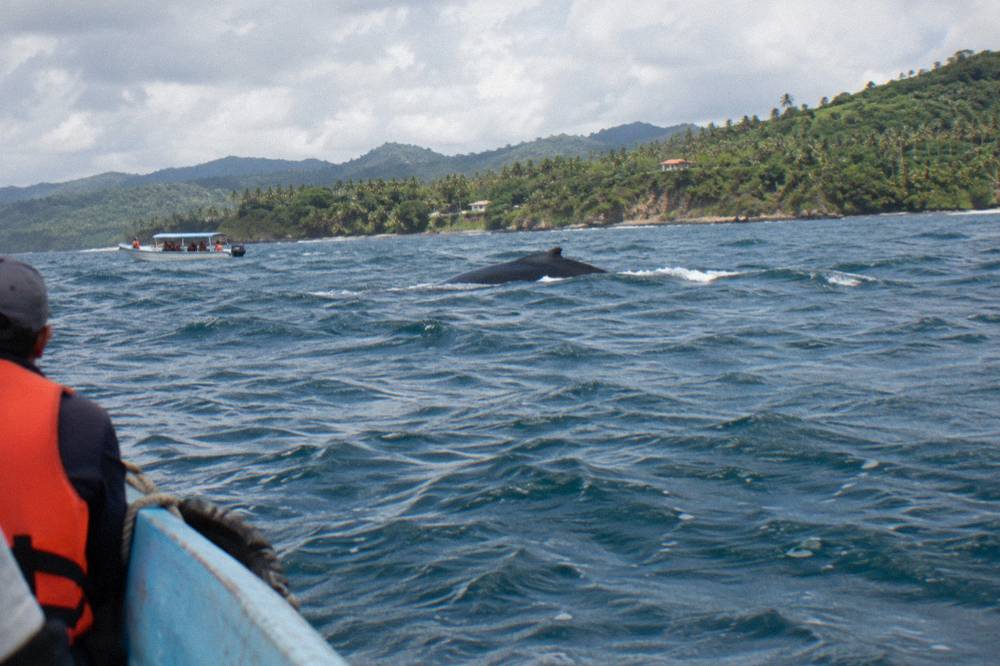
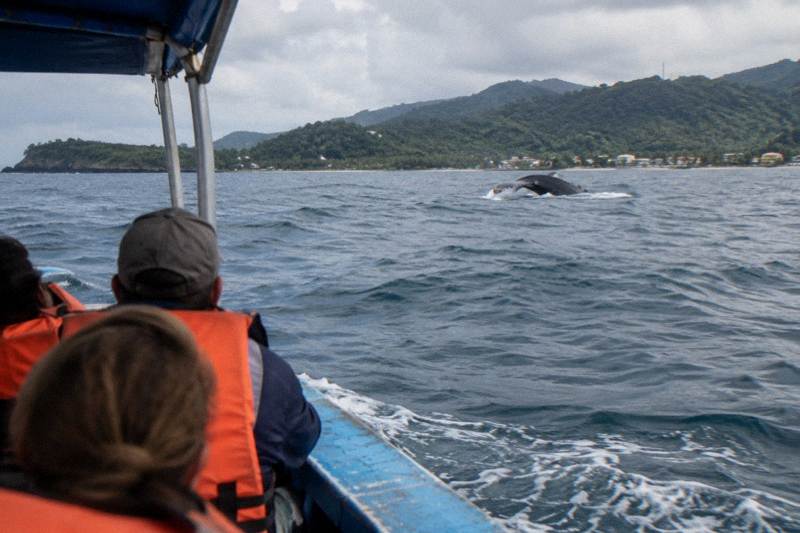
For your own day, the rules shape what you will experience. Boats take turns, sightings are never guaranteed, and the sea state varies, so a licensed operator following the distances is the one worth booking. The site's guide to what to expect on the boat covers the on-water reality, and the season timing detail lives in the best time guide.
What To Verify Before Booking Any Other Island
No verified data exists for any other Caribbean island's whale watching: no season dates, prices, sighting records or rules. So treat every rival claim as unverified until you check five things: the legal season, the licensing system, the boat rules, the published record, and the price transparency of bookable trips.
First, find the official season: who announces the dates, a ministry or a marine park authority, and are they published annually? Second, licensing: are boats authorized, how many, and is there a list? The Dominican Republic publishes its authorization count each season. Third, rules: minimum distances, boat caps per group, time limits, and whether swimming or drones are banned. Fourth, science: is anyone counting whales, cataloguing individuals, or running expeditions? Fifth, prices: can you find bookable trips with printed prices, durations and stated inclusions, rather than "inquire for rates"?
| Check | What the Dominican Republic shows | What to demand from any other island |
|---|---|---|
| Season | Mid-January through March, ministry announced | Official dates published by a regulator, not an operator |
| Licensing | 46 authorizations in 2026, processed digitally | A permit count or licensed-boat list you can verify |
| Boat rules | 80 m from mother-calf pairs, 50 m otherwise, caps and time limits, in force since 1996 | Written distance and approach rules with an enforcing body |
| Research | Ministry expeditions, photo-ID catalogue, management committee | An active monitoring or research program |
| Products | Bookable trips from $45 to $210 per person, plus permitted live-aboards | Printed prices, durations and inclusions you can compare |
Be especially careful with the sighting rate: no month-by-month count exists even for Samaná Bay, so any island promising a percentage chance is selling you a number nobody publishes. A guarantee of any kind is a red flag in itself, since whales, weather and sea state all vary.
How A Dominican Trip Actually Looks Day To Day
A Dominican whale trip is a half to full day on the water with a licensed boat, a guide, and usually food, from a $45 snack run in Samaná to a 13-hour waterfall combo from Punta Cana. Most travelers pair the bay trip with Cayo Levantado, and the strongest single booking is the featured full day at from $84 per person.
Consider the shapes available. If you stay in Samaná town, the 3-hour bay cruise from $69 fits a morning, and the whale and Cayo full day from $84 adds the island lunch. If you base in Las Terrenas, a 6-hour tour with lunch and a Las Terrenas meeting point runs from $125 per person. If you are anchored in Punta Cana, the realistic options are long days, including an 11-hour full day from $159 that includes round-trip transport, lunch and drinks, and the Cayo Levantado and Limón waterfall combos from $135 and $110 respectively, the latter rated 4.1 from 233 reviews.
Whale Watching From Samaná And Las Terrenas · 6 - 7 hours
★ 4.9 · 20 reviews · From $45
Check availability →Budget travelers get a genuine entry point. The whale watching tour with snacks at from $45 per person includes coconut slices, water, soft drinks, a boat ride and an expert guide, and rates 4.9 from 20 reviews, a small pool but a consistently pleased one. Cruise passengers have their own option, a shore excursion from Puerto de Samaná at from $100 per person with round-trip boat transport, a local guide and a safety briefing. For what money buys across the tours listed here, the site's cost guide breaks down the pricing logic.
Timing is the last lever. Book inside the mid-January to end-of-March window, aim for February into early March if you want the period researchers describe as peak concentration, and remember the 2027 dates are not yet announced; the permit process for that season closed its document window in November 2026. Check the operator's live listing for departure details, age and health rules, and cancellation terms, since none of those are uniform across the tours listed here. Weather planning matters too: the January to March window sits outside the Atlantic hurricane season, which runs 1 June to 30 November with its peak from August to October, and mornings on the bay are often the calmer hours before afternoon trade winds pick up. Before you lock anything in, our guide to staying safe as a tourist in Samaná walks through the licensed whale boats, road conditions, and official advisory sources worth checking first.
Matching The Tour To Your Island Decision
If the Dominican Republic wins your comparison, the booking decision reduces to three questions: where you sleep, how long you can spend, and whether you want an island or waterfall bolted on. Town-based travelers take the full day from $84, Punta Cana visitors take the 11-hour day from $159, and short-stay visitors take the 3-hour cruise from $69.
That is the practical end of the island question. The comparison this page can honestly make ends with the Dominican Republic on top by documentation, and the choice that remains is between its own formats. A solo traveler with one free morning, a family with a full day, and a resort guest in Punta Cana with a long transfer all land on different listings, and the lineup covers each of them with a licensed boat and a printed price.
Whatever you book, read the listing's stated inclusions and exclusions rather than assuming, and check availability for your exact dates inside the season window. For the wider planning picture, Whale Tours Samana keeps a comparison of every departure point and format on the homepage.
Common Questions About Caribbean Whale Watching
Can You Swim With Humpback Whales In The Caribbean?
In the Dominican Republic, in-water swimming with humpbacks is allowed only at Banco de la Plata, offshore, and only for authorized live-aboard operators under strict permits, reported at roughly US$3,500 to 5,500 for a week. Swimming with whales is prohibited in Samaná Bay, and offers to swim from Las Galeras are illegal.
When Is The Dominican Whale Watching Season?
The season runs mid-January through March. The 2026 season ran from 15 January to 31 March under the ministry opening. Researchers describe peak concentrations from February to early March. The 2027 dates had not been announced as of late October 2026.
How Much Does Whale Watching Cost In Samaná?
Boat tours listed here run from $45 to $210 per person. Samaná and Las Terrenas departures span $45 to $125, Punta Cana departures $110 to $200, combos $110 to $199, and Santo Domingo, Boca Chica and Puerto Plata departures $130 to $210.
Are Whale Sightings Guaranteed In Samaná Bay?
No, and no honest operator or site will promise one. Whales, weather and sea state all vary, and no month-by-month sighting count is published for the bay. Licensed boats follow observation rules, and the season's strength is the best predictor, not a guarantee.
What Should I Check Before Booking Whale Watching On Another Island?
Verify the official season dates, the boat licensing system, written distance and approach rules, an active research program, and printed prices with stated inclusions. If an island cannot document those five things, treat its claims as unverified.