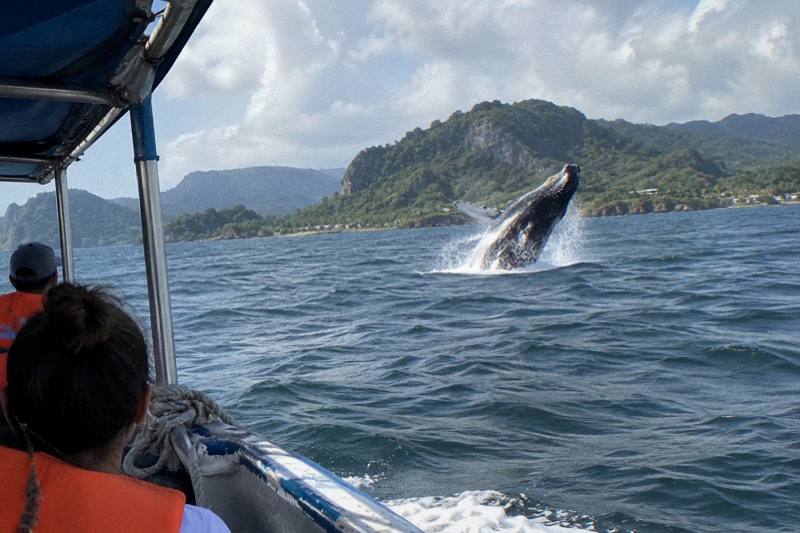
Is Whale Watching In Samaná Worth It?
An honest value look at whale watching in Samaná: real prices from $45, what the 30-minute rule means, the review counts, the season limits, and a verdict by traveler type.
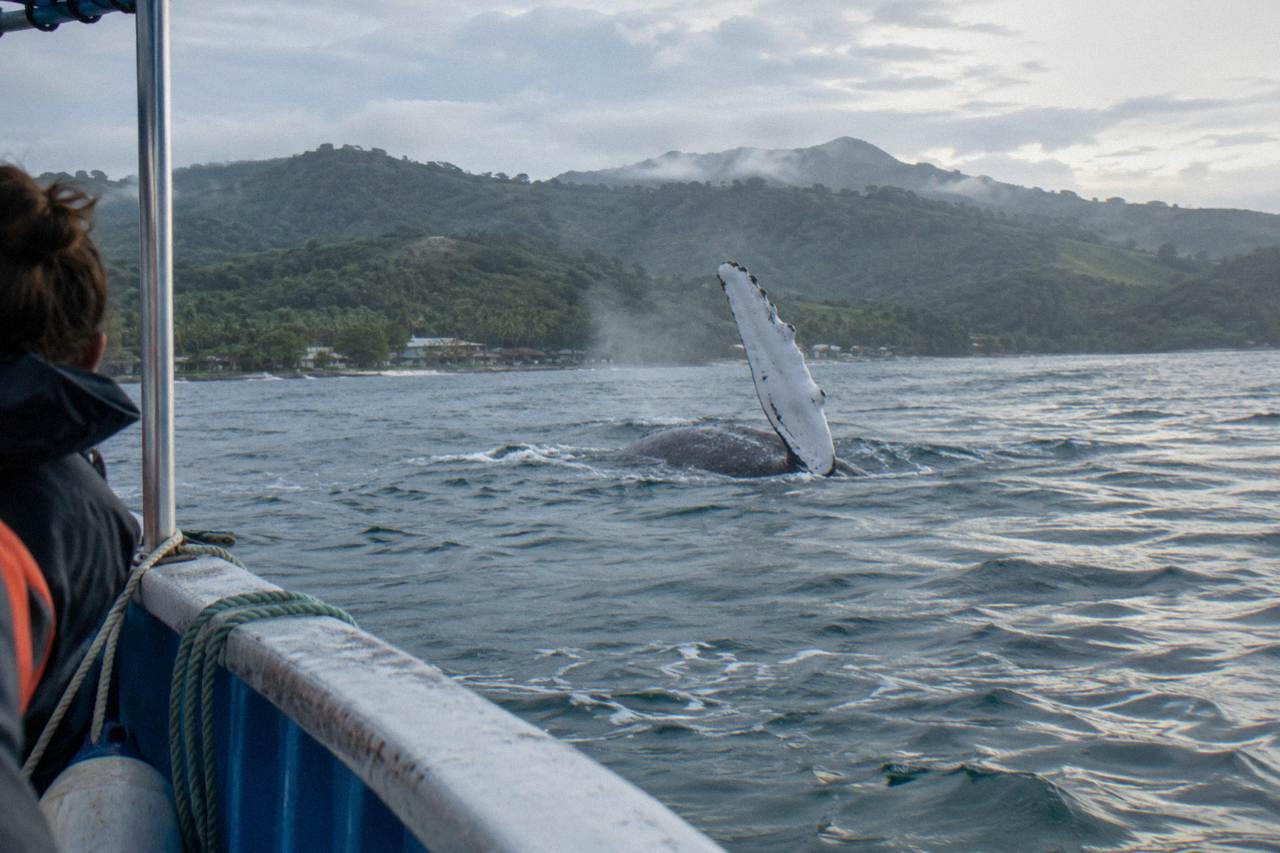
The honest answer for most travelers in season is yes, with three conditions attached: you go between mid-January and the end of March, you accept that no operator can promise a sighting, and you understand the sanctuary rules cap close observation at 30 minutes per whale group. Prices across every bookable boat listed here run from $45 to $210 per person, and the featured whale and Cayo Levantado full day from Moto Marina Tours, from $84 per person with a 4.7 rating from 224 reviews, is the most reviewed product departing Samaná town itself. If you want the bigger picture before committing to a boat, our guide to whale watching across the Dominican Republic explains how the season, the sanctuary rules, and typical trip costs shape what you can realistically expect.
That is the short version. The long version depends on who you are, where you are staying, and what you expect a whale watch to feel like. This page lays out the value case honestly, including the parts that disappoint some visitors.
For most people visiting between mid-January and the end of March, yes: it is a paid boat trip in a protected calving and mating ground, from $45 per person at the cheapest listing, with licensed boats, enforced observation rules and a defined season. It is not worth it for anyone expecting a guarantee, an all-day whale encounter, or the chance to swim with whales, because none of those exist in Samaná Bay. If you're weighing the rest of your trip too, our guide to staying safe in Samaná covers road conditions, hurricane season, and where to check official advisories.
The value question really breaks into three smaller ones. Is the wildlife real? Is the price fair for the hours you spend? And does the format, a shared boat with 30-minute observation windows, match what you pictured?
On the first point, the wildlife is real in a way few Caribbean destinations can match. Humpbacks travel to these waters each northern winter to mate and calve, and the Ministry of Environment formally opens a regulated watching season, 15 January to 31 March in 2026, with 46 environmental authorizations issued to licensed boats. This is a managed sanctuary activity, not a luck-based excursion tacked onto a beach day. The ministry's own season opening release describes the framework that every legal trip operates under.
On fairness of price, the lineup spans $45 to $210 per person depending on departure point and inclusions. The cheapest ticket is the whale watching tour with snacks from Tour Whales Samana, from $45 per person, rated 4.9 from 20 reviews. The most reviewed product listed here is the Punta Cana whales, Bacardi and Limón Falls combo from Pa'conoce RD, 233 reviews, from $110 per person. And the featured whale and Cayo Levantado full day from Samaná, from $84 with 224 reviews, sits in the middle.
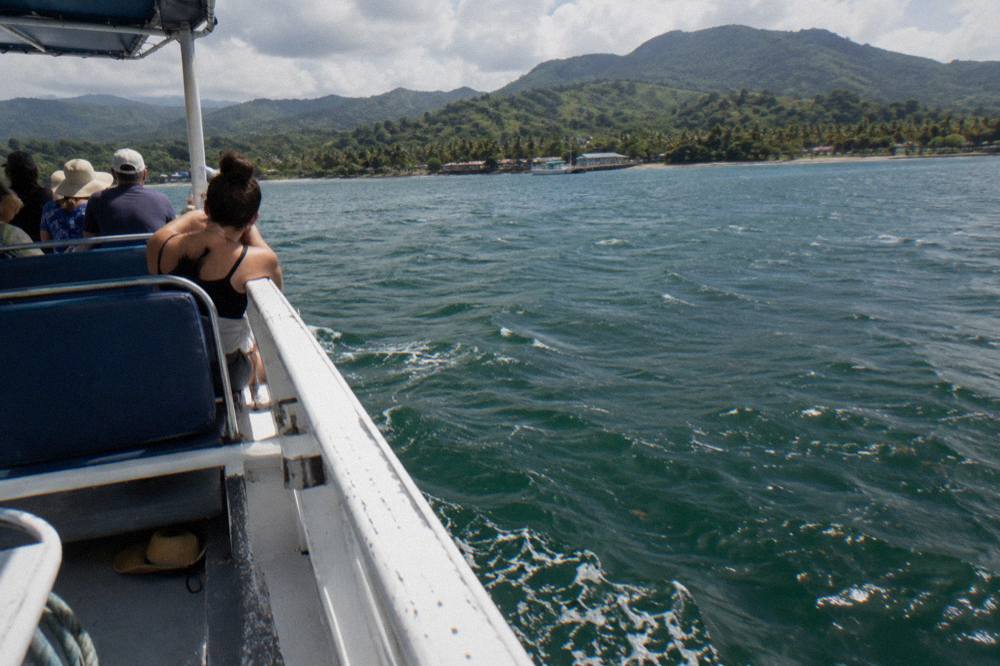
On format, that is where honest disappointment lives, and we cover it in detail below. Nobody swims with whales here. Nobody gets an hour parked beside a mother and calf. What you get is a well-run boat day inside rules designed to keep the whales coming back, plus, on most listings, lunch, beach time or both.
What Does Whale Watching In Samaná Actually Cost?
Across the lineup, every bookable whale watching product runs from $45 to $210 per person. Departures from Samaná and Las Terrenas span $45 to $125, Punta Cana departures $110 to $200, waterfall and island combos $110 to $199, and Santo Domingo, Boca Chica and Puerto Plata departures $130 to $210. The price mostly tracks transport distance and inclusions, not whale quality. If that price spread leaves you unsure which departure suits your trip, our guide to picking the right Samaná whale watching tour compares what each option actually includes.
The spread is easier to read as tiers. A local departure from Samaná town keeps the price low because you are already at the bay. A Las Terrenas base adds an hour of road each way to the town departures, roughly. And the Punta Cana days cost more because the drive alone is 3.5 to 5.5 hours one way, which is also why those listings run 8 to 13 hours door to door.
| Departure base | Price range per person | Typical day length | Notes from the listings |
|---|---|---|---|
| Samaná town | $45 to $95 | 3 to 8 hours 30 minutes | Cheapest listings; some include lunch, some snacks only |
| Las Terrenas | $125 | 6 hours | Las Terrenas meeting point |
| Punta Cana and Bávaro | $110 to $200 | 5.5 to 13 hours | Longest days; most include lunch and pickup |
| Combos with El Limón or Cayo Levantado | $110 to $199 | 7 hours 15 minutes to 13 hours | Waterfall or island stop plus whales |
| Santo Domingo, Boca Chica, Puerto Plata | $130 to $210 | 8 to 13 hours | Breakfast on some Puerto Plata listings |
Two of those tiers deserve a closer look. The private whale watching option from Miches, from $95 per person with Whale Punta Cana, is the cheaper of the two private whale products, 3 to 6 hours, with an optional Cayo Levantado visit. And the whale and Bacardi Island day trip from Punta Cana, rated 4.4 from 47 reviews from $165, is one of the better-reviewed long Punta Cana days.
What the price does not buy, on any listing, is a sighting promise. No operator listed here offers one, and none honestly could. What the better listings do instead is stack the rest of the day, lunch, island time, waterfall stops, so that the whale watching is the centerpiece of a full day rather than the only thing you paid for. The featured whale and Cayo Levantado full day is exactly that shape: whale watching plus a buffet lunch on Bacardi Island plus drinks, from $84, and you can read the full whale and Cayo Levantado combo breakdown for how the day flows.
So is the price fair? Measured per hour, the 3-hour bay cruise from Moto Marina Tours, from $69 per person, rated 4.5 from 126 reviews, is one of the cheaper whale products here, and it includes coconut snacks, water, soft drinks and a guide. Measured as a full vacation day, the big Punta Cana combos cost about what a single excursion costs from most resort zones, with far more road included.
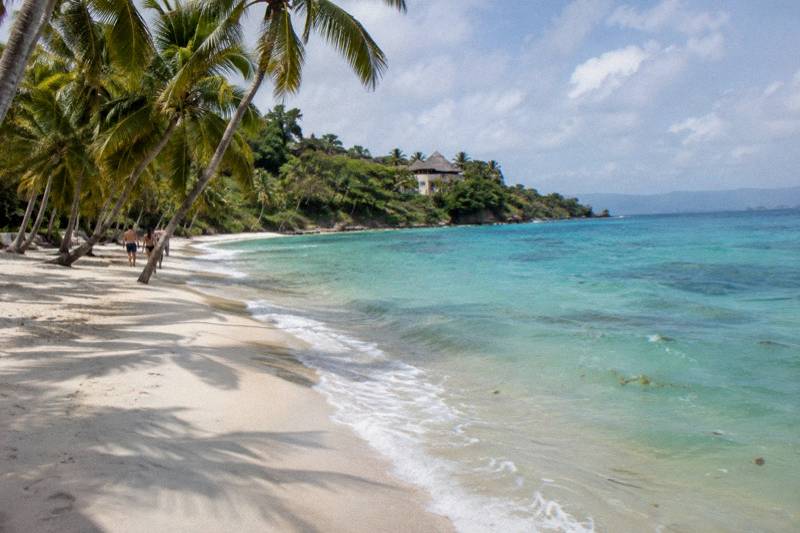
Catamaran, Beach Lunch, Bacardi
8 hours 30 minutes
★ 4.0 · 17 reviews · From $65
Check availability →How Much Time Do You Actually Get With The Whales?
The sanctuary rules set a maximum observation time of 30 minutes per whale group when other boats are waiting, and that time is halved when whales are scarce. Boats must stay 80 meters from mothers with calves and 50 meters from any other group, with at most three boats per group at once. In practice, most trips deliver several short observation windows across three to four hours on the water.
That 30-minute number surprises people who expected an hours-long close encounter, so it is worth explaining what it means on the water. The limit applies per whale group, not per trip. A boat that finishes with one group can move on and find another, and the bay during peak weeks, which researchers describe as February to early March, can hold many groups at once. What the rule prevents is a fleet crowding one mother and calf all morning.
The rules are not new and not voluntary. CEBSE, the Centro para la Conservación y Ecodesarrollo de la Bahía de Samaná, has applied them in the bay since 1996, and they are regulated and licensed by the Ministry of Environment. The CEBSE panel page lays out the distances, the boat limits, the waiting rules and the engine requirements in full. Engines must stay on in the observation area, which sounds odd until you realize a drifting boat is a collision risk around animals that surface without warning.
There is one more rule that shapes expectations more than any other: no swimming with whales in Samaná Bay. Not on any listing, not for a fee, not ever. Swimming with humpbacks is legal only at Banco de la Plata, far offshore, under strict permits aboard week-long live-aboards that run roughly US$3,500 to 5,500, which is a different trip, price and category of traveler entirely. Offers to swim from Las Galeras are illegal, and a listing advertising swimming in the bay is a listing to walk away from.
For a fuller picture of the onboard experience, the what to expect on a Samaná whale watching boat guide walks through the whole day, and the odds of seeing a whale on a tour post explains honestly why nobody can quote you a sighting percentage.
What Do The Reviews Actually Say?
The most reviewed whale products listed here hold up well: the featured whale and Cayo Levantado day is rated 4.7 from 224 reviews, the whale watching and Limón Waterfall day trip 4.5 from 146 reviews, and the 3-hour bay cruise 4.5 from 126 reviews. Several other listings have review counts too small to support a star claim, and a handful have none yet, which is worth knowing before you read a bare listing page.
Review counts matter here more than star averages, because a small pool can swing hard on one unhappy guest. The half-day humpback trip from Whale Punta Cana sits at 3.5 from 15 reviews, for instance, which comes from a small pool. The 4.9 from 20 reviews on the $45 snacks tour is excellent but comes from twenty people. The 224-review featured day and the 233-review Punta Cana combo are the two numbers with real statistical weight behind them. Other pages covering the same trip are gathered on Whale Tours Samana.
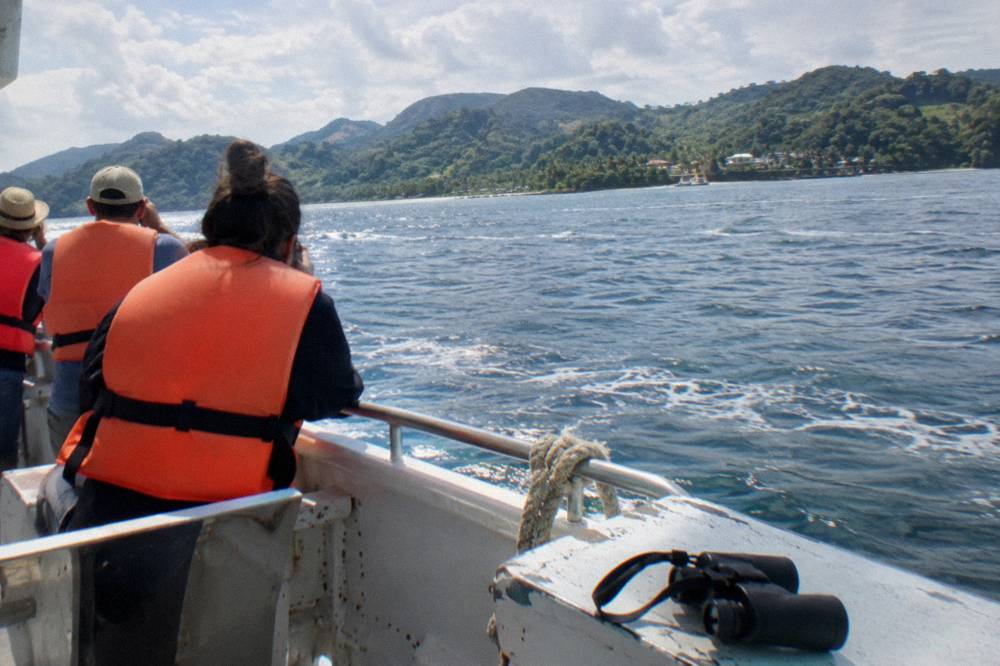
What the negative reviews tend to cluster around is predictable once you know the structure of the day: the transport legs. A Punta Cana departure means 7 to 11 hours of round-trip driving on top of the boat time, and reviews on the long days sometimes mention the road more than the whales. That is not a whale problem, it is a geography problem, and it is why the whale watching from Punta Cana guide exists: to help readers decide whether the drive is worth it or whether an overnight in Samaná makes more sense. If you do decide the overnight makes more sense, the El Limón Waterfall worth-it guide takes an honest look at the area's other famous attraction, including whether pairing it with a whale watching day leaves you thrilled or simply exhausted.
Sea state is the other variable, and no operator controls it. Bay trips in January to March often see calmer mornings and choppier afternoons as the trade winds pick up, which is a pattern rather than a promise. If you are prone to motion sickness, the seasickness on Samaná whale watching boats guide covers timing, medication and seating honestly.
The 3-hour bay cruise keeps coming up as the quiet value pick for exactly this reason: less time on the water, less exposure to afternoon chop, and a price, from $69, that makes the trip easy to repeat on another morning if the first one underdelivers.
Who Will Be Disappointed?
Travelers who want a guarantee, an up-close encounter, swimming with whales, or a trip outside mid-January to late March will be disappointed, and no listing here can change that. Anyone hoping for a small private experience at the shared-boat price will also be let down; the lowest-priced private whale product here is the Miches option, from $95 per person.
The disappointment list is short but real, so it is worth being blunt about each item.
First, the guarantee crowd. Humpbacks are wild animals in an open bay, and sightings vary with weather, sea state and where the whales are that day. No honest operator promises a whale, no listing here offers one, and any pitch that does should end the conversation. The value case rests on the season, the density of whales in the bay during it, and the protected status of the water, not on a certainty.
Second, the intimacy crowd. Fifty meters from a whale sounds close, and from a boat deck it looks close, but it is not a documentary filming distance. Add the three-boat limit and the 30-minute window and you get a structured, respectful viewing experience rather than an immersive one. Some people find the rules themselves reassuring, evidence the activity is managed for the animals' sake, and that reframing is worth trying before you board.
Third, the off-season crowd. The season runs mid-January through March. Outside that window there are no licensed whale watching trips in the bay, and travelers arriving in, say, November should plan around beaches, waterfalls and Los Haitises instead. Hurricane season runs 1 June to 30 November with its peak August to October, which overlaps the closed whale window anyway.
Fourth, the drone photographers. Drones are not allowed inside the sanctuary without ministry permission, so leave the drone at the hotel. The rules are enforced and the whales, not the tourists, are the priority of the whole framework.
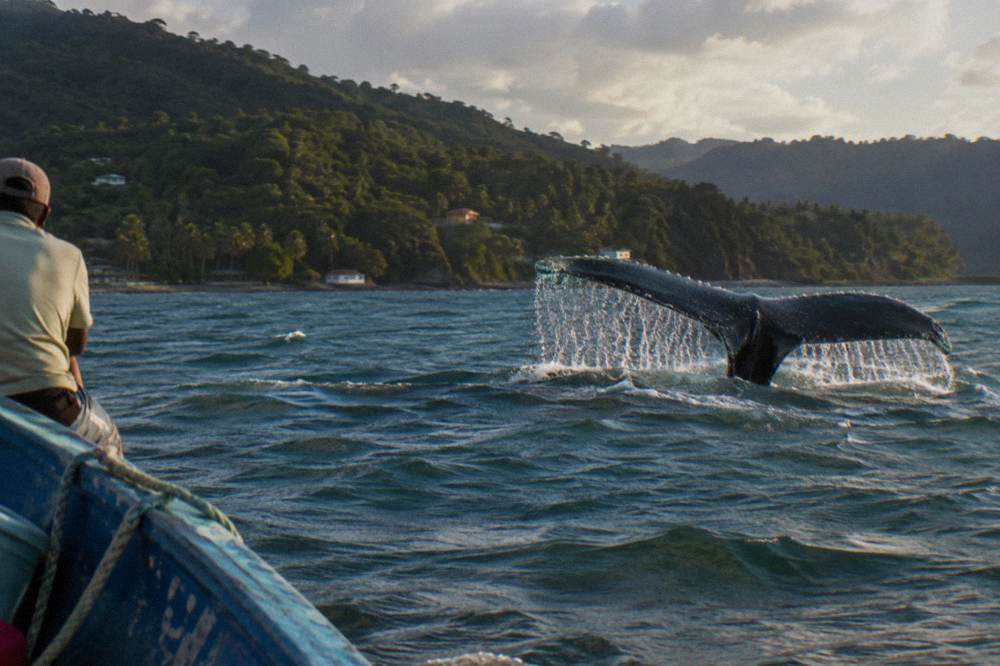
Everyone else, honestly, tends to come off the boats happy. The format rewards realistic expectations: a beautiful bay, a licensed captain, a guide who can read the behavior, and a real chance of breaching, tail lobbing or a mother and calf surfacing within the rules.
Is The Season Worth Planning A Trip Around?
Yes, if you can travel between mid-January and the end of March, because the season is short and the rest of the year offers no legal whale watching in the bay at all. Researchers describe February to early March as the period of peak whale concentrations, and the 2026 season ran on 46 environmental authorizations under a ministry management agreement.
The season is not a marketing construct. It is a regulatory one. The Ministry of Environment opens the season, issues authorizations, and in 2026 signed an inter-institutional management agreement that created a sanctuary management committee covering boat inspection, captain training and scientific monitoring. Licensed boats even carried GPS tracking on a pilot basis during 2026. For a traveler, all of that machinery reduces to one practical fact: a licensed boat in season is a inspected, trained, rule-bound operation, and an unlicensed one is not worth any price.
Timing within the season matters too. Early season and late season days can be quieter on the water, with fewer boats, while February into early March is when researchers describe the highest concentrations of whales, tied to mating and calving activity. The trade-off is that peak weeks also mean peak crowds, both on the boats and around town.
If you are already committed to the region outside the season, the best time for whale watching in Samaná guide covers the season calendar in detail, and the peninsula has a full offseason: El Limón waterfall, Los Haitises National Park and the beaches around Las Galeras carry a trip on their own.
What Is The Best Value Pick For Most Travelers?
For most travelers already in or near Samaná, the featured whale and Cayo Levantado full day from Moto Marina Tours is the strongest value: from $84 per person, rated 4.7 from 224 reviews, 7 hours, with coconut snacks, buffet lunch on Bacardi Island, water, soft drinks, boat ride and guide included. Budget travelers should look at the $45 snacks tour; short-trip travelers at the 3-hour bay cruise.
Breaking the value verdict down by traveler type makes it easier to place yourself.
| Traveler type | Best fit listed here | Why it wins for that reader |
|---|---|---|
| Budget traveler in Samaná | Whale watching tour with snacks, from $45, 4.9 from 20 reviews | Lowest price listed here, snacks and drinks included, no lunch |
| Cruise passenger or short stay | 3-hour bay cruise, from $69, 4.5 from 126 reviews | Shortest quality product, departs Avenida La Marina |
| Full-day value seeker | Featured whale and Cayo Levantado day, from $84, 4.7 from 224 reviews | Most reviewed Samaná departure, lunch and drinks included |
| Resort guest in Punta Cana | Whales, Bacardi and Limón Falls combo, from $110, 233 reviews | Most reviewed product listed here, three stops in one day |
| Privacy seeker | Private whale watching from Miches, from $95 | The cheaper of two private whale products |
| Waterfall lover | Whale watching and Limón Waterfall day, from $169, 4.5 from 146 reviews | El Limón and the bay in one day, fees and taxes included |
The verdict by type, in prose. If you are staying in Samaná town or Las Terrenas, the featured full day at $84 is close to a default pick: it stacks the two best things on the bay, whales and Bacardi Island, into one licensed day with the deepest review pool of any local departure. If you are staying in Las Terrenas specifically, there is also a dedicated whale watching from Las Terrenas departure, from $125 with a Las Terrenas meeting point, which trades a slightly higher price for skipping the transfer into town.
If you are in Punta Cana, the decision is really about the drive, 3.5 to 5.5 hours each way, and the how to get from Punta Cana to Samaná guide covers the options including the private transfer at about $240 per vehicle one way. Most Punta Cana visitors who go choose a combo day, the Bacardi Island day trip at 4.4 from 47 reviews or the whales, Bacardi and Limón Falls combo, so the long drive buys three experiences instead of one.
And if your whole question is "is it worth it at all", the cheapest honest test is the $45 snacks tour from Tour Whales Samana: 6 to 7 hours, coconut snacks, water, soft drinks, guide and boat ride included, buffet lunch not included. It is the floor price of whale watching on this bay, and for many visitors it is the moment they decide the answer is yes.
One last framing thought. This bay, this season and these rules together create something genuinely uncommon: a government-regulated wildlife spectacle you can buy a ticket to for less than a hundred dollars, run by licensed operators under a management plan. Worth is subjective, but the ingredients of a good day here are unusually well stacked, a protected population, a real season, enforced distances and a deep pool of reviewed products to choose among.
Common Questions About Whale Watching In Samaná
Can you swim with whales in Samaná?
No. Swimming with whales is prohibited in Samaná Bay under the sanctuary rules. It is allowed only at Banco de la Plata, far offshore, under strict permits aboard live-aboard boats, roughly US$3,500 to 5,500 for a week. Any offer to swim with whales from Las Galeras or elsewhere in the bay is illegal.
How close do the boats get to the whales?
The rules require 80 meters from mothers with calves and 50 meters from any other group, with at most three boats per group at once. Observation is capped at 30 minutes per group when boats are waiting, halved when whales are scarce.
What is the cheapest whale watching tour in Samaná?
The whale watching tour with snacks from Tour Whales Samana, from $45 per person, is the cheapest listing here. It runs 6 to 7 hours and includes coconut snacks, water, soft drinks, a boat ride, a guide and the whale watching experience; buffet lunch is not included.
When is whale watching season in Samaná?
Mid-January through the end of March. The 2026 season ran 15 January to 31 March under a ministry opening. The 2027 season dates have not been announced. Researchers describe February to early March as the period of peak whale concentrations in the bay.
Do any tours guarantee you will see a whale?
No. No listing here promises a sighting, and none could honestly, because humpbacks are wild animals and sightings vary with weather, sea state and whale movement. The strong review pools on the best-reviewed products are the fairer evidence of a well-run day.